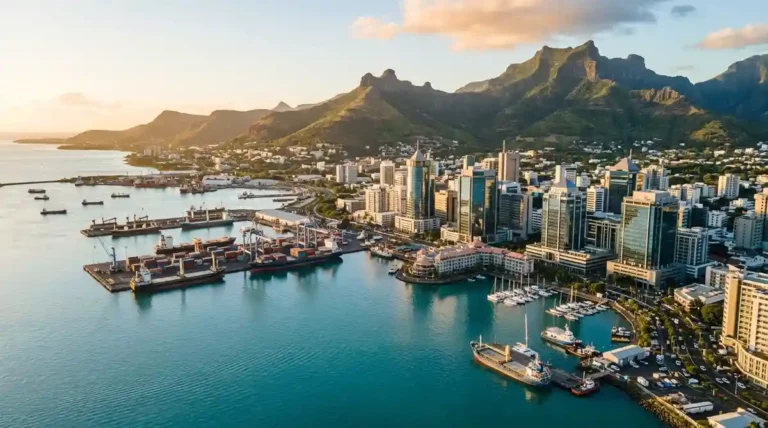
The Mauritius Golden Visa is now operational, and the ticket price is US$1 million committed inside your first twelve months on the island.
PORT LOUIS, Mauritius — 01 August 2026
Cabinet signed the scheme off in April. The 2026-2027 National Budget locked in the tax treatment, and the fiscal year that began on 1 July 2026 carried it into force. The headline number is not the interesting part. The tax wrapper bolted to it is, and so is the fact that Mauritius tightened almost every other route in at the same moment.
Put your assets beyond reach in 57 jurisdictions.
Pick where you want your company. We handle the filing, the registered agent, and the bank introduction. From US$1,290, done in days, not months.
- Charging-order protection in jurisdictions courts can't pierce
- Zero tax on foreign income in 30+ territories
- Banking options available
- Fixed price. No surprise fees at closing
What does the Mauritius Golden Visa actually require?
The Mauritius Golden Visa requires a minimum US$1 million investment into approved high-value sectors within the first year of arrival. Qualifying sectors named by government include fintech, artificial intelligence, biotechnology, renewable energy and global treasury. The visa runs up to two years, renews on reapplication, and unlocks a permanent residence permit application once the investment is complete.
Dependants come along. Spouse and children sit under the same grant, and work permits for accompanying domestic staff are processed inside five days under the Budget 2026-2027 measures. Government briefings around the Cabinet decision put annual intake at roughly 100 approvals, although the Budget papers themselves fix no statutory cap.
Buying a house does not qualify as your million. Foreign property purchases stay confined to Economic Development Board schemes, deliberately, so the programme does not feed local housing prices. Hoping to park the whole US$1 million in a beachfront villa? That ship has sailed.
How is a Mauritius Golden Visa holder taxed?
A Mauritius Golden Visa holder is taxed on foreign employment income only where that income is actually remitted to Mauritius. Money spent locally through a foreign credit or debit card is not deemed a remittance. Funds deposited into a Mauritian bank account escape tax entirely where the holder declares the applicable tax was already paid abroad.
That last clause is the quiet win. Mauritius already runs a remittance system for resident individuals, so foreign-source income is taxable only to the extent it is received in Mauritius, per the Mauritius Revenue Authority. The Budget went further for Golden Visa holders by carving foreign-card spending out of the remittance definition. Residency for tax purposes still turns on presence: 183 days in an income year, a 270-day aggregate test, or domicile. Map that against your exit country before signing anything, which is where offshore residency options across several jurisdictions usually beat a single-country bet.
Americans, read this twice. The visa does nothing about your IRS filing obligation. US citizens are taxed on worldwide income regardless of residence, and the Foreign Earned Income Exclusion covers earned income only. Pensions, Social Security, 401k withdrawals and investment income sit outside it.
| Route into Mauritius | Minimum investment | Initial term | Key condition |
|---|---|---|---|
| Golden Visa | US$1,000,000 | Up to 2 years, renewable | Approved sectors, within 12 months |
| Occupation Permit (Investor) | US$100,000 | Renewable permit | Turnover Rs5m from year 3, Rs8m from year 5 |
| Occupation Permit (Self-employed) | Business income test | Renewable permit | Rs2m from year 3, Rs3m from year 5 |
| Occupation Permit (Professional) | None | Renewable permit | Minimum salary Rs50,000 per month |
| Property (EDB scheme) | US$375,000 | Permit tied to ownership | 10% duty plus 10% land transfer tax from 1 July 2026 |
Why the Occupation Permit got harder at the same time
The cheap door narrowed. Investor Occupation Permits now demand a minimum US$100,000 initial investment plus hard turnover tests, Rs5 million from year three and Rs8 million from year five, to renew. Self-employed holders face Rs2 million and Rs3 million at the same milestones. The Professional minimum salary was standardised at Rs50,000 a month across all sectors, and the Pro Pass and Expert Pass categories merged into one.
The family Occupation Permit was abolished outright. A three-year Technical category replaces it, but only under government-to-government programmes. The numbers don’t lie: Mauritius wants fewer, richer, more productive arrivals.
Something we see often in practice. People fixate on the entry threshold and forget the renewal test. A permit costing US$100,000 is worthless if the business cannot show Rs8 million of turnover by year five, and plenty of consultancy-style ventures never get close.
Property buyers now pay double the transfer tax
Non-citizens buying residential property under EDB schemes now pay 10% registration duty and 10% land transfer tax, up from 5% each. The change bites on deeds registered on or after 1 July 2026 under the Finance Act 2025, and it applies even where the reservation agreement was signed earlier. We covered the mechanics of that Mauritius property tax increase when the Act was gazetted.
Read that again. Signing in 2025 did not protect you. Registration date is what counts. On a US$375,000 purchase that is roughly US$37,500 of duty instead of US$18,750, before notary costs and the rest of the friction nobody puts in the brochure. The Budget also flagged EDB scheme duties for further review, so treat current rates as a floor rather than a ceiling.
Who the Mauritius Golden Visa actually suits
This route suits an operating investor deploying real capital into a Mauritian business, not a passive buyer looking for a stamp. If the plan is to hold assets offshore and visit occasionally, the older residency in Mauritius routes or a cheaper jurisdiction will serve you better for a fraction of the money.
Where it shines is for founders in fintech, AI or renewables who want an English-speaking common-law base with a 15% corporate rate and treaty access into Africa and India. Just remember the CRS 2.0 reporting rules now sweep far more account data than the old standard, and Mauritius is switching on the OECD Crypto-Asset Reporting Framework too. Privacy through obscurity is dead.
How much does the Mauritius Golden Visa cost?
Does the Mauritius Golden Visa lead to permanent residence?
Can I buy property to qualify for the Mauritius Golden Visa?
Is foreign income taxed in Mauritius?
How does the Mauritius Golden Visa differ from the Occupation Permit?
Higher price, tighter gate, better tax certainty for anyone who clears it. Read our coverage of Jamaica’s economic residency programme for the opposite case study, then browse the wider residency programme guides before narrowing the shortlist.
Sources and References
- National Assembly of Mauritius, The Finance Act 2025 (Act No. 18 of 2025)
- PwC Mauritius, National Budget 2026-2027: Taxation Measures
- Mauritius Revenue Authority, Foreign Income
- PwC Worldwide Tax Summaries, Mauritius: Individual Residence Rules
- PwC Worldwide Tax Summaries, Mauritius: Taxes on Personal Income