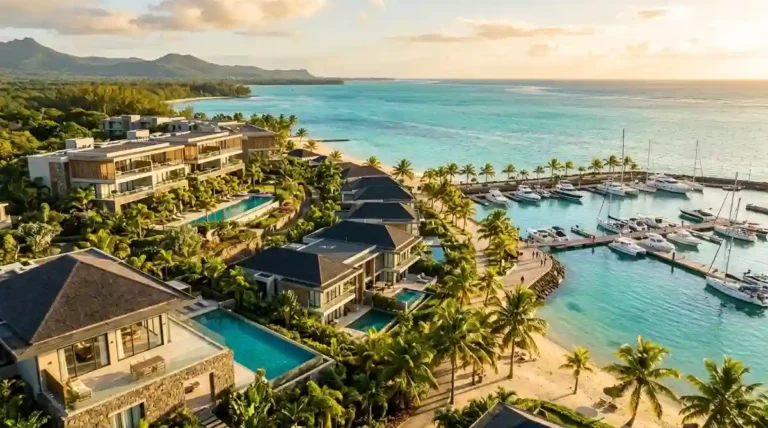
Getting residency in Mauritius is far easier, and far cheaper, than most people assume. You do not need millions. You do not need to be retired. A USD 50,000 business investment opens a 10-year permit, a property purchase opens another door, and remote workers can land a one-year visa almost on arrival. Behind all of it sits a tax system with no capital gains tax and no tax on foreign income you keep offshore. That is a serious offer for a tropical island.
This guide lays out every route without the marketing spin: the Occupation Permit, the property route, the retirement permit, the Premium Visa, and the path to permanent residency and eventually citizenship. Real thresholds, real timelines, and the traps that catch people who only skim a brochure.
Put your assets beyond reach in 57 jurisdictions.
Pick where you want your company. We handle the filing, the registered agent, and the bank introduction. From US$1,290, done in days, not months.
- Charging-order protection in jurisdictions courts can't pierce
- Zero tax on foreign income in 30+ territories
- Banking options available
- Fixed price. No surprise fees at closing
Why Residency in Mauritius Beats the Alternatives
The pitch is simple. Low entry cost, strong tax treatment, and a stable, English-speaking island at the crossroads of Africa, Asia, and Europe. Few jurisdictions hit all three.
Tax is the headline. Mauritius taxes residents on worldwide income in principle, but foreign-source income is only taxed to the extent you remit it into the country. There is no capital gains tax, no inheritance tax, and no wealth tax. For an entrepreneur or investor, that structure is dead simple to live inside. Keep earnings offshore and the Mauritian net does not reach them.
Then there is quality of life. Modern infrastructure, private healthcare, international schools, and a passport that ranks 27th in the world once you naturalise. People who secure a permit here are not settling for a compromise. They are buying into a credible, low-tax base that institutions and banks already trust. Compare it with a Caribbean option in our guide to residency in the Bahamas or a Latin American route in residency in Mexico.
The Five Routes to Residency in Mauritius
There is no single application. The right route depends on whether you are an entrepreneur, an investor, a retiree, or a remote worker. Here are the five main paths, each with its real threshold.
1. Investor Occupation Permit
Invest USD 50,000 into a new Mauritius company and you qualify for a 10-year Occupation Permit. The business must show a turnover of at least MUR 1.5 million in year one and a cumulative MUR 20 million by year five. This is the lowest-cost serious route and the most popular among entrepreneurs.
2. The USD 375,000 business route
Commit at least USD 375,000 to a qualifying business activity and you can secure a 20-year residence permit. This suits larger investors who want a longer horizon and less frequent renewal.
3. Property investment
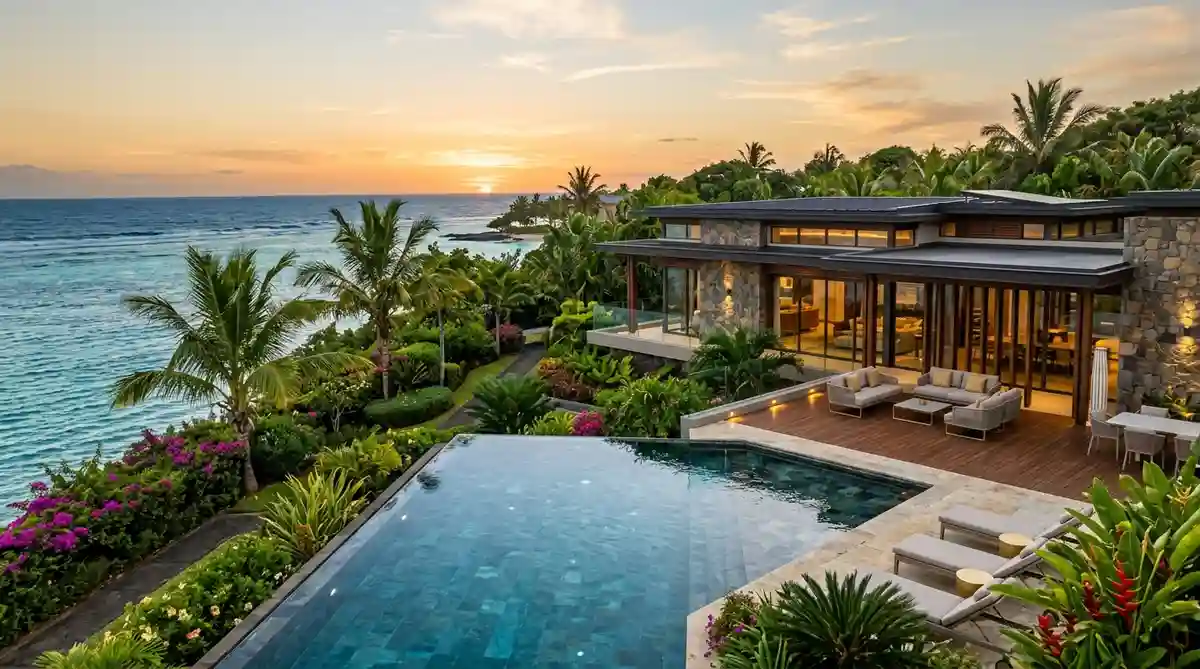
Buy approved residential property worth at least USD 375,000 under the PDS, IRS, RES, or Smart City schemes and the purchase grants you a residence permit. You own a home on a lagoon and get your permit in one move, which is why this route is so popular with families.
4. Retired Residence Permit
Aged 50 or over, you can transfer USD 2,000 a month (USD 24,000 a year) into a Mauritian bank account and qualify for a 10-year retirement permit. For the full breakdown see our dedicated guide to retiring in a zero-tax jurisdiction and weigh it against the island option.
5. Premium Visa for remote workers
The Premium Visa is a one-year, renewable permit aimed at remote workers and long-stay visitors who earn their income abroad. It is the fastest, lightest way to test life on the island before committing to a longer permit.
Taxes Once You Have Residency in Mauritius
The tax treatment is the reason most people look past the beaches. Mauritius applies a residence-based system, but with a remittance feature that protects offshore income.
| Tax | Treatment for residents (2026) |
|---|---|
| Personal income tax | 0% to 20%; foreign income taxed only when remitted |
| Corporate tax | 15%; effective 3% on qualifying foreign income for a GBC |
| Capital gains tax | None |
| Inheritance / wealth tax | None |
| Tax residency trigger | 183 days in a year, or 270 days over 3 years |
To become tax-resident you generally need to spend 183 days in a tax year on the island, or 270 days across the current and two preceding years. If you plan to run a company alongside your residence, read how the corporate side works in our guide to low-tax incorporation, and consider an offshore bank account to keep funds outside high-tax home systems. US citizens should note the IRS still taxes worldwide income regardless of where they live, so the move changes your local bill, not your US filing.
How to Get Residency in Mauritius: Step by Step
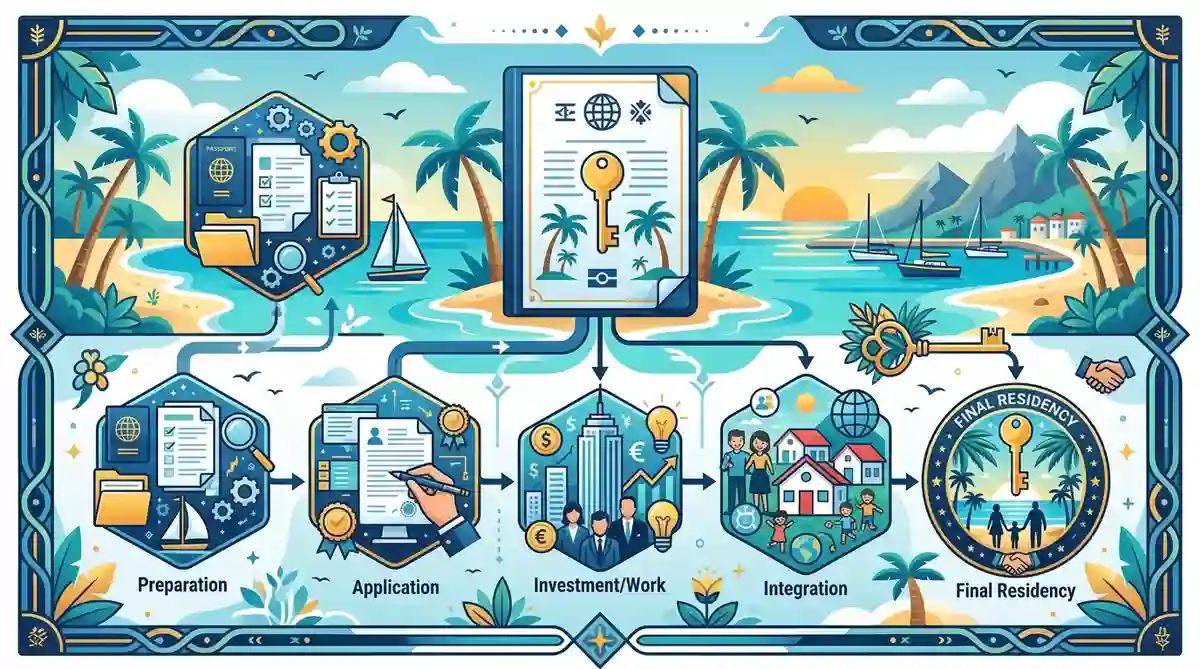
Step 1: Pick your route. Match your profile to a permit: investor Occupation Permit from USD 50,000, the USD 375,000 business or property route, the retirement permit, or the Premium Visa for remote workers.
Step 2: Prepare documents and funds. Gather proof of investment or income, a clean criminal record, health cover, and the supporting paperwork. Set up a Mauritian bank account where required for transfers.
Step 3: File the application. Submit through the Economic Development Board, which coordinates permits. A USD 50 application fee applies to Occupation and Retirement permits from December 2025.
Step 4: Relocate and maintain status. Move to the island, meet the turnover, income, or stay conditions for your route, and renew on schedule. Lawful, genuine residence is what builds toward permanence.
Step 5: Apply for permanent residency. After holding a permit for 5 years you can apply for the 20-year Permanent Residency Permit, and continued lawful residence opens the path to citizenship by naturalisation.
From Residency to Permanent Residency and Citizenship
A permit is the start, not the finish. After 5 years holding a residence permit (raised from 3 years in 2025), you can apply for a 20-year Permanent Residency Permit. Retirees need to have transferred at least USD 200,000 over the five years to qualify.
Hold lawful residence long enough and citizenship comes into reach. Non-Commonwealth nationals can apply for naturalisation after 7 years of legal residence, Commonwealth citizens after 5 years, and spouses of Mauritians after 4 years of marriage plus 2 years on the island. The end prize is a passport ranked 27th in the world.
Here is the part that rewards bigger investors. Under Section 9(3) of the Mauritius Citizenship Act, anyone who invests at least USD 500,000 in the economy and resides on the island for a continuous 2 years can apply for citizenship by naturalisation, years ahead of the ordinary clock. The qualifying USD 500,000 can sit in approved property or a Mauritian business, so the capital that anchors your residency can also fast-track your passport. Approval is at the government’s discretion, but for serious investors it turns a long game into a short one. For the full citizenship picture, read our guide to a second passport in Europe and how it compares.
Common Mistakes Applicants Make
- Choosing the wrong permit for the goal. A Premium Visa is great for testing the island, but it does not build toward permanence the way an Occupation Permit does.
- Assuming residency makes you tax-resident automatically. You generally need 183 days a year on the island to trigger tax residency.
- Bringing all foreign income onshore and paying tax that smarter planning would have deferred under the remittance rule.
- Forgetting the permanent residency clock rose from 3 to 5 years in 2025. Plan timelines around the current rule.
- Letting a permit lapse, which can break the lawful-residence count toward citizenship.
Mauritius vs Other Residency Options
How does the island compare with the residency programs people usually weigh? Here is an honest look using current 2026 figures.
| Country | Cheapest serious route | Foreign income tax | Years to citizenship |
|---|---|---|---|
| Mauritius | USD 50,000 Occupation Permit | Taxed only when remitted | 7, or 2 for USD 500k investors |
| Portugal | Golden visa / D7 | Taxed; NHR 2.0 narrow | 10 ordinary (7 CPLP) |
| Spain | Non-lucrative visa | Worldwide | 10 (2 for Latin American/treaty) |
| Mexico | Temporary resident visa | Worldwide, up to 35% | 5 |
| Malta | Residence program (CBI closed July 2025) | Remittance-based | Not via closed CBI |
A few corrections the brochures get wrong. Portugal’s naturalisation clock is 10 years for ordinary applicants and 7 for CPLP, EU, and Sephardic applicants, not the old 5 years. Spain is 10 years for most and 2 years for Latin American and other treaty nationals. Mexico taxes residents on worldwide income up to 35%, so it is not the escape some assume. Malta’s citizenship-by-investment program closed in July 2025 after the EU Court of Justice struck it down, so only its ordinary residence routes remain. For a broader menu, see our residency options across 57 jurisdictions and the asset protection strategies that pair well with a new base.
What is the cheapest way to get residency in Mauritius?
Can I get residency in Mauritius by buying property?
How long until I can apply for permanent residency?
Does residency in Mauritius make me tax-resident?
Is foreign income taxed with residency in Mauritius?
Can remote workers get residency in Mauritius?
How long does the application take?
Can my family join me on a Mauritius permit?
Final Thoughts
The case for a Mauritian permit is straightforward. Low entry cost, a tax system that respects offshore income, a stable English-speaking base, and a clear path from permit to permanent residency to one of the world’s stronger passports. Few jurisdictions package all of that at this price.
The clock is ticking on the easy mobility many took for granted, as borders tighten and home tax bills climb. A permit here is a way to take back control on your own terms. Not sure where you stand? The free Freedom Score quiz scores your readiness across the five pillars of personal sovereignty. Read next: how to base a company on the island in our guide to offshore incorporation, and how to protect what you build with proper offshore banking.
Sources and References
- Economic Development Board Mauritius, Work and Live in Mauritius
- Passport and Immigration Office Mauritius, Occupation Permit
- Mauritius Revenue Authority, Overview of Taxes
- PwC, Mauritius Individual Taxes on Personal Income
- Wikipedia, Mauritian Nationality Law