
You can legally avoid KYC by holding wealth in forms that never pass through a bank or exchange: cash, gold coins, self-custody bitcoin, collectibles and a handful of others. Every one of these is lawful in the US, UK and EU. The skill lies in knowing exactly where each identity check starts, and keeping clear of it without ever gaming it.
KYC (“know your customer”) started as a bank rule. It’s now everywhere. Coin dealers, crypto apps, casinos, art galleries, even some gift-card sellers want a passport scan and a selfie. Every one of those files sits in a database that can be hacked, subpoenaed or handed to a tax office in another country under the Common Reporting Standard.
Most people who ask us how to avoid KYC aren’t hiding anything. They want a slice of their savings that a bank freeze, a data breach or a clerk with a bad attitude can’t touch. That’s a reasonable goal. This guide covers 15 legal methods, the exact thresholds that trigger ID checks in each region, and the hard legal lines you must never cross.
Put your assets beyond reach in 57 jurisdictions.
Pick where you want your company. We handle the filing, the registered agent, and the bank introduction. From US$1,290, done in days, not months.
- Charging-order protection in jurisdictions courts can't pierce
- Zero tax on foreign income in 30+ territories
- Banking options available
- Fixed price. No surprise fees at closing
What Is KYC, and Can You Legally Avoid KYC?
KYC means a business must confirm who you are before it serves you, usually with a government ID, proof of address and sometimes a selfie. You can legally avoid KYC by dealing in assets and with sellers the rules don’t cover, or by staying below the thresholds where checks start. What you can’t do is lie, use fake ID or split payments to dodge a report.
That distinction matters more than anything else in this article. The law doesn’t require you to use a bank. It doesn’t require you to buy gold from a dealer who scans your passport. It does require businesses above certain sizes and amounts to identify customers, and it punishes customers who deliberately game those triggers.
Huge areas of life still sit outside the KYC net: a private sale between two people, cash you already hold, bitcoin you earn and keep in your own wallet, a gold coin bought over the counter in most US states. Think of KYC as a set of toll gates on specific roads. Plenty of roads have no gate at all.
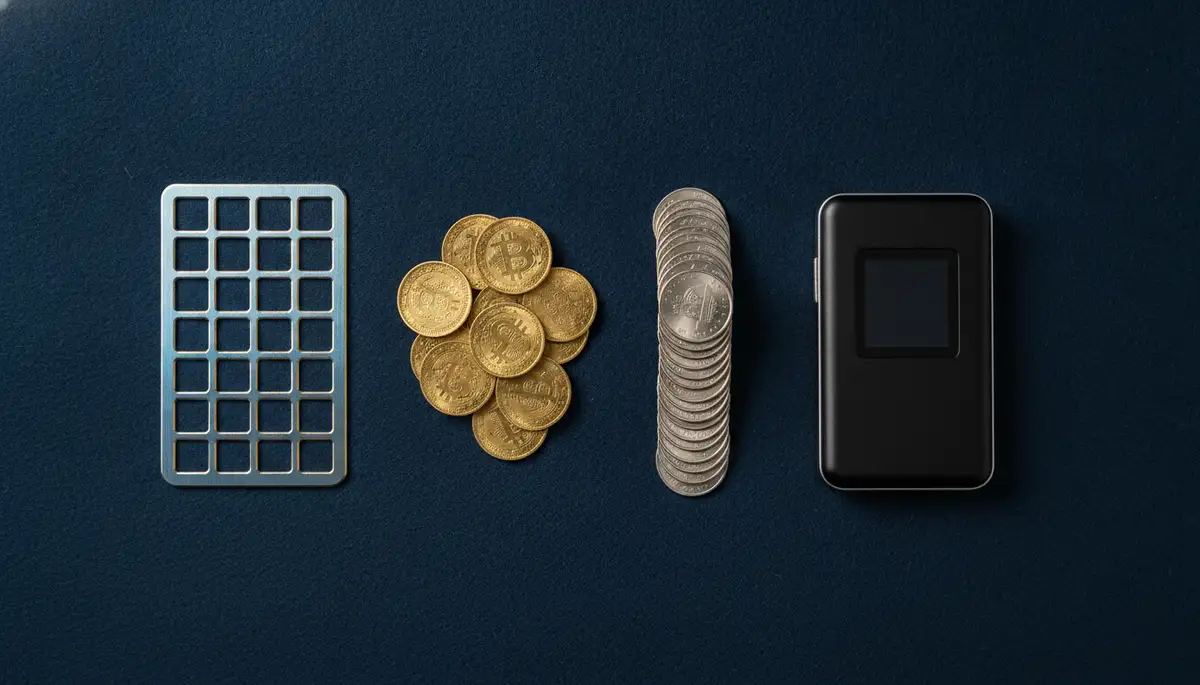
Bearer assets are the core of any no-KYC plan. A bearer instrument belongs to whoever holds it, with no name attached, so nobody needs to check your ID when it changes hands. Cash is the obvious example. Gold coins, bitcoin in self-custody and most collectibles behave the same way.
Where KYC Kicks In: US, UK and EU Thresholds Compared
The thresholds that trigger ID checks differ sharply between the US, UK and EU. In the US most cash triggers sit above $10,000. The UK uses £10,000 for high-value dealers and art. The EU is tightening fastest: a €10,000 cap on cash payments to businesses and ID checks on occasional cash deals from €3,000 arrive on 10 July 2027.
No single official source puts these side by side, so we built the table below from the primary regulations. Read that €2,000 German figure twice. It’s the strictest gold rule in the EU.
| Trigger | United States | United Kingdom | European Union |
|---|---|---|---|
| Bank cash report | Over $10,000 per business day (CTR) | Suspicion-based reporting, no fixed threshold | Cash deposits above €10,000 reported to the FIU from July 2027 |
| Business receiving cash | Form 8300 for cash over $10,000, including related payments | High-value dealer checks from £10,000 cash | €10,000 hard cap on cash payments to businesses from 10 July 2027 |
| National cash payment limits | None | No legal cap, but a business must register with HMRC as a high-value dealer before taking £10,000 or more in cash | France €1,000 (residents), Spain €1,000, Greece €500, Netherlands €3,000 for goods, Italy €5,000, Germany none |
| Buying gold for cash | No federal ID rule below $10,000 | Legal trigger £10,000, though many dealers ask for ID lower | Germany: checks from €2,000. AMLR: checks on occasional cash deals from €3,000 (July 2027) |
| Art and antiques | No AML program rule for art dealers; Form 8300 still applies over $10,000 cash | Art market participants check ID from £10,000 | Art traders check ID from €10,000 |
| Crypto exchanges | Full KYC at registered exchanges; 1099-DA reporting since 2025 | Full KYC at FCA-registered firms | Full KYC; checks on transfers above €1,000 to self-hosted wallets |
| Carrying cash across the border | Declare over $10,000 (FinCEN Form 105) | Declare £10,000 or more (gold not counted on GB routes) | Declare €10,000 or more, including gold coins and bullion |
| Casino | CTR above $10,000 cash per gaming day | Risk-based checks | Checks from €2,000 per transaction |
Two quick notes on that table. The UK switched its dealer and art thresholds from euros to pounds on 30 June 2026, at a 1:1 rate. And the EU numbers for July 2027 come from Regulation (EU) 2024/1624, the new Anti-Money Laundering Regulation that replaces national rules with one rulebook.
15 Legal Ways to Avoid KYC
The list runs roughly from the most private and liquid options to the most niche. For each method we’ve noted where ID checks start, so you know exactly how far you can go before someone asks for a passport.
1. Physical Cash
Cash is still the simplest way to avoid KYC. Banknotes carry no owner’s name, change hands instantly and need no account. Holding cash at home is legal in the US, UK and EU, with no upper limit. The checks start when cash moves into the system: bank deposits, large purchases from businesses, and border crossings.
In the US, banks file a Currency Transaction Report for cash over $10,000 in a single business day. Businesses that receive more than $10,000 in cash file IRS Form 8300. The UK sets no legal cap on cash payments, but a business must register with HMRC as a high-value dealer before it accepts £10,000 or more in cash. Most shops never register, so in practice they’ll turn away a cash purchase that size. Legal tender status doesn’t help either, because it only covers paying off a debt, and a shop can refuse cash entirely. The EU is far stricter. France already caps resident cash payments to businesses at €1,000, and the whole bloc gets a €10,000 cap in July 2027.
The catch is the exit. Cash is easy to hold and hard to put back into a bank in large amounts without questions about where it came from. Keep receipts for every withdrawal. Bottom line: a paper trail showing the cash came out of your own account is what lets you put it back in without trouble.
2. Gold and Silver Coins Bought Over the Counter
Buying gold coins for cash at a local dealer is one of the most effective ways to avoid KYC. In the US no federal rule requires a dealer to see your ID for purchases below $10,000. In Germany the limit for anonymous cash gold is €1,999.99. UK dealers face a £10,000 legal trigger, though many ask for ID earlier.
That’s the answer to “can I buy gold without ID?” for most readers. The US precious metals dealer rule (31 CFR 1027) makes larger dealers run an anti-money-laundering program, but it contains no ID-at-sale requirement. The dealer only files a Form 8300 when cash tops $10,000 in one deal or related deals within 24 hours. Cashier’s checks and money orders count as cash for coin purchases, so they don’t get around it.
Selling is different. Some coins trigger a Form 1099-B report when you sell them back to a US dealer. According to standard industry guidance, the list includes 25 or more one-ounce Krugerrands, Maple Leafs or Mexican Onzas in a single sale, and one-kilo gold bars. American Gold Eagles aren’t on it. State secondhand-dealer laws often require ID when you sell, too.
UK readers get a bonus. HMRC treats gold Sovereigns minted from 1837 and Britannias as currency, so they’re exempt from capital gains tax. Investment gold is VAT-free across the EU and UK. For storage ideas, see our guide to precious metals for asset protection.
One client bought a few coins a month for two years and was never once asked for ID. That’s the real advantage of metal. It sits outside every database until the day you sell.
3. Private Person-to-Person Sales
Buying directly from another private person is the most overlooked way to avoid KYC. KYC duties fall on businesses. A private seller who isn’t trading as a business has no legal duty to check your identity, whether you’re buying a gold coin, a watch or bitcoin. Even the EU’s 2027 cash cap exempts payments between private individuals.
That exemption is written into Article 80 of the AMLR. A retired collector selling his coins, an estate sale, a classifieds listing: none of these are KYC events. The risks are practical ones. Counterfeits, robbery and scams are far more common in private deals, so test metal and meet somewhere public.
There’s one limit. If you start buying and selling regularly for profit, you become a business, and the dealer rules start to apply to you.
4. Self-Custody Crypto Wallets
A self-custody wallet is a no KYC crypto wallet by design. You generate the keys yourself, so no company stands between you and your coins. Holding crypto this way is legal in the US, UK and EU. FinCEN’s own guidance says people using unhosted wallets for themselves aren’t money transmitters, and in October 2026 it withdrew its proposal to track these wallets.
That withdrawal was a real win for privacy. FinCEN’s 2020 plan would have forced exchanges to collect names and addresses for transfers to self-hosted wallets above $3,000. It was formally dropped in the Federal Register on 6 October 2026, together with a separate proposal aimed at crypto mixers.
The EU went the other way. Since 30 December 2024, an exchange sending more than €1,000 to your own wallet must check that you own it, often with a tiny test transaction or a signed message. That’s a check on the exchange leg only. Once coins are in your wallet, moving them between your own addresses involves nobody.
Use a hardware wallet, write the seed phrase down and back it up on steel. A wallet that only lives in your memory sounds clever until you forget one word. This is where people get burned.
5. Earning Crypto for Work or Goods
Getting paid in bitcoin for your work, or selling goods for it, is a clean way to acquire crypto without KYC. There’s no exchange in the middle, so there’s no identity check. It’s legal everywhere this guide covers. The income is still taxable, exactly as if you’d been paid in cash, so keep your own records.
Freelancers, consultants and small sellers do this all the time. A web designer invoices in sats. A seller lists a used camera for bitcoin. The coins land straight in a self-custody wallet with no paper trail at a third party.
6. Mining Bitcoin
Mining creates brand-new bitcoin that has never touched an exchange, which makes it one of the purest ways to get coins without KYC. It’s legal in the US, UK and most of the EU. Several US states, including Kentucky and Oklahoma, have passed laws protecting home mining and self-custody. Mined coins are taxable income when you receive them.
Home mining rarely makes money at retail electricity prices. People do it anyway for the privacy of fresh coins. Treat it as a hobby with a privacy benefit, and do the math on power costs before buying hardware.
7. Non-Custodial P2P Exchanges
Non-custodial peer-to-peer platforms are the main way to buy bitcoin without KYC today. You trade directly with another person, and the platform never holds your money or asks for ID. Bisq, RoboSats, Peach and Hodl Hodl are still running in 2026, though some block US users and most cap trade sizes. Expect to pay 3% to 8% over the market price.
The custodial no-KYC sites have mostly disappeared. LocalBitcoins closed in February 2023. Paxful shut down on 1 November 2025. Canadian police seized the TradeOgre exchange in September 2025, along with the coins of everyone who’d left funds there. The lesson is simple: never leave money on a platform you can’t control.
Watch the volume, too. FinCEN’s 2019 crypto guidance says a person who buys and sells crypto as a business is a money transmitter who must register. In 2019 it fined one peer-to-peer trader $35,000 for exactly that. Buying for yourself now and then is fine. Running a trading desk out of your bedroom isn’t.
8. Bitcoin Vouchers and Gift Cards
Bitcoin vouchers let you buy bitcoin with cash at a shop and redeem it to your own wallet, usually without ID for small amounts. Azteco still sells them in several markets. Going the other way, Bitrefill lets you spend bitcoin on gift cards for everyday shopping, with no ID needed for most purchases below its internal limits.
Availability changes by country and retailer, so check what’s live where you are. Both services keep amounts small by design. They’re good for topping up a wallet. Serious money needs another route.
9. Bitcoin ATMs (Small Amounts Only)
Some US bitcoin ATMs let you buy small amounts with only a phone number. Operators are registered money businesses, so ID rules still apply, and most now ask for ID at a few hundred dollars. A wave of state laws caps new users at $1,000 to $2,000 a day. In the UK, running a crypto ATM is effectively illegal: one operator got four years in 2025.
ATM fees are steep, often far higher than an exchange’s, and these machines are a magnet for scams. FinCEN issued a formal warning about kiosk fraud in August 2025. They work for a quick, small top-up and little else.
10. Monero: The Privacy Coin Worth Owning
Monero is the closest thing crypto has to digital cash. Every transaction hides the sender, the receiver and the amount by default, so your balance and history stay yours. Buying and holding it is legal in the US, UK and EU. The best routes are non-custodial swaps and exchanges outside the EU, because EU platforms are being pushed out of privacy coins.
That push is the only real obstacle. Binance dropped Monero in February 2024, and Kraken stopped serving European clients in October 2024 and UK clients before that. From 10 July 2027, the EU’s new rulebook bars banks and crypto firms from offering “anonymity-enhancing coins”. The wording matters. It restricts the companies. Nothing in it makes owning Monero in your own wallet illegal, and the regulation expressly leaves self-hosted wallet software alone.
So where do you buy it? These routes work in 2026, starting with the ones that never ask for ID:
- Bisq. Monero is one of the busiest markets on this peer-to-peer platform. You trade bitcoin for XMR with another person, with no KYC and no company holding your coins.
- eigenwallet (formerly UnstoppableSwap). Trustless atomic swaps from bitcoin to Monero. Neither side can cheat, and there’s no account to open.
- Haveno instances such as RetoSwap. A Monero-native peer-to-peer exchange with fiat and crypto payment options. Hackers exploited a flaw in May and June 2026 and stole about 7,000 XMR, so keep trades small until the fixes prove themselves.
- Trocador. An aggregator of instant swap services that compares rates for you. Some partner services may freeze a trade or ask for ID, and its terms exclude US residents.
- Kraken (outside the EEA and UK). US clients can still buy Monero on Kraken with dollars. It’s a full-KYC exchange, so withdraw straight to your own wallet and let Monero’s privacy take over from there.
EU residents should know one thing. The rules that stop many non-EU exchanges from serving them fall on the exchange. They don’t make you a criminal for holding XMR, and the peer-to-peer routes above work from anywhere. Our report on the EU’s crypto crackdown covers the politics behind the ban.
We first told readers to look at Monero in September 2021, when it traded at about $269. In October 2026 it’s around $616, up roughly 129%, while bitcoin rose about 69% over the same period.
11. Closed-Loop Gift Cards and Small Prepaid Cards
Store gift cards are bearer instruments in miniature. In the US, closed-loop cards usable at one merchant are exempt from federal ID rules up to $2,000 per card per day. Open-loop cards (Visa or Mastercard prepaid) stay exempt only up to $1,000 and only if they can’t be reloaded or sent abroad. Reloadable cards require full ID.
The EU is far stricter. From July 2027, only non-reloadable cards holding €150 or less, usable for the issuer’s own goods, can skip checks. Gift cards are fine for small, everyday privacy. They also lose value to fees and expiry dates, so don’t store real wealth in them.
12. Casino Chips
Casino chips work as a short-term bearer instrument: you can buy them with cash, hold them and redeem them later at the same casino. US casinos must file a report and check ID once cash in or out tops $10,000 in a gaming day. Each casino sets its own redemption rules and time limits, which makes chips a poor long-term store of value.
We mention chips because they appear in every list of bearer instruments. In practice, they’re a curiosity. The casino controls them, can refuse redemption, and in the EU gambling operators check ID from €2,000.
13. Lottery Tickets
An unclaimed winning lottery ticket is a bearer instrument: whoever holds it can claim the prize. Claiming always needs ID and a tax number. Several US states, including Delaware, Kansas, Maryland and Ohio, let winners keep their names out of the public eye. From 2026 the US reporting threshold for lottery wins rose from $600 to $2,000.
Anonymity from the public is different from anonymity from the tax office. The lottery still reports your win to the IRS. Treat this one as a privacy-from-the-neighbours option, and check your own state’s rules before relying on it.

14. Art and Antiques
Fine art is a classic way to hold large value in a single portable object. The US has no anti-money-laundering program rule for art dealers, after a 2022 Treasury study recommended against one. Cash over $10,000 still triggers Form 8300. In the UK and EU, art dealers must check ID on deals of £10,000 or €10,000 and up.
That leaves a lot of room below the thresholds and in private sales. The downside is liquidity. Art can take months to sell, prices swing, and fakes are common. A bill in Congress to bring US art dealers under bank-style rules was introduced in 2025, so this window may narrow.
15. Watches, Jewellery and Other Collectibles
Rare coins, watches, jewellery, stamps and fine wine all let you avoid KYC when you buy them below dealer thresholds or privately. US dealers file Form 8300 only for cash over $10,000. From July 2027, EU dealers in jewellery and watches must check ID on deals above €10,000. Below that, and in private sales, no ID is required.
These are the least liquid options on the list. The secondary watch market has cooled since its 2022 peak, and fine wine prices fell sharply in 2024. Buy what you understand and would be happy to own if prices stalled for years.
What About Bearer Shares?
Bearer shares, company stock owned by whoever holds the paper certificate, were once the gold standard of financial privacy. They’re almost gone. No US state allows them now, Nevada’s law states plainly that a corporation can’t issue them, and the EU will cancel any remaining unconverted bearer shares on 10 July 2030. Panama still allows them, but only held by a registered custodian.
Panama’s custodian rule, in force since 2015, means someone always records the real owner. That defeats the original point. We cover the history and what replaced them in our guide to bearer shares. Today, private ownership of a company comes from structures like trusts and foundations, which is a different discussion from KYC on day-to-day assets.
Where to Keep Bearer Assets Once You Have Them
Storage is where many no-KYC plans fall apart. A bank safe deposit box requires full ID in the US, because federal rules treat it as an account. EU rules ban anonymous safe deposit boxes. A home safe needs no ID, and private non-bank vaults in the US aren’t covered by federal KYC rules, though most collect ID anyway.
Private vaults carry their own risk. In 2021 the FBI raided US Private Vaults in Beverly Hills and tried to seize the contents of hundreds of boxes. In January 2024 the Ninth Circuit ruled the searches unconstitutional. The box holders won, eventually. The lesson from that case: never keep everything in one place. Our guide to storing an offshore gold stash covers safer options.
Crossing a border with bearer assets needs care, too. You must declare cash of $10,000 (US), £10,000 (UK) or €10,000 (EU) or more. In the EU, gold coins and bullion count as cash. On Great Britain routes they don’t. Undeclared cash gets seized, and getting it back is slow and expensive, as we explain in why it’s dangerous to travel with cash.
| Storage option | ID required? | Main risk |
|---|---|---|
| Home safe | No | Theft, fire, discovery in a search |
| Bank safe deposit box | Yes (US, UK, EU) | Bank access rules, closures, seizure |
| Private non-bank vault (US) | No federal rule, but most ask | Raids like the 2021 US Private Vaults case |
| Self-custody crypto wallet | No | Lost seed phrase, theft of backups |
| Split between several locations | Depends on each | More admin, lower single-point risk |
Where Avoiding KYC Becomes a Crime
Avoiding KYC is legal. Gaming a reporting threshold isn’t. In the US, splitting cash into smaller amounts to stop a bank or business filing a report is structuring, a federal crime carrying up to five years in prison even if every dollar is clean. Running a crypto trading business without registering is also a crime. Taxes stay due on every gain.
Structuring catches honest people. The law, 31 USC 5324, cares about your purpose and ignores where the money came from. Depositing $9,500 on Monday and $9,500 on Tuesday because you don’t want a report is the crime. Depositing $20,000 in one go is perfectly legal. Let the report get filed.
The crypto cases show where the line sits for builders. The founders of Samourai Wallet were sentenced to five and four years in November 2025 for running an unlicensed money transmitting business. Tornado Cash developer Roman Storm was convicted on a similar count in August 2025, with a retrial on the other charges set for April 2027. Yet the Treasury lifted its sanctions on Tornado Cash itself in March 2025 after losing in court.
Tax is the other line. Gains on gold, crypto and collectibles are taxable whether or not anyone checked your ID. US citizens owe tax on worldwide income wherever they live. Privacy from a data broker is a sensible goal. Privacy from your own tax return isn’t a legal option.
How to Build a Low-KYC Privacy Stack: Step by Step
Step 1: Decide what share of your wealth to hold privately. Most people only need a slice outside the system: enough to live on if accounts are frozen. Write down a target amount before you buy anything.
Step 2: Withdraw cash openly and keep the records. Take the cash out of your own account in whatever amounts you need, report or no report. Bank statements are your proof of clean money later.
Step 3: Buy gold or silver coins locally. Pick widely recognised coins that are easy to resell. Pay cash and keep the receipt. Stay aware of your country’s dealer threshold, and don’t split a purchase to stay under it.
Step 4: Set up a self-custody crypto wallet. Buy a hardware wallet, generate a new seed phrase offline and back it up on steel in two locations.
Step 5: Acquire crypto without KYC. Earn it, mine it or buy it on a non-custodial P2P platform in modest amounts for your own use. Move it straight to your wallet.
Step 6: Split storage and keep tax records. Never keep everything in one place. Record purchase dates and prices for every asset so you can report gains correctly when you sell.
Common Mistakes When Trying to Avoid KYC
We’ve watched people make the same handful of errors again and again. None of them are about the assets themselves. They’re about the edges: getting money in, getting money out and keeping records.
- Structuring deposits or withdrawals. Splitting cash to stay under $10,000 is a crime. Large, single transactions are legal.
- Leaving coins on a “no-KYC” exchange. TradeOgre users learned this in 2025 when police seized the platform.
- Cashing out at a bank with no paper trail. A bank will ask where the money came from. Without records you may face a frozen account. See how to avoid bank accounts being frozen.
- Forgetting the tax. No-KYC assets are still taxable. Keep your own purchase records.
- Carrying undeclared gold into the EU. Gold coins count as cash at EU borders.
- Trusting one storage spot. Fires, burglaries and raids all hit single points of failure.
- Using fake details. Giving false information to a dealer or platform turns a legal choice into fraud.
The cash-out mistake is the one we see most. One client sold a few years’ worth of P2P bitcoin and tried to deposit the proceeds at his high-street bank. The bank asked for source of funds, he had nothing on paper, and the account was closed within a month. Keeping receipts would have solved it.

What’s Changing: New Rules That Affect How You Avoid KYC
Europe is tightening while the US loosens. The EU’s new anti-money-laundering rulebook applies from 10 July 2027, bringing a €10,000 cash cap, ID checks on cash deals from €3,000 and a ban on privacy coins at crypto firms. The US is moving the other way on crypto, while the UK sits in between.
These are the changes worth tracking:
| Region | Change | Date | Effect |
|---|---|---|---|
| EU | €10,000 cap on cash payments to businesses | 10 July 2027 | Large cash purchases of gold, cars and watches end |
| EU | ID checks on occasional cash deals from €3,000 | 10 July 2027 | Anonymous cash gold limits fall in most states |
| EU | Crypto firms barred from anonymity-enhancing coins | 10 July 2027 | Monero access via EU platforms ends |
| EU | Unconverted bearer shares cancelled | 10 July 2030 | Bearer shares end in the EU |
| EU | Digital euro and cash legal tender laws | In negotiation | Pilot planned for 2027 |
| US | Unhosted wallet and mixer proposals withdrawn | October 2026 | Self-custody remains outside reporting |
| US | Beneficial ownership reporting ended for US companies | August 2026 | Domestic companies no longer file owner reports |
| UK | Dealer thresholds moved to £10,000 | 30 June 2026 | Small change for buyers |
The clock is ticking for EU residents. If you live in the EU and want a private gold reserve, the months before July 2027 are the easiest window you’ll get. US readers have less to worry about. Washington spent 2025 and 2026 rolling back crypto surveillance proposals. Our guide to CRS 2.0 crypto reporting explains what still gets shared between tax offices.
Methods That No Longer Work
Plenty of older lists of bearer instruments are now out of date. Cross these off your list:
- Traveler’s cheques. American Express no longer issues them. You can only redeem old ones.
- US bearer bonds. The Treasury stopped issuing bearer securities in 1982.
- LocalBitcoins and Paxful. Closed in 2023 and 2025.
- Bank boxes without ID. Banned under US and EU rules.
- Anonymous reloadable prepaid cards. The US already requires ID for these, and the EU’s exemption shrinks to small non-reloadable cards in July 2027.
Every one of them relied on a company. The methods that survive are the ones where you hold the asset yourself, which is the whole idea behind living privately.
Frequently Asked Questions About How to Avoid KYC
Is it legal to avoid KYC?
Can you buy bitcoin without KYC?
Where can I buy Monero without KYC?
Can I buy gold without ID?
What is a no KYC crypto wallet?
Do I have to pay tax if I avoid KYC?
What is structuring, and why does it matter when you avoid KYC?
Will the EU ban cash payments?
Are bitcoin ATMs a good way to avoid KYC?
Can I still use bearer shares to avoid KYC?
How much cash can I carry across a border?
Final Thoughts
You can still avoid KYC legally in 2026, and for most people it takes nothing exotic: cash withdrawn from your own account, a few gold coins bought over the counter, and bitcoin earned or bought peer to peer and held in a wallet you control. That combination keeps a meaningful slice of your wealth outside every database, without breaking a single law.
The window is narrowing in Europe and holding steady in the US. Whatever you do, keep records, pay your taxes and never split a transaction to dodge a report. Privacy built on those rules lasts. For the bigger picture, read our guide to financial privacy and browse more asset protection strategies.
Sources and References
- EUR-Lex, Regulation (EU) 2024/1624 on preventing the use of the financial system for money laundering (AMLR)
- Legal Information Institute, 31 U.S. Code § 5324: Structuring transactions to evade reporting requirement
- Legal Information Institute, 31 CFR § 1027.210: AML programs for dealers in precious metals, stones or jewels
- IRS, IRS Form 8300 Reference Guide
- FinCEN, Application of FinCEN’s Regulations to Convertible Virtual Currencies (FIN-2019-G001)
- Federal Register, Withdrawal of the proposed rule on convertible virtual currency and unhosted wallets (2026-20430)
- HMRC, Capital Gains Manual CG78305: Gold coins
- GOV.UK, Taking cash in and out of the UK