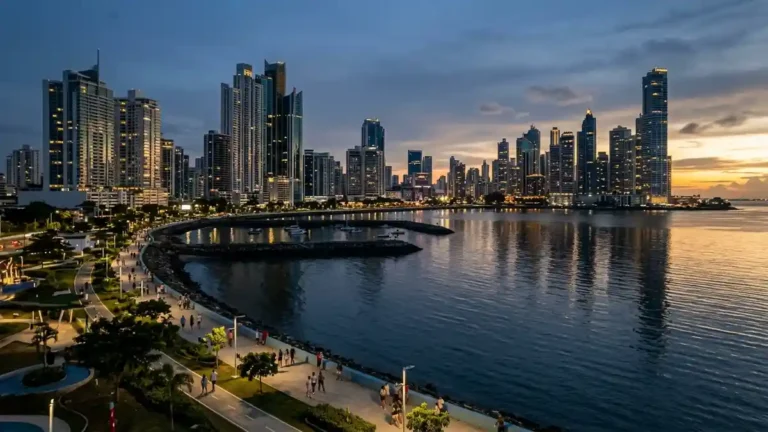
The Panama EU tax haven list saga looks set to end next week, when European finance ministers meet in Luxembourg on 9 October. Bloomberg reported on 28 September that the Council plans to drop Panama from its blacklist entirely, while Vietnam slides down to the softer grey list.
PANAMA CITY, Panama – 02 October 2026
Panama has sat on the EU’s Annex I list of non-cooperative jurisdictions since February 2020. That’s six years of extra paperwork, awkward bank questions and penalty tax rules for anyone running a Panama company with European clients or shareholders. The government of President José Raúl Mulino made delisting a priority, and its main bargaining chip was Law 526, a new economic substance law passed in May.
Nothing’s final until the ministers vote, though the EU’s own calendar already put the next review of the list in October.
Put your assets beyond reach in 57 jurisdictions.
Pick where you want your company. We handle the filing, the registered agent, and the bank introduction. From US$1,290, done in days, not months.
- Charging-order protection in jurisdictions courts can't pierce
- Zero tax on foreign income in 30+ territories
- Banking options available
- Fixed price. No surprise fees at closing
What’s happening with the Panama EU tax haven list?
EU finance ministers are expected to remove Panama from the Panama EU tax haven list, formally Annex I of the EU list of non-cooperative jurisdictions, at their 9 October 2026 meeting in Luxembourg. Bloomberg first reported the plan on 28 September. Vietnam, added in February, is expected to move to the Annex II grey list instead.
The Council last updated the list on 17 February 2026. That update named ten jurisdictions: American Samoa, Anguilla, Guam, Palau, Panama, Russia, the Turks and Caicos Islands, the US Virgin Islands, Vanuatu and Vietnam.
According to Bloomberg, Finance Minister Felipe Chapman has called the elimination of shell companies a top priority. That’s the quiet part out loud. Brussels wanted proof that Panama’s territorial tax system wouldn’t keep sheltering paper companies with nobody home, and Law 526 is the proof Panama offered.
What does Panama Law 526 economic substance require?
Panama Law 526 economic substance rules, published in Official Gazette No. 30534-B on 28 May 2026, tax passive foreign-source income of multinational group entities at 15% unless they can prove real activity in Panama. The rules apply from fiscal year 2027. Dividends, interest, royalties, capital gains and rental income are all covered.
To qualify for the old 0% treatment, a covered entity has to show three things, according to KPMG Panama’s summary of the law: qualified, paid staff and suitable premises in Panama, strategic decisions taken in the country, and local operating costs that match the income. Maritime businesses and regulated financial entities are carved out.
| Issue | Today (Annex I) | After expected 9 Oct delisting | From fiscal year 2027 |
|---|---|---|---|
| Panama EU tax haven list status | Blacklisted since Feb 2020 | Removed (pending Council vote) | Subject to EU’s twice-yearly reviews |
| EU defensive tax measures on payments to Panama | Apply (withholding, non-deductibility, CFC) | Should be switched off as member states update rules | Off, unless relisted |
| Foreign passive income, multinational group entity without substance | 0% (territorial) | 0% (territorial) | 15% under Law 526 |
| Foreign passive income, group entity with Panama substance | 0% | 0% | 0% |
| Annual substance evidence with tax return | No | No | Yes |
Who counts as a “multinational group” matters a lot here. The law defines it as two or more entities linked by ownership or control and tax resident in different countries. A lone Panama company owned by one individual with nothing else may sit outside it. Add a Delaware LLC or a Hong Kong trading company under the same owner, and you may well be inside. This is where people get burned. Get advice on your specific chart before you assume either way.
Why does the EU blacklist matter for a Panama company?
The EU blacklist matters because member states must apply defensive tax measures to listed jurisdictions. Payments from an EU business to a Panama company can face withholding tax, lose their tax deduction or trigger controlled foreign company rules. Delisting at the October 2026 ECOFIN should remove that penalty layer for Panama entities trading with Europe.
The European Commission also ties the list into reporting. Under the DAC6 rules, cross-border arrangements involving deductible payments to a blacklisted recipient are reportable.
We’ve seen the real cost of this up close. Clients using a Panama S.A. for consulting work with German or Dutch customers often found the customer’s finance team simply refused to pay the invoice, or demanded a long questionnaire first. The friction usually cost more than the tax. Banks behaved the same way, which is why the FATF grey list and the EU list together have shaped where offshore money actually moves.
Who’s affected by the Panama EU tax haven list change?
Three groups gain most from Panama’s exit: owners of Panama companies invoicing EU customers, EU residents holding Panama structures, and Panama private interest foundations used for estate planning. Each faces fewer defensive measures and less bank friction, though Law 526 adds a substance test for group entities from 2027.
Foundation holders should pay attention. A Panama private interest foundation is a popular wealth-holding vehicle, and its reputation has suffered from the listing. If your foundation sits on top of operating companies in several countries, it may now be part of a multinational group for Law 526 purposes. It’s worth comparing it against other trusts and foundations before the 2027 rules land.
One more pattern we see over and over: people pick a jurisdiction because it’s cheap on paper, then pay for it every year in compliance headaches. Panama getting off the list fixes some of that. It doesn’t make a thin company with no staff bulletproof, and banks will keep asking where the decisions get made. If you’re weighing where to put a holding company, our team handles offshore company formation across dozens of jurisdictions, and Panama is back in the running for EU-facing clients.
Panama’s residency side is moving too. Its investor visa recently got pricier, as we covered in our report on the Panama residency by investment resale minimum rising to $500K.
Panama EU Tax Haven List: Frequently Asked Questions
When will Panama be removed from the EU tax haven list?
How long has Panama been on the EU tax haven list?
Does Panama Law 526 end Panama’s territorial tax system?
Which countries remain on the EU blacklist after October 2026?
Is a Panama company a good choice once Panama leaves the EU tax haven list?
Want the bigger picture on offshore structures after the delisting? Browse our latest coverage in the offshore companies section.
Sources and References
- Council of the European Union, Taxation: Council updates the EU list of non-cooperative jurisdictions for tax purposes (17 February 2026)
- European Commission, Taxation and Customs Union, EU updates list of non-cooperative tax jurisdictions
- Bloomberg Tax, Vietnam, Panama to Be Removed From EU Tax Haven Blacklist
- KPMG Panama, Se promulga la Ley No. 526 de 2026 sobre Sustancia Económica para Rentas Pasivas de Fuente Extranjera
- RSM Panama, Ley 526 de Sustancia Económica en Panamá: lo que su empresa debe saber antes del 2027