The FATF grey list just got two new names, and if you bank across borders, that should grab your attention. On 19 June 2026, the Financial Action Task Force added Iraq and Bosnia and Herzegovina to its list of jurisdictions under increased monitoring, while waving Algeria and Namibia off after they cleaned up their action plans. The list now sits at 22 countries.
This was the last plenary under the Mexican Presidency of Elisa de Anda Madrazo, and the timing matters. On 1 July 2026 the United Kingdom takes the gavel, and fraud is at the top of its agenda. For anyone holding offshore accounts, structuring through a foreign company, or planning a move, a grey-list shuffle is never just bureaucratic housekeeping. It changes how banks treat your money.
PARIS, France — 23 June 2026
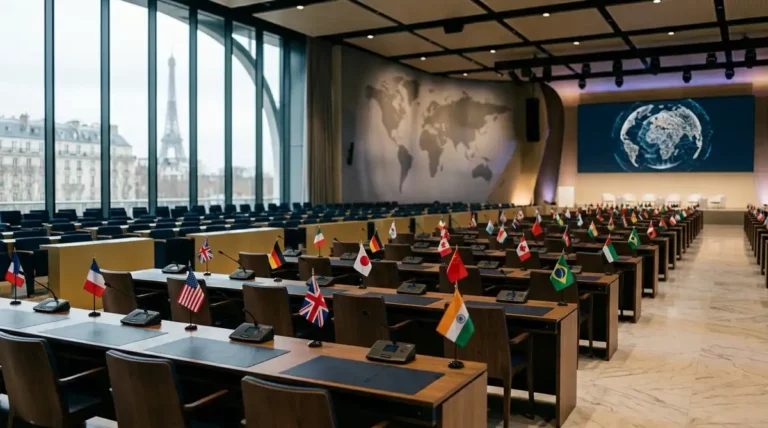
Delegates from more than 200 jurisdictions met in Paris from 17 to 19 June. They adopted mutual evaluation reports for Canada and Türkiye and signed off on fresh guidance for cross-border payment transparency. The headline most people care about, though, is always the same one. Which countries went on the list, and which got off.
Put your assets beyond reach in 57 jurisdictions.
Pick where you want your company. We handle the filing, the registered agent, and the bank introduction. From US$1,290, done in days, not months.
- Charging-order protection in jurisdictions courts can't pierce
- Zero tax on foreign income in 30+ territories
- Banking options available
- Fixed price. No surprise fees at closing
What the FATF grey list actually is
Let’s be blunt about the terminology, because the headlines muddle it. The FATF grey list is the polite name for “jurisdictions under increased monitoring.” A country lands there when the Financial Action Task Force decides its defences against money laundering, terrorist financing, and proliferation financing have strategic gaps. The country then commits to an action plan with deadlines, and FATF watches.
It is not the blacklist. That shorter, nastier list, formally “high-risk jurisdictions subject to a call for action,” stayed unchanged in June 2026: Iran, North Korea, and Myanmar. Grey is the warning track. Black is the wall.
Here’s the kicker that trips up most people. FATF itself says grey-listing should not trigger blanket de-risking, and it pushes banks toward a risk-based approach rather than dumping every customer with a connection to a listed country. That is the guidance. The reality inside compliance departments is messier, and we will get to why.
Who got added and who got off in June 2026
Two on, two off. The math kept the list flat at 22, but the names carry weight for anyone with exposure to the region. Bosnia and Herzegovina drew its listing after a MONEYVAL review flagged fragmented governance and weak money-laundering investigations. Iraq’s listing reflected thin supervision of banks and non-financial businesses, plus limited asset-recovery muscle.
| Action at June 2026 plenary | Jurisdiction | Why |
|---|---|---|
| Added to grey list | Bosnia and Herzegovina | Fragmented governance, weak ML investigations |
| Added to grey list | Iraq | Weak supervision, limited asset recovery |
| Removed from grey list | Algeria | Completed action plan, on-site visit passed |
| Removed from grey list | Namibia | Completed action plan, on-site visit passed |
| Blacklist (unchanged) | Iran, North Korea, Myanmar | Serious, unresolved strategic deficiencies |
Algeria and Namibia earned their exits the hard way, by finishing their action plans and passing on-site inspections. Algeria keeps working with MENAFATF and Namibia with ESAAMLG to hold the line. Getting off the list is real progress, but the banking benefits lag the announcement by months, because internal risk models do not refresh overnight.
The full FATF grey list: all 22 jurisdictions in June 2026
Here is the complete roster of countries on the FATF grey list after the June 2026 plenary, with the date each made its high-level political commitment and where it stands now. A few are circling the exit. Bulgaria, Côte d’Ivoire, the Democratic Republic of the Congo, and Monaco were all judged to have substantially finished their action plans and are awaiting on-site visits. Others have blown past their deadlines with work still outstanding.
| # | Jurisdiction | On the list since | Status (June 2026) |
|---|---|---|---|
| 1 | Angola | October 2024 | Monitoring ongoing |
| 2 | Bolivia | June 2025 | Monitoring ongoing |
| 3 | Bosnia and Herzegovina | June 2026 | Added this plenary |
| 4 | Bulgaria | October 2023 | Near exit, on-site pending |
| 5 | Cameroon | June 2023 | Deadlines expired, work remains |
| 6 | Côte d’Ivoire | October 2024 | Near exit, on-site pending |
| 7 | Democratic Republic of the Congo | October 2022 | Near exit, on-site pending |
| 8 | Haiti | June 2021 | Deadlines expired, work remains |
| 9 | Iraq | June 2026 | Added this plenary |
| 10 | Kenya | February 2024 | Monitoring ongoing |
| 11 | Kuwait | February 2026 | Monitoring ongoing |
| 12 | Lao PDR | February 2025 | Monitoring ongoing |
| 13 | Lebanon | October 2024 | Monitoring ongoing |
| 14 | Monaco | June 2024 | Near exit, on-site pending |
| 15 | Nepal | February 2025 | Monitoring ongoing |
| 16 | Papua New Guinea | February 2026 | Monitoring ongoing |
| 17 | South Sudan | June 2021 | Deadlines expired, work remains |
| 18 | Syria | February 2010 | Action plan met, on-site blocked by security |
| 19 | Venezuela | June 2024 | Monitoring ongoing |
| 20 | Vietnam | June 2023 | Deadlines expired, work remains |
| 21 | Virgin Islands (UK) | June 2025 | Monitoring ongoing |
| 22 | Yemen | February 2010 | Action plan met, on-site blocked by security |
Two names on that list deserve a flag for offshore planners. Monaco, a banking hub that has been near the exit for a while, and the Virgin Islands (UK), a workhorse jurisdiction for offshore companies. If your structure runs through either, a compliance officer somewhere is already applying extra scrutiny, even though Monaco looks set to graduate soon.
How FATF grey list status hits your bank accounts
This is where it stops being trivia. When a country joins the FATF grey list, correspondent banks and retail banks recalibrate. They apply enhanced due diligence to clients and companies with ties to that jurisdiction. Wires get held for review. Account opening slows to a crawl. In the worst cases, a bank decides the relationship is not worth the compliance cost and closes the account outright. That practice, killing customers wholesale instead of assessing them individually, is exactly the bank de-risking problem that has hammered small jurisdictions for years.
The numbers don’t lie. A grey-listed economy typically sees banking friction spike, even though FATF never asked banks to slam the door. If your offshore structure routes through, or even just touches, a newly listed country, your bank may treat the whole arrangement as higher risk, whether you are a clean, compliant investor or not. The flag does not distinguish.
So what is the defensible play? Redundancy and clean jurisdictions. A non-resident US bank account paired with a US LLC sits outside the grey-list drama entirely, because the United States is a FATF member in good standing. Spreading banking across two or three stable jurisdictions means one compliance tantrum never freezes your entire financial life.
What the UK Presidency signals for 2026 and beyond
The handover matters as much as the list. Incoming President Giles Thomson laid out UK priorities from 1 July 2026: a harder international response to fraud, stronger risk-based supervision, and more public-private information sharing. India’s Vivek Aggarwal steps in as Vice-President. Translation for the rest of us, more data flowing between banks and governments, and a sharper focus on payment transparency under the strengthened Recommendation 16.
The plenary also greenlit new work on underground banking and hawala networks, plus a fresh update on virtual assets. Pair that with the EU’s CRS 2.0 and crypto reporting rollout and the direction is obvious. The era of quiet, low-scrutiny offshore banking is closing. Structuring openly and compliantly, through stable jurisdictions with proper beneficial ownership records, is the only version of this game with a long future.
What is the FATF grey list?
Which countries were added to the FATF grey list in June 2026?
Does FATF grey list status mean banks will close my account?
Is the FATF grey list the same as the blacklist?
How does the FATF grey list affect offshore banking strategy?
Two countries on, two off, list still at 22. On paper, June 2026 looks like a wash. It is not. Every cycle nudges the banking system toward tighter scrutiny, and the incoming UK Presidency has made fraud and information sharing its headline priorities. That ship has sailed for anyone hoping offshore banking stays quiet and low-friction. The answer is not to hide. It is to structure cleanly, bank where FATF rules are respected, and keep a backup so a single headline never controls access to your own cash. For more, read our guides on surviving bank de-risking and opening a non-resident US bank account.
Sources and References
- Financial Action Task Force, Outcomes FATF Plenary, 17-19 June 2026
- Financial Action Task Force, Jurisdictions under Increased Monitoring, 19 June 2026
- Financial Action Task Force, High-Risk Jurisdictions subject to a Call for Action, 19 June 2026
- Reuters, Global financial crime watchdog FATF adds Iraq and Bosnia to grey list (19 June 2026)