
In Monaco vs Italy, Monaco wins on tax: it charges residents no income tax at all, apart from French nationals. Italy taxes residents on worldwide income at up to 43%, but sells new arrivals a €300,000-a-year flat tax on foreign income and offers foreign pensioners 7% in small southern towns.
They sit a short drive apart on the same coast. Monaco residency means a flat in a 208-hectare city-state and a bank willing to vouch for you. Italy residency opens a country of 59 million people and EU membership, with a tax bill that depends on which regime you pick.
We checked every figure below against government sources and established news reports at the end of October 2026.
Put your assets beyond reach in 57 jurisdictions.
Pick where you want your company. We handle the filing, the registered agent, and the bank introduction. From US$1,290, done in days, not months.
- Charging-order protection in jurisdictions courts can't pierce
- Zero tax on foreign income in 30+ territories
- Banking options available
- Fixed price. No surprise fees at closing
Monaco vs Italy at a Glance
These rows decide most moves. Each is explained below.
| Factor | 🇲🇨 Monaco | 🇮🇹 Italy |
|---|---|---|
| Personal income tax | None (French nationals excepted) | 23%, 33% and 43%, plus regional and municipal surcharges |
| Foreign income of residents | Not taxed | Taxed, unless you opt for a special regime |
| Flat tax for new residents | Not needed | €300,000 a year on foreign income (moves from 2026), €50,000 per family member |
| Pensioner regime | Not needed | 7% on foreign income for 9 years in qualifying southern towns |
| Dividends, interest, capital gains | Not taxed | 26% (12.5% on Italian government bonds) |
| Wealth taxes | None | No general wealth tax; 0.2% IVAFE on foreign financial assets and 1.06% IVIE on foreign property |
| Inheritance | 0% spouse and children; 8% to 16% for others, on Monaco assets only | 4% spouse and children above €1m each; 6% to 8% for others |
| VAT | 20% | 22% |
| Corporate tax | 25%, only where more than 25% of turnover is outside Monaco | 24% IRES plus 3.9% IRAP |
| Main residence route | Residence permit: home in Monaco plus proof of means | Elective residence (about €31,000 a year passive income), Investor Visa, work, EU registration |
| Citizenship | 10 years after age 18, at the Prince’s discretion | 10 years (4 for EU citizens) |
| Dual nationality on naturalising | Must renounce | Allowed |
| Passport Freedom Index | 2nd of 198 (176 visa-free) | 4th of 198 (186 visa-free) |
| CRS first exchanges | 2018 | 2017 |
Monaco vs Italy Tax: Which Takes Less?
Monaco takes less. It has no personal income tax, no wealth tax and no annual property tax, so salaries, dividends and gains all go untaxed for residents other than French nationals. Italy taxes residents on worldwide income at 23% to 43%, and only its special regimes, a €300,000 flat tax or 7% for pensioners, bring the bill down.
Monaco: nothing on income, with one national exception
The Monaco government’s tax page is short because there’s little to say. No personal income tax has been levied since 1869, and there’s no wealth tax, annual property tax or council tax. The state lives on 20% VAT, property registration duty and its profits tax.
The exception is French nationals: under the 1963 convention, France taxes them as if they still lived in France. The US taxes its citizens wherever they live. Italians have no treaty clause like the French one, but they face a problem at home, covered below.
Inheritance duty only touches assets in Monaco, and spouses and children pay nothing; other heirs pay 8% to 16%.
Italy: high standard rates, three ways round them
An ordinary Italian tax resident pays IRPEF on worldwide income: 23% up to €28,000, 33% to €50,000 (cut from 35% by the 2026 Budget Law) and 43% above, plus regional surcharges of 1.23% to 3.33% and any town surcharge. Investment income pays 26%, foreign holdings 0.2% a year IVAFE and foreign property 1.06% IVIE. Three regimes change that:
- Flat tax for new residents. A fixed €300,000 a year covers foreign income for people who move their tax residence to Italy from 1 January 2026, plus €50,000 for each family member included. You can’t have been Italian tax resident in 9 of the previous 10 years, it lasts up to 15 years, and Italian-source income is taxed normally. Earlier arrivals kept €200,000 or €100,000, as our report on Italy raising the flat tax price explains.
- 7% for foreign pensioners. Draw a foreign pension, move to a qualifying town in the south, and all your foreign income is taxed at 7% for 9 years. The town must be in Sicily, Calabria, Sardinia, Campania, Basilicata, Abruzzo, Molise or Puglia, or in listed earthquake areas, and the Agenzia delle Entrate says the population limit rose from 20,000 to 30,000 from 7 April 2026. Our guide to living in Italy on a single-digit tax rate walks through it.
- Impatriate regime. Qualified workers who haven’t been resident for 3 years are taxed on 50% of their work income (40% with a minor child), up to €600,000, for 5 years.

When does Italy’s flat tax beat ordinary tax?
Let’s be blunt: €300,000 is a lot of tax to prepay. Our own arithmetic, before surcharges, puts the break-even at about €716,000 a year of foreign income taxed at ordinary IRPEF rates. If your foreign income is mostly dividends and gains that would otherwise pay 26%, the flat tax only saves money above roughly €1.15 million a year.
Monaco’s zero has its own price, and it’s housing. Fifteen years of Italy’s flat tax adds up to €4.5 million. At IMSEE’s 2025 average of €57,569 per square metre, that buys about 78 square metres in Monaco. Clients weighing the two usually end up modelling exactly this: a fixed tax bill in a large country against a property bill in a tiny one.
Italians Moving to Monaco: The Tax Residence Presumption
Italians who move to Monaco are presumed by Italian law to remain Italian tax residents. Article 2(2-bis) of Italy’s income tax code applies that presumption to citizens who emigrate to states on a 1999 ministerial list, and Monaco is still on it. The burden falls on the taxpayer to prove a genuine move.
The Agenzia delle Entrate’s copy of the ministerial decree of 4 May 1999 lists Monaco. The two signed a tax information exchange agreement in March 2015, ratified in 2016, but it didn’t take Monaco off the list. In August 2026 ItaliaOggi reported a Cuneo tax court ruling (no. 55/2026) holding that Monaco is still listed and the agreement doesn’t change that.
Since 2024, Italy’s residence test counts physical presence too, and it defines domicile as the place where your personal and family relationships mainly develop. A man who moves to Monaco while his wife and children stay in Milan has a weak case. Italians abroad must also register with AIRE, the register of Italians resident abroad, within 90 days of the move, and fines for late registration have applied since 2024.
None of this stops an Italian from living in Monaco tax-free. The paperwork just has to show a real life there: the home, the days, the family and the tax residence certificate. The Italians we’ve helped settle in Monaco spend more time on that file than on the residence permit.
Getting Residency: Monaco vs Italy
Monaco residency needs a home in Monaco, proof of sufficient means and a clean record, with no minimum investment set in law. Italy offers more routes: elective residence for people with about €31,000 a year of passive income, an Investor Visa from €250,000, work visas, and simple registration for EU citizens.
Monaco: accommodation, a bank attestation and a clean record
The official application page asks for accommodation in Monaco, proof of financial means, a criminal record extract under three months old, and, for applicants living on savings, an attestation from a Monaco bank dated within the last month. Non-EEA nationals need a French long-stay visa first. The government sets no deposit; it says the amount depends on the bank. A Monaco account normally opens in under a month once the bank is satisfied.
The first card is temporary, valid a year, and costs €80. After three years you move to an ordinary card (€100), and after ten to a privileged card (€160). The tax residence certificate is separate: €600 a year, with more than 183 days in Monaco or your main business there.
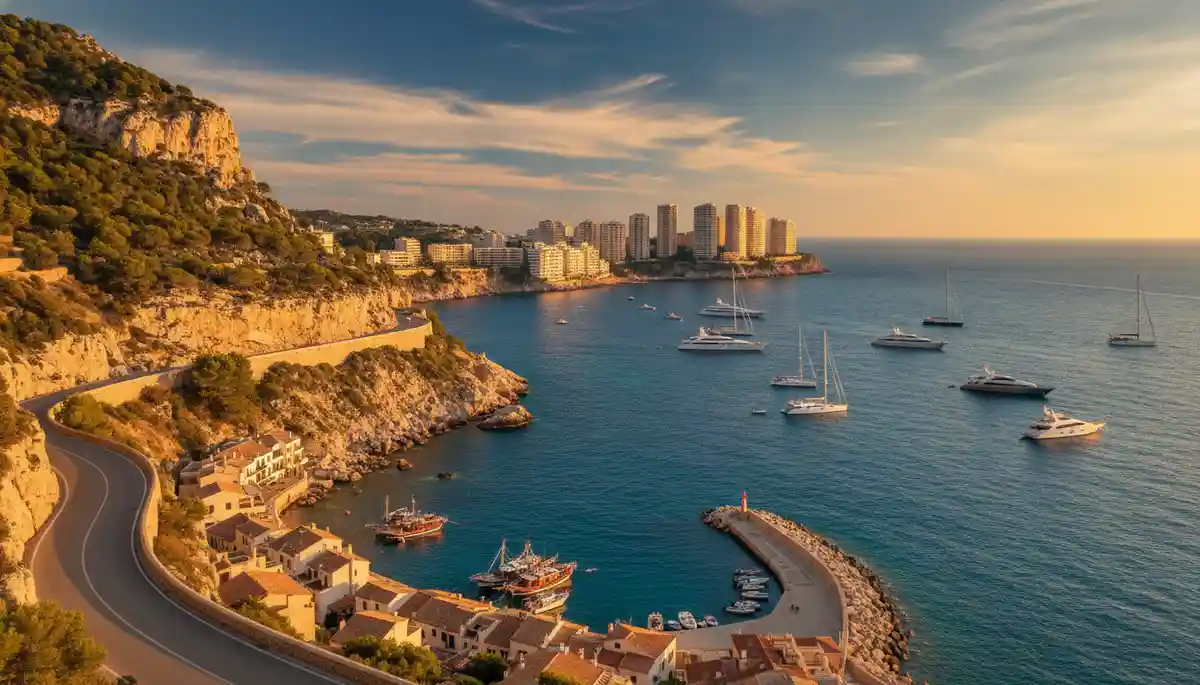
Italy: elective residence, investor visa or EU rights
| Route | Main requirement | Notes |
|---|---|---|
| Elective residence visa | About €31,000 a year of passive income per applicant, plus housing | No work allowed |
| Investor Visa for Italy | €250,000 in an innovative startup, €500,000 in an Italian company, €1m donation or €2m in government bonds | 2-year visa, extendable by 3 years |
| Digital nomad visa | Highly qualified remote worker, income above the consular threshold, housing and insurance | 1-year permit, renewable |
| EU citizens | Register with the town hall after three months, working or with resources and health cover | EU citizens only |
For retirees, elective residence is the usual route, and it pairs naturally with the 7% regime. It counts passive income only, so a salary from a remote job doesn’t qualify.
Monaco vs Italy Passport and Citizenship
Both passports rank near the top of our Passport Freedom Index: Monaco 2nd of 198 with 88.0, Italy 4th with 87.7. Italy’s gives visa-free access to more places, 186 against 176, and lets you keep your other nationality. Monaco’s leads on financial freedom because it taxes no income.
The pillar scores show the trade: Monaco 100 on financial freedom to Italy’s 50, Italy 100 on citizenship security to Monaco’s 75.
Italian citizenship
Non-EU foreigners can apply after 10 years’ legal residence, EU citizens after 4, and spouses of Italians after 2 years’ residence in Italy following the marriage (halved with children). You’ll need B1 Italian, and you keep your existing passport because Italy allows dual nationality. Decree-Law 36/2025 tightened the citizenship-by-descent rules for people born abroad, but descendants of Italians by birth can now naturalise after 2 years’ residence. A June 2025 referendum on citizenship missed its turnout quorum, so the 10-year rule stands.
Monegasque citizenship
Monaco requires 10 years’ residence after age 18, and naturalisation is at the Sovereign Prince’s discretion. You must give up your previous nationality and show you’re exempt from military service at home. For marriages from 1 July 2022, a spouse can declare for Monegasque nationality after 20 years, without renouncing.
Monaco vs Italy Safety and Cost of Living
Both are safe. ISTAT counted 327 homicides in Italy in 2024, 0.55 per 100,000 people, and Italy’s 2023 rate was well below the EU average. Monaco’s police recorded no homicides in 2025 and 1,055 offences, according to their annual review as reported by Monaco Tribune.
Cost is the big gap. IMSEE put Monaco’s average home price at €57,569 per square metre in 2025 across 493 sales; our piece on real estate in Monaco shows what that means for a family flat. Buying costs are modest once you have the money: registration duty is 4.5% for buyers who meet the legal transparency criteria, 7.5% otherwise.
Italy is far cheaper. A resale home from a private seller costs 2% registration tax as a qualifying first home or 9% otherwise, and IMU property tax doesn’t apply to your main home unless it’s a luxury category.

Banking and CRS Reporting
Both report under the Common Reporting Standard, Italy since 2017 and Monaco since 2018. The FATF put Monaco on its grey list in June 2024 and removed it at the October 2026 plenary, according to the US Treasury’s FinCEN. The EU still lists Monaco as a high-risk third country, so EU banks must apply enhanced due diligence until Brussels removes it.
That matters most to Italian residents. An Italian tax resident holding investments at a Monaco bank pays IVAFE at 0.4% a year on them, double the normal 0.2%, because Monaco is on the 1999 list. People on the €300,000 flat tax or the 7% regime are exempt from IVAFE, IVIE and the foreign-asset reporting form altogether.
Company Setup: Monaco vs Italy
Italy is cheaper to start: an SRL needs as little as €1 of capital, fully paid in cash below €10,000. It pays 24% IRES and 3.9% IRAP. Our Italian company formation page covers the setup.
Monaco asks for more: an SARL needs two partners and €15,000, an SAM €150,000 fully paid, and foreign partners need Business Development Agency approval after a 45-day review. Our Monaco company formation service handles that. Since a company with more than 25% of turnover abroad pays 25% profits tax, most residents trade through a company elsewhere.
Monaco or Italy: Which Is Better for You?
Monaco is better if you live on investment income or a business run elsewhere and can afford its housing. Italy is better if you want EU rights, a passport you can hold alongside your own, space and lower living costs, or if you qualify for the 7% pension regime. Our scores reflect that split.
| Liberty Mundo score | 🇲🇨 Monaco | 🇮🇹 Italy |
|---|---|---|
| Tax | 10/10 | 5/10 |
| Residency | 5/10 | 7/10 |
| Lifestyle | 8/10 | 9/10 |
| Business | 5/10 | 5/10 |
| Banking and asset protection | 6/10 | 6/10 |
| Overall | 6.8/10 | 6.4/10 |
Choose Monaco if
- You’d pay more than about €300,000 a year in Italian tax, or you simply want zero
- You can buy or rent in Monaco and a Monaco bank will sign your attestation
- You aren’t French, and if you’re Italian you’re ready to document a full move
- Your heirs are your spouse and children, who pay no Monaco inheritance duty
Choose Italy if
- You’re retiring on a foreign pension and would live in a southern town to pay 7%
- Your foreign income is large enough that €300,000 a year beats ordinary rates
- You want EU residence and a path to an EU passport you can hold with your own
- You have Italian ancestry or an Italian spouse that shortens the wait
Common Mistakes When Comparing Monaco and Italy
- Assuming Italians escape Italian tax just by moving to Monaco. Italian law presumes they’re still resident. The move works with evidence and AIRE registration.
- Quoting €500,000 as Monaco’s official deposit. The government sets no amount and leaves it to the bank. Ask your bank before you sign a lease.
- Using an old flat-tax figure. Plenty of pages still say €100,000. For anyone moving from 2026 it’s €300,000 a year, and Italian-source income stays taxable on top.
- Checking the wrong town list for the 7% regime. The limit is now 30,000 inhabitants and the regime runs 9 years. Plans built on the old 20,000 cap may rule out towns that now qualify.
Frequently Asked Questions: Monaco vs Italy
Is Monaco or Italy better for tax?
Do Italians pay Italian tax if they move to Monaco?
How much is Italy’s flat tax compared with living in Monaco?
How much money do you need to live in Monaco?
Can I retire in Italy and pay 7% tax?
Which passport is stronger, Monaco or Italy?
Can you hold Italian and Monegasque citizenship together?
How long does citizenship take in Monaco vs Italy?
Is Monaco still on the FATF grey list?
Monaco vs Italy: The Bottom Line
Monaco vs Italy isn’t close on tax: Monaco charges nothing on income, and Italy charges a lot unless you buy into its flat tax or retire to a small southern town. Italy wins on space, living costs, EU rights and a passport you can add to your own. Most people who’ve run both sets of numbers already know which of those matters more to them.
If you’re weighing Monaco against its other neighbour, our France vs Monaco comparison covers the French side of the border.
Sources and References
- Government of Monaco, Tax in Monaco
- Government of Monaco, How to apply for a residence permit and Acquiring Monegasque nationality
- Agenzia delle Entrate, Option for new residents (flat tax)
- Agenzia delle Entrate, Optional regime for foreign pensioners
- Agenzia delle Entrate, Ministerial Decree of 4 May 1999 (list of states) and Residence for tax purposes
- Ministry of the Interior (Italy), Italian citizenship by residence
- ISTAT, Homicides: victims and perpetrators, 2024
- US Treasury FinCEN, FATF identifies jurisdictions with anti-money laundering deficiencies, October 2026