
Yes, a non-resident can open a bank account in Mauritius, but expect to meet the bank in person and to hand over a certified passport, recent proof of address, a bank reference letter and an explanation of where your money comes from. Banks such as AfrAsia, Investec and Bank One openly take foreign clients who don’t live on the island, and the interest they pay you is exempt from Mauritian income tax.
Two facts change the picture once you dig in. Mauritius’s deposit insurance scheme doesn’t cover non-residents at all, and every account opened since 1 January 2017 sits inside the Common Reporting Standard. So a Mauritius offshore bank account gives you a hard-currency account in a stable, English-speaking jurisdiction with no tax at source on your interest. It doesn’t give you secrecy, and it doesn’t give you a state guarantee on your balance.
Put your assets beyond reach in 57 jurisdictions.
Pick where you want your company. We handle the filing, the registered agent, and the bank introduction. From US$1,290, done in days, not months.
- Charging-order protection in jurisdictions courts can't pierce
- Zero tax on foreign income in 30+ territories
- Banking options available
- Fixed price. No surprise fees at closing
Can a Non-Resident Open a Bank Account in Mauritius?
A non-resident can open a bank account in Mauritius at several licensed banks, provided they pass the bank’s know-your-customer review. That review normally means a face-to-face meeting, a certified passport, proof of address under three months old, a reference letter from your current bank, a CV and a written explanation of your source of funds and wealth.
The legal framework is simple. Banks hold licences under the Banking Act 2004 and are supervised by the Bank of Mauritius. Nothing in the published rules reserves personal accounts for residents. The friction comes from compliance departments, which decide case by case who they want.
Most of the clients we take to Mauritius already have a reason to be there: a Global Business Company, a property purchase, or a plan to move under one of the island’s residence permits. Banks warm to a foreigner with a visible link to the island far faster than to someone who simply wants a USD account in a new country. If you have no link at all, say so up front and explain the purpose clearly. A vague answer to “why Mauritius?” is the most common reason a file stalls.
Which Banks Open a Mauritius Bank Account for Non-Residents?
The Bank of Mauritius lists 13 banks as members of the Mauritius Deposit Insurance Scheme as at end-May 2026, which is the clearest current roll of licensed banks taking deposits. Five of them publish something useful about foreign or non-resident clients. The others may still take you, but you’ll only find out by asking.
| Bank | What it publishes for non-residents | Source |
|---|---|---|
| AfrAsia Bank | Non-residents must meet the bank’s team in person to clear KYC | AfrAsia |
| Investec Bank (Mauritius) | Published face-to-face checklist for non-resident individuals, including a bank reference letter | Investec |
| Bank One | Private banking onboards high-net-worth individuals, resident and non-resident, with tailor-made pricing | Bank One |
| MauBank | International multi-currency account for individuals and global business companies in USD, EUR, GBP and more | MauBank |
| MCB (Mauritius Commercial Bank) | Foreign currency current and fixed deposit accounts in GBP, USD, EUR, AUD and ZAR, other currencies on request; non-resident eligibility isn’t spelled out | MCB |
The full list of member banks: ABC Banking Corporation, Absa Bank (Mauritius), AfrAsia Bank, Bank One, Bank of Baroda, Banque Patronus, BCP Bank (Mauritius), Investec Bank (Mauritius), MauBank, SBI (Mauritius), SBM Bank (Mauritius), The Mauritius Commercial Bank and Warwyck Private Bank (Bank of Mauritius, MDIS members as at end-May 2026). One name dropped off this year: the Bank of Mauritius revoked Silver Bank’s banking licence on 30 April 2026. Read that date twice if a provider still pitches you a Silver Bank account.
Minimum balances aren’t published for most of these accounts. Private banks quote individually, and the retail banks set their own thresholds for foreign clients. Ask for the minimum and the monthly charge in writing before you fly.
Mauritius Bank Account for Non-Residents: The Documents
A Mauritius bank account for non-residents needs a certified passport, a utility bill or similar proof of address dated within the last three months, a reference letter from your existing bank dated within three months, a CV, and a signed confirmation of the source of your funds and wealth. Expect FATCA and CRS self-certification forms in the same pack.

Investec’s published checklist for non-resident individuals is the most detailed on the island, and it’s a fair guide to what every bank there wants (Investec Bank (Mauritius), Face to Face, Non Resident):
- Valid passport or national ID, original or certified true copy
- Utility bill in your name, no older than three months, showing your home address
- Bank reference letter from a reputable institution in your country of residence, no older than three months
- CV or a short history of your career or business
- Confirmation of source of funds and wealth (a signed letter or email), with documents on request
- Expected origin and destination of money passing through the account
- Application forms, including the FATCA and CRS self-certification
This is where people get burned. Investec accepts certified copies only with a single certification by a lawyer, notary, accountant or similar professional who adds “Certified true copy of the original”, the date, their name, address, phone number and profession. Dual certification isn’t allowed. A notary stamp alone, or a copy certified and then re-certified, gets sent back. Get the wording right first time and you save a week.
The source-of-funds letter carries more weight than people expect. We’ve seen files approved quickly where the client wrote two clear paragraphs (sale of a business in 2024, here’s the completion statement) and files that dragged for a month over a one-line answer. Mauritius compliance teams read these letters closely, so give them a document trail they can follow.
Can You Open a Bank Account in Mauritius Remotely?
Opening a bank account in Mauritius remotely is rare for a new personal client. AfrAsia states that non-residents must meet its team in person to clear KYC, and Investec’s non-resident checklist is built around a face-to-face meeting. Online opening, such as MCB’s foreign currency accounts through Internet Banking, applies once you’re already a registered client.
So budget for a trip to Port Louis or Ebène. Two or three working days on the island is usually enough to sign forms and meet the relationship manager, provided your certified documents arrive before you do. It’s worth asking whether a bank will accept another arrangement, but don’t plan around it.
If you’re incorporating there anyway, you’ll find the bank conversation easier. A Mauritius Global Business Company keeps its main bank account on the island, and the bank meets the directors and the beneficial owner as part of that onboarding. Many clients open the personal account at the same meeting.
Is Mauritius CRS? What Gets Reported
Mauritius is CRS. Banks have treated every account opened on or after 1 January 2017 as a new account under the Common Reporting Standard, and the Mauritius Revenue Authority received its first CRS reports in 2018, covering 2017. Each year the bank reports your balance, interest and identity to the MRA, which passes them to your tax home.

The dates come straight from the MRA’s own notices. The OECD-published guidance notes define new accounts as those opened on or after 1 January 2017 (MRA CRS Guidance Notes), the MRA published its list of reportable jurisdictions for the 2018 reporting year in December 2017, and it extended that first reporting deadline to 31 August 2018 (MRA communiqué, 26 July 2018).
Let’s be blunt: if privacy from your own tax office is the goal, a Mauritius bank account won’t deliver it. Your home government gets an annual data file on you. Readers who need an account that sits outside CRS look at the US instead, because the United States never joined the standard. Our guides to non-CRS countries and the US bank account for non-residents cover that route.
Mauritius also cleaned up its standing with the Financial Action Task Force. At its plenary on 21 October 2021, FATF concluded that Mauritius was no longer subject to increased monitoring (Financial Services Commission). That matters for your outgoing wires. A grey-listed jurisdiction triggers extra checks at correspondent banks, and Mauritius no longer carries that label.
How Mauritius Taxes Interest Paid to Non-Residents
Mauritius doesn’t tax interest paid to a non-resident individual on a balance held at a licensed bank. The Mauritius Revenue Authority lists “interest payable on a balance maintained in a bank holding a banking licence under the Banking Act 2004 by an individual who is not resident in Mauritius” as exempt income. Your home country may still tax it.
That exemption is on the MRA’s exempt income list (MRA, Exempt Income). It’s a cleaner position than Uruguay, where interest paid to non-residents is taxed at source, as our guide to opening a bank account in Uruguay as a non-resident explains.
US citizens should keep two obligations in mind. The IRS taxes Americans on worldwide income wherever they live, so Mauritian interest goes on your US return. And if your foreign accounts together exceed $10,000 at any point in the year, you file an FBAR (IRS, FBAR). The Mauritian exemption doesn’t touch either one.
How Safe Is Money in a Mauritius Bank for a Non-Resident?
A non-resident’s deposits in a Mauritius bank have no deposit insurance. The Mauritius Deposit Insurance Scheme covers up to Rs300,000 per depositor per member bank, but only for individuals resident in Mauritius. The scheme’s own FAQ lists “deposits of non-residents” among the exclusions, along with corporate deposits, domestic and foreign.
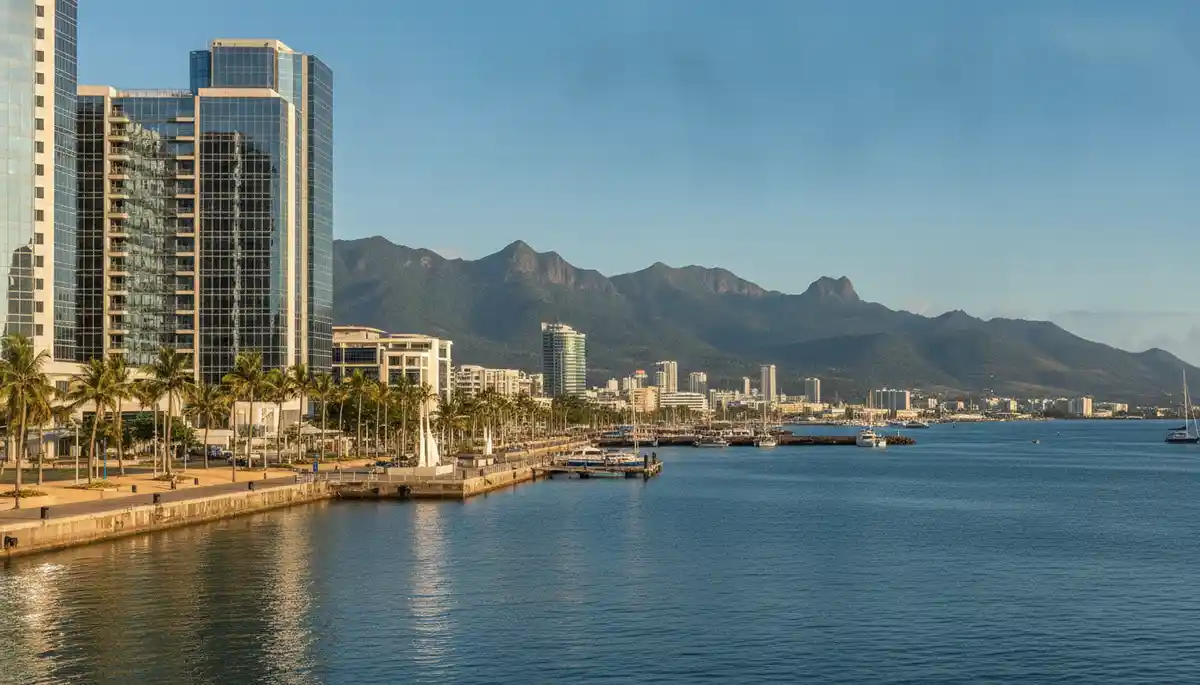
Source: the Bank of Mauritius FAQ on the Mauritius Deposit Insurance Corporation (Bank of Mauritius, MDIC FAQ). The scheme does cover residents’ foreign currency deposits, so the exclusion turns on where you live and has nothing to do with the currency you hold.
Bottom line: your protection is the bank’s own balance sheet. Pick an established name, split larger sums between two banks, and treat any bank that lost its licence recently, as Silver Bank did in April 2026, as a reminder that licences do get pulled. If you later take up residency in Mauritius (the investor Occupation Permit starts from USD 50,000 of business investment), you fall inside the scheme’s definition of a resident depositor.
How to Open a Bank Account in Mauritius as a Non-Resident
Step 1: Pick the bank and confirm it takes your profile. Email two banks with your nationality, country of residence, expected balance and purpose. Ask for the minimum balance, the monthly charge and the current non-resident checklist in writing.
Step 2: Get the documents certified correctly. Have a lawyer, notary or accountant certify your passport and proof of address once, with the full wording the bank asks for. Order the bank reference letter last so it’s under three months old on the day you meet.
Step 3: Write the source-of-funds letter. State where the money came from, when, and how much, and attach the evidence: sale contracts, payslips, dividend statements or tax returns.
Step 4: Send the file ahead and book the meeting. Let the compliance team pre-check the pack, then fly in for the face-to-face KYC meeting and signatures.
Step 5: Fund the account and register for online banking. Make the first transfer from the account named in your source-of-funds letter, then set up internet banking so you can open further currency accounts without another trip.
Common Mistakes Non-Residents Make With Mauritius Banks
- Assuming the account is insured. Non-resident deposits sit outside the Rs300,000 scheme.
- Booking flights before the file is pre-checked. A missing certification line means a second trip.
- Funding from a different account than the one you described. Compliance teams compare the first incoming wire with your letter.
- Expecting privacy from home. Mauritius reports under CRS every year.
- Forming a trust first and then looking for a bank. If you plan to hold a Mauritian company inside a trust, open the company’s bank account while you own the shares personally, then move the shares into the trust and update the bank. Banks onboard a straightforward owner far faster than a fresh trust structure.
Mauritius vs Other Non-Resident Banking Options
Mauritius sits in the middle of the field. It’s harder than Georgia, where a passport and a branch visit usually do it, and easier than Paraguay, where banks want a local cédula. The table uses figures from our own country guides.
| Country | Open without residency? | What the bank wants first | CRS reporting |
|---|---|---|---|
| Mauritius | Yes | In-person KYC, certified documents, bank reference, source of funds | Yes, accounts from 2017 |
| Georgia | Yes | Original passport and a branch visit in Tbilisi | Yes |
| Uruguay | Yes | Branch visit, proof of income; BROU asks new non-residents for a US$5,000 fixed deposit for 181 days | Yes |
| Paraguay | Rarely | A Paraguayan cédula, which comes with residency | Exchanges due to start in 2027 |
| Jersey | Yes, if the bank accepts your country | A minimum balance, for example £25,000 at NatWest International | Yes |
| Isle of Man | Yes, if the bank accepts your country | Residence in a country Lloyds or Santander International accepts | Yes |
Where Mauritius wins is the combination: no tax on your interest, accounts in rand, dollars, euros and sterling, and a full company and residency system on the same island. For a South African moving money offshore, a rand account close to home is useful, and our guide to offshore bank accounts for South Africans covers the rules on their side.
Does a Mauritius Bank Account Make You a Tax Resident?
A Mauritius bank account doesn’t make you a tax resident of Mauritius. Tax residence there depends on where you live and how long you spend on the island, so holding an account, even a large one, changes nothing. You stay a non-resident for banking and tax purposes until you actually move.
If moving is the plan, the account becomes far more useful. The retirement permit for over-50s and the investor routes are set out in our Mauritius residency guide, and the long-term path to a passport is in our guide to a second passport in Mauritius. For a company that trades abroad, a company formed through our incorporation service and banked on the island is the usual next step.
Mauritius Bank Account FAQ
Can a non-resident open a bank account in Mauritius?
Can I open a bank account in Mauritius online?
Is Mauritius CRS compliant?
Is interest on a Mauritius bank account taxed for non-residents?
Are non-resident deposits insured in Mauritius?
Which currencies can I hold in a Mauritius bank account?
What is the minimum deposit for a Mauritius bank account for non-residents?
Do I need a company to open a Mauritius offshore bank account?
Which banks are licensed in Mauritius?
Final Thoughts
So, can a non-resident open a bank account in Mauritius? Yes, and on good terms: no tax on your interest, a choice of hard currencies, and banks that are used to foreign clients. You pay for it with a trip, a carefully certified file, full CRS reporting and no deposit insurance. If that trade suits you, prepare the paperwork properly and the bank meeting is a formality. For the wider picture, start with our guide to offshore bank accounts.
Sources and References
- Bank of Mauritius, Frequently Asked Questions, Mauritius Deposit Insurance Corporation
- Bank of Mauritius, List of MDIS Members as at end-May 2026
- Mauritius Revenue Authority, Exempt Income
- Mauritius Revenue Authority, Implementation of CRS, Guidance Notes (published by the OECD)
- Mauritius Revenue Authority, Communiqué: Extension of CRS reporting deadline, 26 July 2018
- Financial Services Commission Mauritius, FATF and ESAAMLG
- Internal Revenue Service, Report of Foreign Bank and Financial Accounts (FBAR)
- Investec Bank (Mauritius), Face to Face, Non Resident account opening checklist