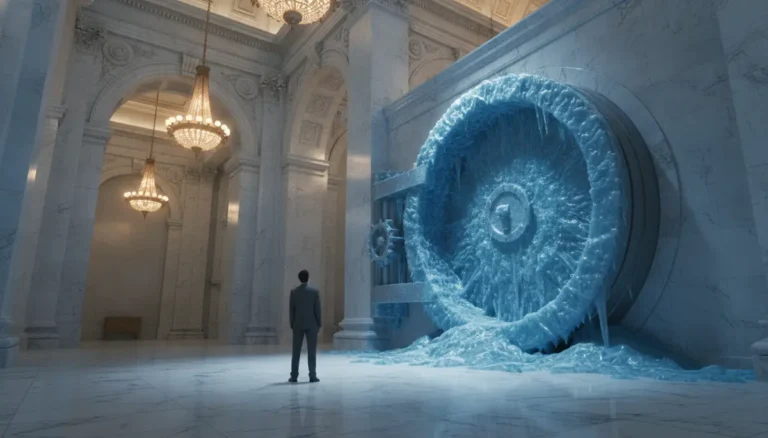
A bank account freeze does not announce itself. It arrives at midnight, between a declined card and a refreshed banking app, and by the time you see the zero balance the decision was made days ago by someone you will never meet. The man in the video below had roughly half a million dollars in his checking account. Then he had nothing. No charges. No hearing. No timeline. Just a line in his transaction history that read “legal order.”
Watch it before you read another word, because everything that follows is about making sure this never happens to you.
Put your assets beyond reach in 57 jurisdictions.
Pick where you want your company. We handle the filing, the registered agent, and the bank introduction. From US$1,290, done in days, not months.
- Charging-order protection in jurisdictions courts can't pierce
- Zero tax on foreign income in 30+ territories
- Banking options available
- Fixed price. No surprise fees at closing
What Actually Happened in This Video
Strip away the politics, whoever the speaker is and whatever you think of him, and look at the mechanics. That is where the lesson lives.
He checks his email one night and sees a card declined for a routine subscription. Odd, but hardly alarming. He opens his banking app. Checking account: zero. The day before it held roughly $500,000. He assumes a glitch, refreshes, reinstalls, nothing. Then he finds it in the transaction history: a legal order that subtracted his entire balance and froze both credit cards in the same stroke.
He calls the bank. The bank calls its legal department. The answer comes back: “Your account is under review, and we can give you no other information.” He calls every day, multiple times a day, for more than two weeks. On roughly day 15 the bank finally offers its version of good news: three phone numbers for US attorneys at the Department of Justice. That was the update. Not your money is coming back. Not here is what you are accused of. Just here is the agency that took it, feel free to call.
His lawyer’s assessment, in his telling, was brutally simple: they can take your money, they do not need a reason, they can keep it as long as they want, and they do not have to give it back.
Notice what never happened in that story. No judge heard his side before the money moved. No charge sheet was filed. No clock started ticking in his favor. One signature from a bureaucrat he will never meet outweighed every dollar he had ever earned. And here’s the kicker: the bank, the institution he trusted with his life savings, was legally conscripted against him and gagged from telling him why.
Can the Government Freeze Your Bank Account Without Warning?
Yes. In the United States and most Western countries, the government can freeze your bank account without warning, without a criminal charge, and without a hearing. Seizure warrants, restraining orders, and agency directives are served on the bank, not on you. The account holder typically discovers the bank account freeze only when a card declines or a balance reads zero.
The machinery behind that answer was built in plain sight. Anti-money-laundering rules deputized every bank as a surveillance outpost decades ago, and the Patriot Act supercharged the whole apparatus after 2001. Your banker is required to report “suspicious” activity in secret, is forbidden from telling you a report was filed, and will comply with a freeze order in minutes because the penalty for hesitating lands on the bank, not on the agency that sent it.
Think about the incentives for a moment. The bank faces ruin if it resists and loses nothing if it complies. The agency faces no penalty for freezing first and investigating later. The only party with everything at stake, you, is the only party with no seat at the table. A system with those incentives does not need villains to produce outcomes like the one in the video. It produces them automatically, the way water runs downhill.
We see the aftermath of that machinery regularly. Most people who contact us after a freeze or a debanking event say some version of the same sentence: “I always assumed there would be a warning.” There is never a warning. The warning is the story you just watched, and the time to act on it is while your app still shows a balance.

Civil Asset Forfeiture: Guilty Until You Prove Otherwise
Civil asset forfeiture lets American law enforcement take cash, cars, and bank balances without convicting anyone of a crime. The proceeding targets the property, not the person, so constitutional protections barely apply. Since 2000, US federal and state governments have forfeited at least $68.8 billion this way, according to the Institute for Justice, and the true figure is higher because many states do not fully report.
Read that again. Not $68.8 billion from convicted criminals. $68.8 billion from people, most of whom were never convicted of anything, through cases with names like United States v. $124,700 in U.S. Currency. The government sues your money. Your money, being money, mounts a poor defense.
The dirty secret of asset forfeiture is that it is engineered to make fighting back irrational. In the 21 states that publish data, half of all currency forfeitures are worth less than $1,300. Hiring a lawyer to contest a seizure costs multiples of that. So the rational move is to walk away, which is precisely the point. The agencies keep the proceeds, often routed through the Department of Justice’s own Assets Forfeiture Fund, which means the people deciding whether to seize your property have a direct budgetary stake in seizing it. In any other context we would call that what it is: a protection racket with a flag on the wall.
Let’s be blunt about the principle at stake. Property either belongs to you or it belongs to whoever holds power over the ledger. There is no third option. A right you must beg to have restored, at your own expense, on the state’s timeline, was never a right. It was a permission slip.
This Is Not an American Problem. Any Government Can Do It
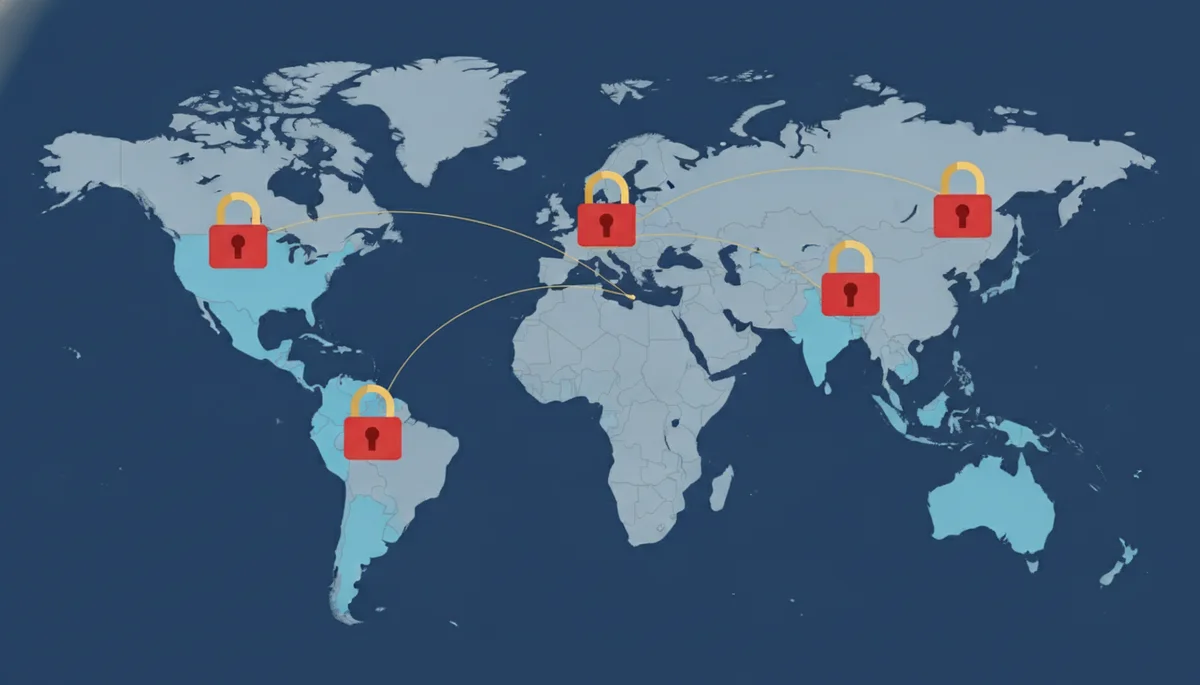
The comfortable assumption is that account freezes are for other countries, the Russias and Venezuelas of the world. The record from the last 13 years says otherwise. The table below is worth more than a thousand words of reassurance from your bank’s compliance department.
| Country | Year | What happened | Legal process before money was touched |
|---|---|---|---|
| United States | Ongoing | At least $68.8 billion forfeited since 2000 via civil asset forfeiture, no conviction required | None. Property is seized first; owner must sue to recover |
| Cyprus | 2013 | Bank of Cyprus depositors lost 47.5% of balances above EUR 100,000 in an overnight bail-in | None for depositors. Terms set by government and creditors while banks were closed |
| Canada | 2022 | At least 257 accounts frozen (about CA$7.8 million) under the Emergencies Act over protest donations | No court order. Banks froze accounts from RCMP lists; courts later ruled the invocation unreasonable |
| United Kingdom | 2023 | A major private bank closed a prominent politician’s accounts, with internal documents citing his views | None. Regulators later found serious failings, after the fact |
Canada deserves a closer look because it demolishes the “due process will save you” argument so cleanly. In February 2022, banks froze at least 257 accounts holding roughly CA$7.8 million, based on lists supplied by police, with no court order anywhere in the chain. Ordinary people who donated a few hundred dollars to a protest found themselves locked out of their own payroll deposits. Two years later, a federal court ruled the whole invocation unreasonable and a violation of the Charter, a finding upheld on appeal. A complete vindication, and completely useless to anyone who needed to buy groceries in February 2022. The freeze was instant. The justice took four years and changed nothing about the weeks the money was gone.
Cyprus is the other bookend. Depositors there did nothing at all, not even donate to the wrong cause. They simply kept more than EUR 100,000 in the wrong bank in a country whose government had overspent. One weekend in 2013 the banks did not open, and when they did, 47.5% of large deposits at the Bank of Cyprus had been converted into shares of a broken bank. The politicians called it a bail-in, which is a lovely word for reaching into private accounts and taking what the state’s own failures required.
Different countries, different pretexts, same architecture: the money moved first, and the arguments happened later, if ever. When capital controls return in earnest, and history says they always return, that architecture is already built, tested, and waiting.
Why You Effectively Never Get the Money Back
A frozen or seized balance rarely comes back whole because the burden of proof is reversed. The government does not have to prove you did anything wrong; you have to prove the money is innocent, at your own cost, in the government’s forum, on the government’s schedule. Many owners spend more recovering funds than the funds are worth, so most never try.
Sit with the asymmetry. To freeze your account, an agency spends 20 minutes drafting an order. To unfreeze it, you spend months or years, tens of thousands in legal fees, and you do it with no access to the very money you would use to fund the fight. Even a total victory usually means getting back your own money, without interest, without compensation for the business you lost, and without so much as an apology. The Canadian truckers won in court. The Cypriot depositors litigated for a decade and mostly lost. The man in the video was told, by his own lawyer, that there was nothing to file and no one to sue.
That is not a malfunctioning legal system. That is the system functioning exactly as designed, because the entity that writes the rules, employs the referees, and profits from the seizure is the same entity you are asking for your money back. Expecting neutrality from that arrangement is like expecting the house to audit its own casino. The illusion of banking privacy and the illusion of banking security die at the same moment, usually around 11pm on the night your card declines.
The lesson is not “hire a better lawyer.” The lesson is that recourse after the fact is a mirage, so the entire game is played before the freeze. Structure beats litigation. Every single time.
The Offshore Bank Account: Insurance Against the Stroke of a Pen
An offshore bank account is simply an account held in a country where you do not live. Its protective power is jurisdictional: a domestic freeze order binds banks under your home government’s authority, and a bank in Singapore, Switzerland, or Panama is not one of them. Reaching money abroad requires courts and treaties, which restores the due process a domestic bank account freeze skips.
This is the entire strategy in one sentence: keep your money in more than one legal system, so that no single official’s signature can touch all of it. Not hiding money. Not evading taxes. Diversifying jurisdiction, the same way you would never hold your entire portfolio in one stock. Countries are riskier than stocks; stocks cannot arrest your checking account.
A domestic freeze order hits everything inside the fence in minutes. Reaching an account in another sovereign country is a different sport entirely. A government must ask a foreign court, under a treaty, with actual evidence, and the foreign judge owes your home bureaucracy nothing. The process takes months or years instead of minutes, and it fails unless there is a real case. In other words, moving money offshore does not make you untouchable. It makes the state do what it was always supposed to do: prove it.
One client came to us after a compliance flag froze his domestic business account for six weeks over a perfectly legal transaction. Nothing came of the review, but payroll nearly bounced twice while it dragged on. What struck us was his comment afterward: the offshore account he had opened “just in case” two years earlier carried the company through, and it was the cheapest insurance he had ever bought. That pattern repeats constantly. Nobody who diversifies ever regrets it; the only regret we hear is the timing, and the timing is always “I wish I’d done it sooner.”
Where should the money go? The honest answer depends on your citizenship, your business, and your risk profile, which is why we walk through the top offshore banking jurisdictions in a separate guide. The short version: Singapore for stability and world-class banking, Switzerland for centuries of institutional memory about protecting depositors, and Panama for practical, accessible accounts in a territorial-tax hub. For business owners, pairing an account with a Nevis LLC or a US LLC structure adds a corporate layer between your name and the balance.
And the deeper play goes beyond banking. Money answers to the jurisdiction it sits in, but you answer to the jurisdiction you sit in. A second passport or a backup residency does for your person what the offshore account does for your cash. Governments know this, which is why they keep so many ways to revoke your passport on the books. A document issued by a second country is the one they cannot cancel.

How to Open an Offshore Bank Account Before You Need It
Opening an offshore bank account takes five steps: pick a jurisdiction with strong rule of law, choose remote or in-person onboarding, prepare identity and source-of-funds documents, fund the account from your existing bank, and file your home country’s reporting forms. Budget two to six weeks from application to active account.
Step 1: Pick your jurisdiction. Optimize for rule of law and banking stability, not secrecy. Secrecy is largely dead anyway under automatic information exchange, and there are legal ways to structure around CRS overreach that do not depend on hiding. Singapore, Switzerland, Liechtenstein, and Panama all serve different profiles.
Step 2: Choose your onboarding route. Some banks open accounts remotely; the stronger institutions often want a visit or an introduction. An introduction through an established intermediary routinely turns a rejection into an approval, because the bank is pricing the risk of an unknown applicant, not judging your character.
Step 3: Prepare your documents. Passport, proof of address, and source-of-funds evidence: tax returns, sale contracts, payslips, or statements. The step nobody warns you about is document freshness. Banks routinely reject utility bills older than 90 days, and an apostille, if required, can eat two or three weeks on its own. Start the paperwork before the bank asks.
Step 4: Fund the account. Wire from your existing domestic account in a clean, documented transfer. A sensible starting allocation for most people is three to twelve months of living expenses held offshore, enough to function indefinitely if everything at home froze tomorrow.
Step 5: File your reporting forms. US persons file FBAR (FinCEN Form 114) once foreign accounts exceed $10,000 in aggregate, plus Form 8938 where thresholds apply. Other countries have equivalents. File them. The account’s protection comes from jurisdiction, not concealment, and a fully declared account protects you just as well while keeping you bulletproof on compliance.
Common Mistakes That Leave You Exposed
The bottom line is that most people who get hurt by a bank account freeze made one of four unforced errors, and every one of them is avoidable.
| Mistake | Why it fails | What to do instead |
|---|---|---|
| Waiting for a warning sign | Freezes arrive without notice by design; the first symptom is a dead card | Open the offshore bank account while everything is boring and normal |
| Keeping 100% of cash in one country | One signature reaches every domestic account simultaneously, including “different” banks | Split across two or more jurisdictions so no single order touches it all |
| Confusing offshore with hiding | Undeclared accounts create real criminal exposure and forfeit the moral high ground | Declare everything; jurisdiction, not secrecy, is the protection |
| Stopping at a personal account | Personal balances are the easiest target for orders and creditors alike | Add a corporate or trust layer through proper asset protection planning |
There is a fifth mistake worth its own paragraph: assuming your good behavior protects you. The Canadian donors broke no law. The Cypriot savers broke no law. The regulators who reviewed the UK debanking scandal found the customer’s politics in the bank’s own paperwork. Compliance with the rules is not a defense when the rules themselves are the weapon. Plan for the government you might get, not the one you have. If that sounds paranoid, so did “they might freeze protest donors’ accounts” in January 2022. Absolute lunacy, right up until it was policy.
Frequently Asked Questions
Can the government freeze your bank account without a court order?
How long can a bank account freeze last?
Is civil asset forfeiture legal even if I am never charged with a crime?
Is it legal to have an offshore bank account?
Can the US government freeze an offshore bank account?
How much money should I keep offshore?
Did Canada really freeze bank accounts over protest donations?
What happened to depositors in Cyprus in 2013?
Will an offshore account protect me from taxes?
What is the fastest first step if I am worried about a bank account freeze?
Final Thoughts: Structure Beats Hope
The man in the video learned the true nature of his relationship with the banking system in a single evening: every dollar in a domestic account exists at the pleasure of whoever holds the pen. Most people never learn it, not because it is not true for them, but because the pen has not pointed their way yet. That is not safety. That is luck, and luck is not a plan.
The remedy costs a few weeks of paperwork and asks nothing illegal, nothing hidden, nothing radical. Keep some of your money where a domestic signature cannot reach it, and the worst night of the video becomes, for you, an inconvenience instead of a catastrophe. Start with the five moves that make sure a frozen account never ruins you, and if you want the full playbook for money the state cannot casually touch, read our guide to preparing before capital controls arrive. The clock is ticking on the boring, quiet window in which all of this is easy. Use it.
Sources and References
- House of Commons of Canada, Standing Committee on Finance, Report on the Emergency Economic Measures Order: accounts frozen and total value
- CBC News, Federal Court ruling: Emergencies Act use was unreasonable and violated the Charter
- Institute for Justice, Policing for Profit: civil forfeiture revenue and median seizure data
- US Department of Justice, Asset Forfeiture Program and Assets Forfeiture Fund
- BBC News, Bank of Cyprus large depositors face losses in 2013 bail-in
- BBC News, UK regulator findings on account closures and the Coutts debanking affair