
Cyprus is the easiest country to get permanent residency in Europe if you can invest. A €300,000 new home and €50,000 a year of foreign income get you a permanent permit in about two months. Malta also grants permanent residence on approval, for a much bigger fee. Poland hands it straight to people with Polish ancestry, with no investment at all.
Everywhere else, the honest answer is five years. Under the EU’s long-term resident rules you hold a temporary permit for half a decade before anything permanent is on the table, and most national schemes copy that clock. So the real question is which door you can walk through, and what it costs to skip the queue.
Put your assets beyond reach in 57 jurisdictions.
Pick where you want your company. We handle the filing, the registered agent, and the bank introduction. From US$1,290, done in days, not months.
- Charging-order protection in jurisdictions courts can't pierce
- Zero tax on foreign income in 30+ territories
- Banking options available
- Fixed price. No surprise fees at closing
What Is the Easiest Country to Get Permanent Residency in Europe?
The easiest country to get permanent residency in Europe is Cyprus, under Regulation 6(2) of its Aliens and Immigration Regulations. You buy a new home worth at least €300,000 plus VAT and show €50,000 a year of income from abroad. Pay the €500 fee and you get an indefinite permit without living there first.
“Easiest” depends on what you bring to the table, though. Money, ancestry and a job offer each open a different door. Here’s how the realistic options line up.
| Route | Who it suits | Main requirement | Wait before permanent status |
|---|---|---|---|
| Cyprus Regulation 6(2) | Investors with passive income | €300,000 property (or company or fund), €50,000 a year income | None, roughly 2 months to approve |
| Malta MPRP | Investors who want an English-speaking Schengen base | €375,000 purchase or €14,000 a year lease, €500,000 assets, €99,500 in fees | None, usually under 3 months to approve |
| Poland, Polish origin | Anyone with Polish ancestry | Polish parent, grandparent or two great-grandparents, plus ties to Polishness | None |
| Germany settlement permit | EU Blue Card holders | Qualified job, pension contributions, German | 21 months with B1 German, 27 months otherwise |
| EU long-term resident status | Everyone else | Legal residence, stable income, health insurance | 5 years |
Sources: Cyprus Civil Registry and Migration Department, Residency Malta Agency, Poznań Provincial Office, Make it in Germany, Directive 2003/109/EC. Figures as of October 2026.
Cyprus Permanent Residency: The Fastest Permanent Residency in Europe by Investment
Cyprus permanent residency under Regulation 6(2) takes a €300,000 investment and €50,000 of annual income, plus €15,000 for a spouse and €10,000 per child. The government charges a €500 application fee and €70 per person for the registration certificate. Approval takes about two months, and the residence right has no end date.
The Civil Registry and Migration Department’s criteria (fourth revision, in force since 2 May 2023) give you four ways to place the €300,000:
- A new house or apartment bought first-hand from a developer, at €300,000 plus VAT. Your payment receipts must add up to €300,000 before VAT.
- Other real estate such as offices, shops or hotel units. Resale property is allowed in this category.
- Share capital in a Cyprus company that has a real operation on the island and at least five employees.
- Units in a Cyprus investment fund (AIF, AIFLNP or RAIF) holding assets in Cyprus.
For the residential route the €50,000 has to come from abroad: pensions, rent, dividends, salary from a foreign employer. You also sign a statement that you won’t take a job in Cyprus. Children under 18 go on your file. Students aged 18 to 25 apply separately, and you show an extra €10,000 a year for each. Parents and adult relatives need their own full investment.
We see the same pattern with most clients who go this route: they never intended to live in Cyprus full-time. They want a permanent EU address in a drawer, and the permit gives them that with a single visit every couple of years. The paperwork that slows files down is almost never the property. It’s proving the foreign income cleanly, with tax returns or an independent accountant’s certificate, in a form the department accepts. Our Cyprus residency service handles that file end to end.
How you lose Cyprus permanent residency
The permit is permanent in name, and three rules can still end it. This is where people get burned:
- You live abroad and don’t take up the permit within a year of approval.
- You stay out of Cyprus for two years straight.
- You obtain permanent residence in another country. Read that one twice if you’re collecting permits.
Selling the property without replacing it with an equal or bigger investment also cancels the permit.
Malta Permanent Residence Programme: Permanent From Day One, at a Price
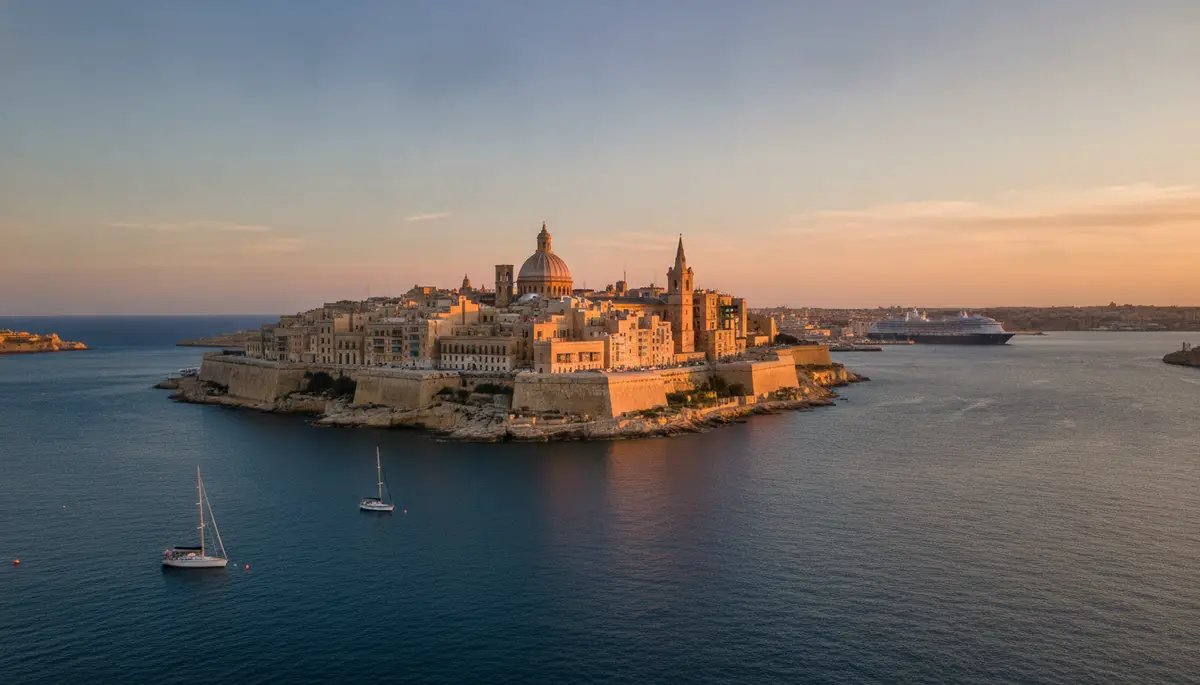
Malta’s Permanent Residence Programme (MPRP) grants permanent residence once approved. You buy a property for €375,000 or lease one for €14,000 a year, and hold €500,000 in assets (€150,000 of it financial) or €650,000 (€75,000 financial). On top of that come a €60,000 administration fee, a €37,000 contribution and a €2,000 donation to a Maltese NGO.
Those figures come straight from the Residency Malta Agency. Each adult dependant other than your spouse adds €7,500, and the residence card costs €500 per person for five years. You keep the qualifying property for at least five years and must hold a residential property in Malta after that.
Add up what’s sunk for a single applicant: €60,000 + €37,000 + €2,000 + €500 = €99,500. In Cyprus the government fees for one person come to €570, and the €300,000 stays in an asset you can sell (replace it if you want to keep the permit). Bottom line: Malta suits you if you plan to live in an English-speaking Schengen country and you’re happy to rent. Cyprus is far cheaper if you just want the status. See our Malta residency page for how the two compare on tax.
Poland: Permanent Residency in Europe Without Any Investment
Poland grants permanent residence directly to people of Polish origin. You qualify if a parent, a grandparent or two great-grandparents held Polish nationality, and you show your ties to Polish culture at an interview. The permit is indefinite and lets you work without a separate work permit.
That’s the description on the Poznań Provincial Office’s foreigners’ portal. Holders of a Pole’s Card (Karta Polaka) can apply too, with no stamp duty, if they intend to settle in Poland for good. Filing is electronic, and fingerprints are taken in person.
Plenty of people with Polish roots never check this. Many would do better chasing Polish citizenship by descent, which can turn the same family records into an EU passport. Permanent residence is the fallback when the citizenship chain breaks somewhere in the family line.
Germany: The Fastest Work Route to Permanent Residence
An EU Blue Card holder in Germany can get a settlement permit after 21 months of qualified work with B1 German, or 27 months with basic A1 German. You also need pension contributions for that period, enough living space, a pass in the “Living in Germany” test and income to cover your costs.
Ordinary skilled workers wait three years, with 36 months of pension contributions and B1 German, according to the government’s Make it in Germany portal. A few highly qualified people, such as scientists with special expertise, can get one with no wait at all. That’s at the authorities’ discretion.
It works on paper. In practice it suits a narrow crowd: salaried professionals happy to live in Germany, pay German tax and learn the language. If you’re running your own business from a laptop, this isn’t your route.

EU Long-Term Resident Status: The Five-Year Default
EU long-term resident status requires five years of legal, continuous residence in one member state, stable income and health insurance. Absences shorter than six consecutive months, and no more than ten months in total, don’t break the five years. The permit you get lasts at least five years. It renews automatically.
Those rules come from Council Directive 2003/109/EC. Denmark and Ireland opted out of the directive and run their own national rules. Once you hold the status, you lose it after 12 consecutive months outside the EU, or after six years away from the country that issued it.
The EU has proposed a recast of the directive to make the status easier to get and keep. As of the Commission’s January 2026 talent recommendation, it was still only a proposal, so plan on today’s five-year rule.
Why most golden visas don’t count
Greece and Portugal both sell residence by investment, and people often assume that means permanent. It doesn’t. The Greek golden visa is a renewable residence permit, and in Portugal you apply for permanent residence after five years of legal residence. They’re excellent tools, especially for Schengen access and a path to citizenship, but they put you on the same five-year clock as everyone else.
Permanent Residency in Europe Versus Tax Residency
Holding permanent residency in a European country doesn’t make you tax resident there, and it doesn’t stop your home country taxing you. Tax residency follows where you spend your time and keep your life, under each country’s own day-count and ties tests.
That gap is useful. A Cyprus permit with one visit every two years leaves your tax residency where it is now. It also cuts the other way: if you move to Malta or Germany full-time, expect to become taxable there.
US citizens are a special case. The IRS taxes Americans on worldwide income wherever they live, and the Foreign Earned Income Exclusion covers only earned income from work. It doesn’t touch pensions, Social Security, 401(k) withdrawals or investment income. A European permit changes none of that.

How to Get Cyprus Permanent Residency: Step by Step
Step 1: Prove your foreign income. Gather tax returns from your country of tax residence, or a certificate from an independent certified accountant, showing €50,000 a year plus the add-ons for your family.
Step 2: Choose and pay for the investment. Buy a new home from a developer, other real estate, Cyprus company shares or fund units worth at least €300,000. Wire the money from abroad and file the sale contract with the Department of Lands and Surveys.
Step 3: Collect clean records. Get criminal record certificates from your country of origin and residence, health insurance, and officially translated and certified civil documents for every family member.
Step 4: File form MIP1. Submit the application with the €500 fee, the non-employment statement and proof of payment. Expect about two months for a decision.
Step 5: Take up the permit and keep it alive. Register within a year of approval, pay €70 per person for the registration certificate, and visit Cyprus at least once every two years.
Common Mistakes With Permanent Residency in Europe
- Treating a golden visa as permanent. Most are renewable temporary permits that still run on the five-year clock.
- Stacking permanent permits. Cyprus cancels its permit if you take permanent residence elsewhere.
- Assuming national PR gives EU-wide rights. A Cyprus or Malta permit lets you live in that country. Moving to work in another member state is a separate application.
- Buying resale in Cyprus by accident. For a house or apartment, only a first sale from a developer qualifies.
- Forgetting the absence rules. Two years away from Cyprus, or 12 straight months outside the EU on long-term resident status, and the permit’s gone.
FAQ: Easiest Country to Get Permanent Residency in Europe
What is the easiest country to get permanent residency in Europe?
Which European countries give permanent residency immediately?
How much does Malta permanent residency cost?
Do I have to live in Cyprus to keep permanent residency?
Is there a permanent residency in Europe without investment?
How long does EU long-term resident status take?
Does permanent residency in Europe let me work in other EU countries?
Is the easiest country to get permanent residency in Europe also the best for taxes?
Final Thoughts on Permanent Residency in Europe
If you have €300,000 to park and income from abroad, Cyprus is the easiest country to get permanent residency in Europe. Malta buys you a nicer place to live for a much bigger bill you won’t get back. If a grandparent carried a Polish passport, check that first, because it may cost you nothing.
For everyone else, pick the country you’d want to live in for five years and start the clock now. Compare the options on our second residency page.
Sources and References
- Cyprus Civil Registry and Migration Department, Immigration Permit criteria under Regulation 6(2), 4th revision (in force 2 May 2023)
- Cyprus Mail, New rules for permanent residency status, more in the pipeline (30 April 2023)
- Residency Malta Agency, Malta Permanent Residence Programme: legal framework and requirements
- Poznań Provincial Office, I am of Polish origin and I have a Pole’s Card
- Federal Government of Germany, Make it in Germany: Settlement permit
- Council Directive 2003/109/EC, Long-term resident status, Chapter II
- Council of the European Union, Commission Recommendation on attracting talent for innovation, document 6854/26 (27 February 2026)