
A Nicaraguan second passport used to be one of the easiest paths to citizenship in the Americas. The investor visa for $30,000 could get you permanent residency in months and citizenship in just 2 years. The standard naturalization track took 4 years. Territorial tax system meant you only paid taxes on Nicaraguan-source income.
Then January 2026 hit, and everything changed. Nicaragua eliminated dual citizenship.
For most foreigners seeking a second passport in Nicaragua, this is not a small bump in the road. It’s a fundamental restructuring of the value proposition. If you hold US citizenship, an EU passport, or any other nationality, naturalizing in Nicaragua now means losing that passport. Full stop. No dual citizenship exception unless you’re a Central American national.
But here’s the flip side: if you’re willing to trade your current passport, a Nicaraguan second passport is still extremely valuable. The passport ranks 38th globally with visa-free access to 125 countries. That’s surprisingly strong for Central America. Central American residency integration opens doors across the region. The territorial tax system remains intact. And the investor visa pathway to citizenship still takes just 2 years, not 4.
The question isn’t whether a Nicaraguan passport is worth getting. The question is whether you’re prepared for what it actually costs in 2026.
Why a Nicaraguan Passport Still Makes Sense
Losing dual citizenship sounds like you’re getting a raw deal. And if you’re comparing Nicaragua to Costa Rica (which still allows dual citizenship for naturalized citizens in certain cases), it stings. But reframe the equation, and the Nicaraguan passport becomes strategically interesting again.
First, the passport itself is legitimately strong. Ranked 38th by the Henley Passport Index, Nicaraguan passport holders access 125 countries visa-free or on arrival. That’s better than most Central American neighbors. You get visa-free access to all of Central America, most of South America, parts of Europe, and scattered destinations in the Middle East and Asia. Not a top-10 passport, obviously. But not a third-world document either.
Travel power is only half the story. Visa-free access tells you where Nicaragua’s passport can take you, not how free the country behind it leaves you. The Liberty Mundo Passport Freedom Index re-ranks 197 passports on tax, extradition protection, conscription and civil liberties, not just visa-free travel, so you can see where Nicaragua really lands once freedom is in the mix.
Second, the territorial tax system is the real prize. Nicaragua taxes only Nicaraguan-source income. Foreign income goes untouched. Pensions, investments, savings, business profits earned abroad: taxed nowhere in Nicaragua. Costa Rica, Honduras, and Panama all run territorial systems too, but none of them pair territorial taxation with a 2-year fast-track to citizenship the way Nicaragua does.
Third, you’re locked into Central American integration. CAFTA-DR membership and regional reciprocity agreements smooth trade, residency transitions, and business operations across El Salvador, Honduras, Guatemala, and Costa Rica. If you’re building something in Central America, that integration matters more than you might think.
Fourth, the investor visa still moves fast. $30,000 gets you permanent residency immediately. Two years later, you apply for citizenship. No CBI auction, no six-month waiting period, no bureaucratic theater. This is the speed you’re paying for.
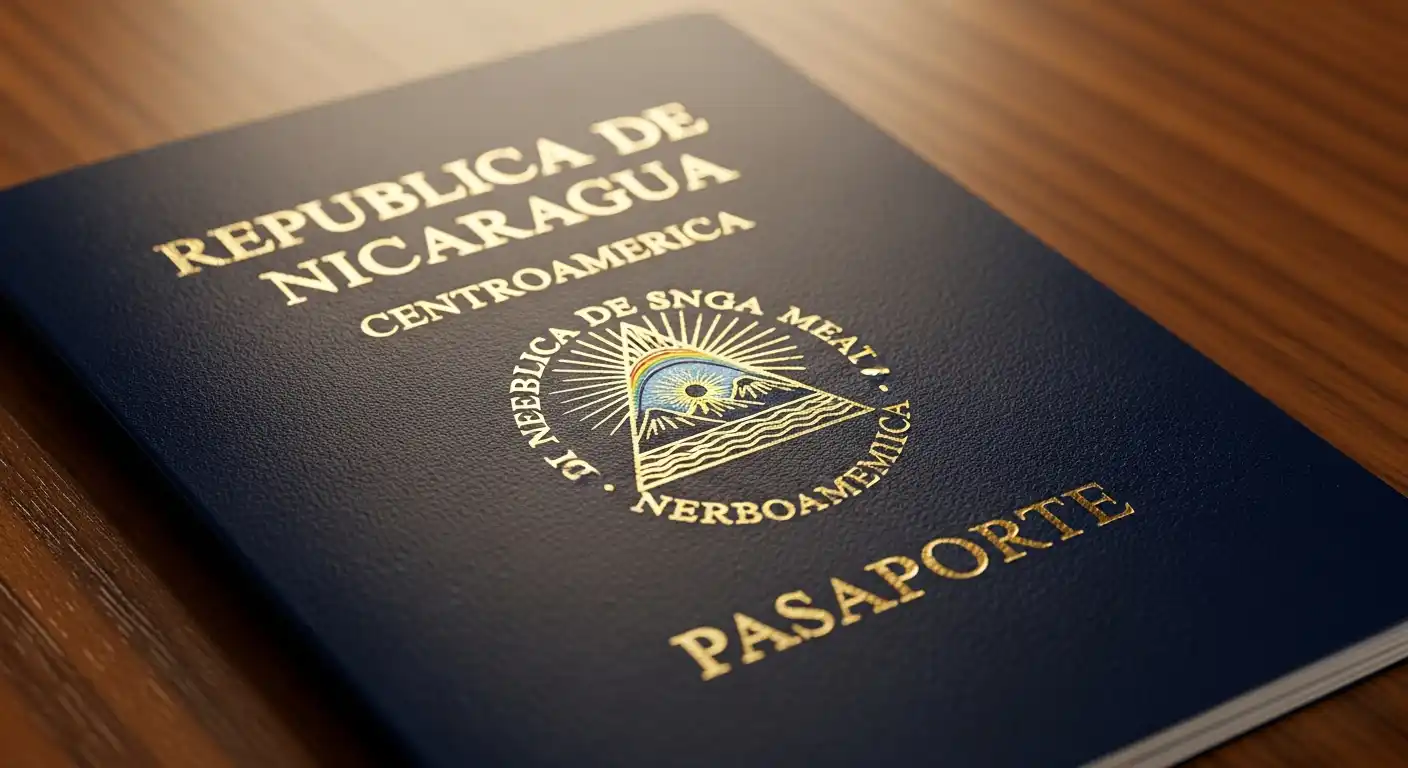
The Pathways to a Second Passport in Nicaragua
Not all roads to Nicaraguan citizenship are equal. Cost, speed, and eligibility vary dramatically depending on your situation.
| Pathway | Minimum Investment | Residency First | Time to Citizenship | Dual Citizenship |
|---|---|---|---|---|
| Investor Visa | $30,000 | Immediate permanent residency | 2 years | No (renounce required) |
| Central American Fast-Track | None | Legal residence required | 2 years | Yes (exception applies) |
| Spanish/Reciprocal National Fast-Track | None | Legal residence required | 2 years | No (renounce required) |
| General Naturalization | None | Legal residence required | 4 years | No (renounce required) |
| Marriage to Nicaraguan | None | Dependent on marriage length | Variable (typically 2-4 years) | No (renounce required) |
The investor visa dominates the field for speed and certainty. You’re out the $30,000, but you skip the residency visa altogether. Permanent residency lands immediately upon approval. Two years of continuous residence in Nicaragua, and you file for citizenship.
Central Americans by birth have a structural advantage: they keep dual citizenship under the 2026 constitution. If you hold Costa Rican, Guatemalan, Salvadoran, or Honduran citizenship by birth, the restriction doesn’t apply to you. You can acquire Nicaraguan citizenship while keeping your original passport.
Everyone else faces the renunciation requirement. Spanish nationals and those from countries with reciprocal naturalization agreements with Nicaragua (check with your government) can compress the timeline to 2 years instead of 4, but they still renounce.
Marriage to a Nicaraguan national can shorten the timeline, but again: renunciation is non-negotiable unless you’re Central American.
The Dual Citizenship Elimination: What Changed in January 2026
Let’s be blunt: the constitutional amendment that took effect January 16, 2026, is the dominant story here. This was not a quiet administrative change. Daniel Ortega’s regime pushed through a full constitutional rewrite targeting dual citizenship.
The old rule was straightforward: Nicaraguan nationality didn’t require renunciation of other passports. Naturalized citizens could hold dual, even triple nationality. Thousands of expats, returnees, and investors were holding Nicaraguan passports alongside US, European, or South American documents.
The new rule: upon acquiring Nicaraguan nationality through naturalization, you must renounce all other nationalities. The constitution also states that if a Nicaraguan acquires another nationality, they lose Nicaraguan citizenship. Automatic. No choice.
The single exception: Central Americans by birth who reside in Nicaragua can opt for Nicaraguan citizenship without renouncing their original passport. This is a specific carve-out for the five neighboring countries and Belize.
For US citizens, EU nationals, and everyone else: renunciation is the price of admission. You cannot have both.
Here’s the critical detail no one likes to say out loud: this change is likely not retroactive. Nicaraguans who already held dual citizenship before January 16, 2026, probably keep both passports. But anyone naturalizing after that date loses the option. The government has not clarified whether existing dual-passport holders could lose citizenship if they later acquire a third nationality, so the safest assumption is that the new rule applies going forward to everyone.
Now here’s the part that experienced internationalists are quietly pointing out: Nicaragua can demand you renounce your other citizenship all day long, but it has no mechanism to enforce that renunciation in another sovereign country. When you sign the notarized renunciation statement in Managua, that document carries legal weight inside Nicaragua. It does not, however, automatically cancel your US, Canadian, or European passport. Your home country decides whether you lose that citizenship, not Nicaragua. The US, for example, requires a specific voluntary renunciation process conducted at a US embassy or consulate, complete with sworn oaths and State Department processing. A Nicaraguan notary’s stamp doesn’t trigger that. The same applies across the EU, UK, Canada, and most other developed nations. You can sign whatever Nicaragua asks you to sign, and your original passport remains legally valid until your home country formally revokes it through its own procedures.
Does this mean the renunciation requirement is meaningless? No. It means the practical enforcement gap is wider than the law on paper suggests. Nicaragua gets its signed document. You technically satisfy the constitutional requirement. Whether your home country recognizes or acts on that renunciation is an entirely separate legal question, and in most cases, the answer is: it doesn’t, unless you walk into their consulate and explicitly ask them to cancel your citizenship. Plenty of people around the world hold citizenships that one of their countries technically prohibits. The difference between law and enforcement is where experienced planners operate.
This doesn’t mean you should treat it as a loophole to exploit carelessly. If Nicaragua’s government ever decided to verify renunciation (requesting proof from the other country that your citizenship was actually terminated), you’d be in a difficult position. But as of 2026, no such verification mechanism exists, and the administrative capacity to create one is minimal. The practical reality is that the renunciation requirement may not be the dealbreaker it appears to be on first reading.

The Investor Visa Fast-Track: $30,000 to Citizenship in 2 Years
For non-Central Americans, the $30,000 investor visa is the only path that makes practical sense in 2026. Here’s why.
Standard naturalization demands 4 years of continuous legal residency before you can even apply for citizenship. You have to get a residency visa first (rentista, pensionado, or another category), prove continuous residence, document your ties, and then file. Renunciation happens in the notarized application. Total elapsed time from arrival to new passport: realistically 5 to 6 years accounting for processing delays.
The investor visa compresses this to 2 years. Full stop.
Here’s how it works: You invest a minimum of $30,000 in one of these approved categories:
- Real estate purchase (property valued at minimum $30,000)
- Business investment in Nicaragua (creating jobs, capital contribution of at least $30,000)
- Agriculture or forestry projects approved by the government
Upon approval and proof of investment, you receive Permanent Resident status immediately. No temporary residency visa first. You jump straight to permanent resident, valid for 5 years (extendable indefinitely). The cedula (ID card) arrives, and you’re legally authorized to reside indefinitely in Nicaragua.
Two years of continuous residence after receiving permanent resident status, and you file for citizenship. The application includes your renunciation document (notarized before a public notary). Background checks, citizenship interview, and approval typically close within 3 to 6 months.
Total cost breakdown:
- Investment: $30,000
- Legal/application fees: $2,000 to $4,000 (varies by law firm and complexity)
- Government processing fees: approximately $500 to $1,000
- Notary and documentation: $300 to $500
You’re not paying for citizenship directly, as some CBI programs do. You’re paying for a real investment that must be documented, verified, and often ongoing (real estate requires ownership; business investment might require operational proof). But the speed is legitimate.
Note: The two-year continuous residence requirement is strict. Absences of more than a few days can reset the clock in some interpretations. This is where expert guidance prevents costly restarts.
Put your assets beyond reach in 57 jurisdictions.
Pick where you want your company. We handle the filing, the registered agent, and the bank introduction. From US$1,290, done in days, not months.
- Charging-order protection in jurisdictions courts can't pierce
- Zero tax on foreign income in 30+ territories
- Banking options available
- Fixed price. No surprise fees at closing
Tax Treatment for a Nicaraguan Resident and Passport Holder
The territorial tax system is the second-biggest win after citizenship speed.
Nicaragua taxes residents on Nicaraguan-source income only. Pensions: not taxed. Investment returns from US brokerage accounts: not taxed. Rental income from property in other countries: not taxed. Business profits earned abroad: not taxed. Salaries from remote work for a US company, drawn from a foreign bank account: not taxed in Nicaragua.
Personal income tax rates for Nicaraguan-source earned income are progressive, ranging from 15% to 30% on salary, depending on brackets. Capital gains are taxed at 15%. Dividends paid to residents face 15% withholding. But none of that applies to foreign income.
Compare this to Costa Rica and Honduras, which also operate territorial tax systems but lack Nicaragua’s investor visa fast-track to citizenship. Panama runs a territorial system too but requires 5 years for naturalization. Nicaragua’s combination of territorial taxation and a 2-year citizenship timeline is unmatched in the region.
Corporate tax is 30% on Nicaraguan-source profit, but foreign-source business income is not taxed. This creates planning opportunities if you structure carefully with Nicaraguan and offshore entities.
Important caveat for US citizens: Nicaraguan residency and a Nicaraguan passport do not erase your US tax obligation. The IRS taxes US citizens on worldwide income regardless of where they live. The Foreign Earned Income Exclusion (FEIE) shields up to roughly $120,000 of earned income from US tax, but only earned income from employment or self-employment. Pensions, Social Security, 401k withdrawals, investment income, and rental returns are fully taxable to the US. You must file and likely pay both Nicaragua and the US unless you formally renounce citizenship, which is a separate legal process entirely. The Nicaraguan passport does not end your US tax residency; only renunciation of citizenship does.
Step-by-Step: How to Get a Second Passport in Nicaragua
Step 1: Consult with immigration specialists. Before investing a dime, hire a Nicaraguan immigration attorney or residency firm with a track record in investor visa processing. They verify your eligibility, check for any criminal or immigration issues that could block approval, and explain the continuous residence requirements. This costs $1,000 to $2,000 upfront but saves you from investing $30,000 only to face denial. Liberty Mundo’s strategy call can help you identify the right specialist for your situation.
Step 2: Identify and document your investment. Choose real estate, business, or an approved agricultural project. Real estate is most common: you find a property, get a property valuation and title search, and set up the purchase. Provide documentation proving the $30,000 minimum. Real estate contracts, bank statements, and title transfer receipts are collected.
Step 3: File the investor visa application. Your attorney submits the formal application to the Ministry of Interior (Ministerio del Interior) or the immigration office. The application includes proof of investment, background documentation, passport copies, and your notarized renunciation statement (signed ahead of permanent residency, effective upon citizenship). Processing typically takes 2 to 4 months.
Step 4: Receive permanent resident status. Upon approval, the Ministry issues your Permanent Resident cedula (cédula de residente permanente). This is your legal authorization to live in Nicaragua indefinitely and work without visa restrictions. Start your continuous residence clock here.
Step 5: Complete 24 months of continuous residence. Live in Nicaragua continuously for 2 years. Minimal absences (a few days) are typical. Extended trips (weeks or months abroad) risk restarting the clock. Document your presence: keep utility bills, rental agreements, business records, and records of tax filing. Work with your attorney to understand the Ministerio’s expectations for continuous residence documentation.
Step 6: File for citizenship after 24 months. Your attorney submits a formal citizenship request to the Ministry. The application includes proof of 24 months residence, background documentation, and the renunciation statement (signed and notarized earlier, now presented as final). A citizenship interview may be scheduled. The Ministry reviews the entire file, confirms no disqualifying issues, and approves the application (barring any complications).
Step 7: Receive Nicaraguan citizenship and passport. Upon approval, your renunciation becomes effective, and you are granted Nicaraguan citizenship by naturalization. The cedula is updated to reflect citizenship status. You apply for a Nicaraguan passport at the Ministry of Foreign Affairs (Ministerio de Relaciones Exteriores). The passport arrives within 3 to 6 weeks. Total elapsed time from investor visa approval to Nicaraguan passport in hand: typically 28 to 32 months.
Common Mistakes That Derail Your Application
Getting to Nicaraguan citizenship looks simple on paper. In execution, small missteps collapse the whole timeline.
Mistake 1: Assuming your renunciation document is automatically effective. Your renunciation must be notarized before a public notary in Nicaragua and properly dated. It does not take effect until the citizenship is granted. Some applicants sign the renunciation but fail to have it properly notarized, creating a document that the Ministry rejects. Restart: 3 to 6 months lost.
Mistake 2: Breaking continuous residence without realizing it. The 24-month clock requires continuous physical presence in Nicaragua. One source says a week abroad is fine. Another says 30 days resets the clock. The Ministry’s interpretation varies. Assume strict: stay put for 24 months. If you must travel, consult your attorney beforehand and document your return. Some applicants have been forced to restart after a single extended absence that they thought was allowable.
Mistake 3: Investing in a property that doesn’t meet title requirements. Not all real estate in Nicaragua has clean title. Buying land in a protected zone, on indigenous territory, or with disputed ownership can invalidate your investment later. Your attorney must conduct a full title search before you close. Skipping this step, you invest $30,000 in an illiquid property that the Ministry rejects as ineligible.
Mistake 4: Failing to document continuous residence adequately. The Ministry wants proof you lived in Nicaragua for 24 months. Utility bills, rental agreements, bank statements, tax filing records, and local employment records build your case. If your file shows you had a property but no utility bills, bank statements, or other ties, the Ministry questions your continuous presence. Err on the side of over-documentation.
Mistake 5: Not banking the investment. The $30,000 must be documented as coming from a legitimate source. Wire transfers from your registered bank account abroad, with clean statements, create a paper trail. Cash investments or transfers from informal sources are rejected. The Ministry conducts basic source-of-funds checks to prevent money laundering.
Mistake 6: Ignoring changes in Nicaraguan law mid-process. As you’ve seen with the dual citizenship amendment, laws change. Ongoing legal changes can affect residency rules, investment categories, or processing procedures. Attorneys stay updated. Self-directed applicants do not. By the time you realize the rules shifted, your application may no longer meet current criteria.
Nicaragua vs. Central American Alternatives: Passport & Citizenship Comparison
Nicaragua is one option among several in Central America. The comparison matters because each country presents a different cost-benefit trade-off.
| Country | Passport Rank (2026) | Visa-Free Access | Tax System | Naturalization Timeline | Dual Citizenship | Fastest Fast-Track |
|---|---|---|---|---|---|---|
| Nicaragua | 38th | 125 destinations | Territorial | 4 years (standard) / 2 years (investor $30k) | No (except Central Americans) | Investor visa: 2 years |
| Honduras | 37th | 130 destinations | Territorial | 3 years | Yes | Marriage/children: 1 year |
| Costa Rica | 26th | 134 destinations | Territorial | 7 years | Yes (naturalized) | Investment/pensionado: 3-7 years |
| Panama | 26th | 134 destinations | Territorial | 5 years | Yes (naturalized) | Investment: 5 years |
| Ecuador | 47th | 95 destinations (approx) | Worldwide (modified) | 3 years | Yes | Investment/marriage: 2-3 years |
Costa Rica and Panama tie for the strongest passports (26th) with 134 visa-free destinations each. Both allow dual citizenship. But Costa Rica demands 7 years of residency for standard naturalization, and Panama requires 5. The trade-off: stronger passport, dual citizenship, longer wait. Neither has a $30,000 investor visa fast-track to citizenship in 2 years.
Honduras sits at 37th (nearly identical to Nicaragua’s 38th) with 130 destinations and allows dual citizenship. Honduras also runs a territorial tax system, so the tax treatment is comparable. But Honduras has its own political instability concerns and weaker investor infrastructure.
Ecuador’s passport is weaker (47th, about 95 destinations), and Ecuador taxes worldwide income on modified basis. Citizenship takes 3 years, dual citizenship is allowed, but the overall value proposition is inferior to Nicaragua’s territorial tax system.
For speed and tax treatment, Nicaragua’s investor visa is hard to beat. For passport strength and dual citizenship, Costa Rica wins but at the cost of 7 years. For the best portfolio of all three (speed, tax, passport quality), there’s no perfect answer in Central America. Nicaragua optimizes for speed and tax; Costa Rica optimizes for passport strength.
Frequently Asked Questions About a Second Passport in Nicaragua
Can I keep dual citizenship if I become a Nicaraguan citizen?
What if I already held dual citizenship before January 2026?
How fast can I get a second passport in Nicaragua through the investor visa?
Do I pay taxes in Nicaragua if I’m a resident with a Nicaraguan passport?
What if I’m a US citizen? Do I owe US taxes as a Nicaraguan resident?
How strong is a Nicaraguan passport for global travel?
What investment options qualify for the $30,000 investor visa?
Do I have to live in Nicaragua for the full 24 months continuously?
What happens if my application is denied?
Is there a CBI program in Nicaragua?
Should I get a second passport in Nicaragua or somewhere else?
Can I apply for Nicaraguan citizenship without the investor visa?
The Bottom Line: Is a Nicaraguan Second Passport Worth It in 2026?
The dual citizenship elimination changes the calculus. No question. If you’re willing to renounce your current passport for a Nicaraguan one, you’re betting on the territorial tax system and the 38th-ranked passport being better than what you have. For most people, that’s a losing bet.
But if you’re a Central American by birth (Costa Rican, Honduran, Salvadoran, Guatemalan, Belizean, or Panamanian), the exception applies. You keep your original passport while acquiring Nicaraguan citizenship through the same 2-year investor visa fast-track. For you, Nicaragua becomes a no-brainer: dual citizenship, 24-month timeline, territorial tax treatment, and integration across the region.
If you’re building something in Central America (a business, real estate portfolio, residency base for regional operations), the investor visa makes sense. $30,000 buys you permanent residency immediately, citizenship in 2 years, and zero tax on foreign income while you’re based in Nicaragua. Liberty Mundo has guided hundreds of people through this exact calculation.
If you’re optimizing for a strong global passport and you have time, Costa Rica is still the better play. Its 26th-ranked passport gives you access to 134 countries. Dual citizenship is allowed (for naturalized citizens under most circumstances). The cost is 7 years of continuous residence, but the end result is objectively superior in mobility terms.
The key is knowing what you’re actually buying. A second passport in Nicaragua is not citizenship by investment. It’s not quick-and-easy dual citizenship. It’s a legitimate naturalization process that happens to move fast if you use the investor visa pathway, but it costs you your current passport unless you’re a Central American by birth.
Smart strategy: use Liberty Mundo’s Second Passport Blueprint to compare all 50+ countries and their pathways. Run the numbers for your situation. Then book a strategy call to validate your choice before you invest $30,000 and commit years to a single jurisdiction.
Final Thoughts
Nicaragua’s dual citizenship elimination is a gut punch if you were counting on keeping your existing passport. But it’s also a wake-up call: the world is moving fast. Rules change. Programs close. Government priorities shift. The second passport strategy that made sense in 2024 might not work in 2026.
That’s exactly why Liberty Mundo exists. We track these changes in real time. We guide people through the jurisdictions that actually work now, not the ones that worked 18 months ago. The Second Passport Blueprint is updated quarterly to reflect changes like Nicaragua’s dual citizenship elimination.
If a Nicaraguan second passport makes sense for your situation, the 2-year investor visa timeline is still the fastest path to Central American citizenship. If it doesn’t, Costa Rica or another jurisdiction might be the better fit. The only way to know is to run the numbers and consult with someone who understands all the options.
Your second passport strategy should never rest on guessing or old information. Get informed, get strategic, and make a decision that actually protects your interests. That’s the Liberty Mundo approach.
Sources and References
- U.S. Embassy in Nicaragua, Alert for U.S. citizens: Nicaragua Eliminates Right to Dual Nationality (January 30, 2026)
- PwC, Nicaragua Tax Summaries
- Tax Atlas, Nicaragua Tax System Overview
- Visa Index, Global Passport Index 2026
- Wikipedia, Henley Passport Index 2026
- World Bank, Nicaragua Country Overview 2025
- IMI Daily, Nicaragua Investor Permanent Residency
- Wikipedia, Nicaraguan Nationality Law