
Choosing to retire in Belize is one of the few moves that ticks every box at once: a Caribbean coastline, English as the official language, common law you already understand, and a tax system that simply ignores your pension. You can qualify as young as 45. The income bar is a gentle US$2,000 a month. And the country runs an official retirement program built specifically to roll out the welcome mat.
Most “best places to retire” lists bury the one fact that actually matters. When you retire in Belize and bring foreign retirement income, Belize does not tax it. Not your pension, not your Social Security, not your annuity. That is not a loophole. It is how the territorial tax system works, and it changes the entire math of a fixed-income retirement.
Put your assets beyond reach in 57 jurisdictions.
Pick where you want your company. We handle the filing, the registered agent, and the bank introduction. From US$1,290, done in days, not months.
- Charging-order protection in jurisdictions courts can't pierce
- Zero tax on foreign income in 30+ territories
- Banking options available
- Fixed price. No surprise fees at closing
Why So Many People Choose to Retire in Belize
Start with language. Belize is the only country in Central America where English is the official tongue. No wrestling with Spanish paperwork, no mistranslated medical forms, no language barrier with your doctor or your lawyer. For a retiree, that single fact removes more daily friction than any tax break.
Then stack the rest. A small, friendly population. British-rooted common law. A US-dollar-pegged currency, so your savings do not swing on exchange rates. The Caribbean Sea on one side and rainforest on the other. And a cost of living that lets a fixed pension stretch in ways it never could back home. Belize sells itself once you see the numbers next to the lifestyle.
The deal-closer is the tax treatment. Belize taxes territorially, which means it only reaches income earned inside Belize. Your foreign pension lands untouched. That is why people who plan to secure residency in a low-tax country keep putting Belize at the top of the shortlist, alongside its Caribbean peers.
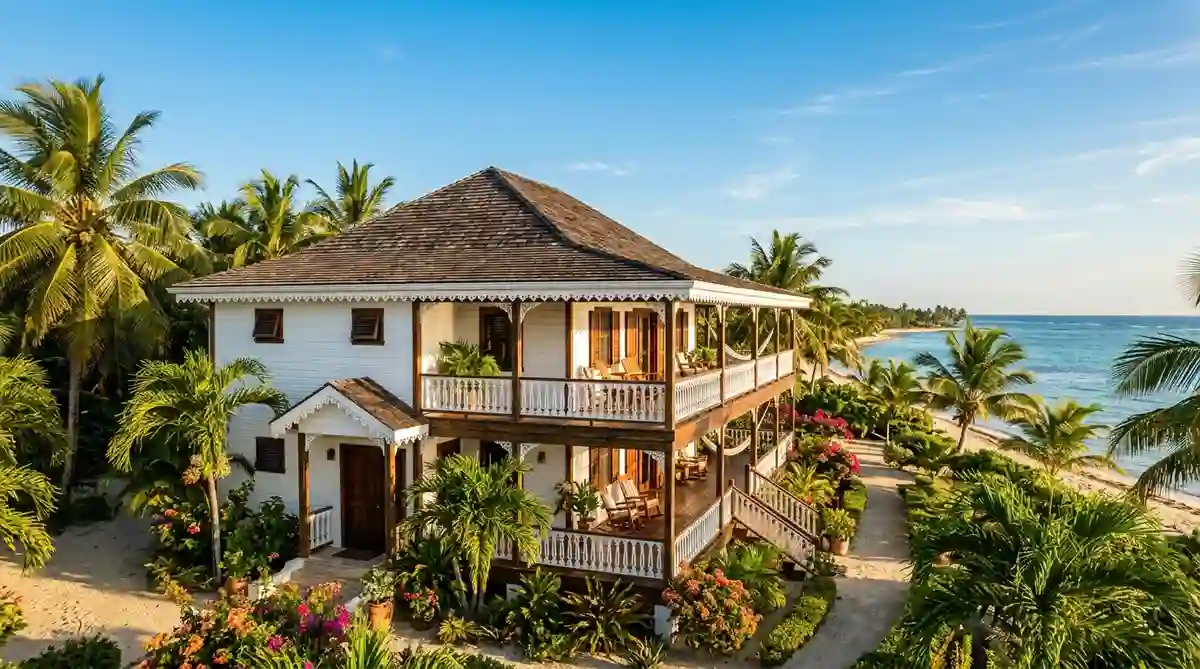
The QRP: The Easiest Way to Retire in Belize
The Qualified Retired Persons program is the headline route, and it is refreshingly simple. Run by the Belize Tourism Board, the QRP is designed to attract exactly the people reading this. Meet the bar and you get residency for you and your dependents, plus a one-time customs exemption that lets you import your household goods, and even a vehicle, boat or light aircraft, duty-free.
The requirements are light. You must be 45 or older. You must show a guaranteed income of at least US$2,000 a month, or US$24,000 a year, from a pension or annuity generated outside Belize, in an approved currency such as US dollars, pounds, euros or Canadian dollars. You bring that income into a local bank account, and the Tourism Board checks in annually to confirm you are still receiving it.
The trade-off worth knowing: classic QRP status is built around living off foreign income, not taking a local job. If you intend to work or run a business locally, the standard permanent residency track, covered in full in our guide to residency in Belize, may fit better. Many people start on the QRP and convert later, and our Belize residency service can handle either route. Decide which life you actually want before you file.
What It Costs to Retire in Belize
Here’s where a pension breathes. Numbeo data puts the overall cost of living in Belize roughly 31% below the United States, with rent around 65% lower. A couple living on the mainland, in districts like Cayo or Corozal, runs a comfortable life on US$1,500 to US$2,000 a month. Push toward the islands and the number climbs.
Ambergris Caye, the most popular expat island, is the priciest corner of the country. Beachfront rents there can run from a few hundred dollars to US$2,000 for larger apartments, and imported goods carry heavy duties. The mainland is where your money goes furthest. Fuel is genuinely expensive at US$5 to US$7 a gallon, so factor that in if you plan to drive a lot.
| Expense (couple, monthly) | Mainland (Cayo/Corozal) | Ambergris Caye |
|---|---|---|
| Comfortable total budget | $1,500 to $2,000 | $2,500 to $3,500 |
| One-bedroom rent | $500 to $1,000 | $1,000 to $2,000 |
| Mid-range dinner for two | $25 to $40 | $50 to $60 |
| Tax on your foreign pension | Zero | Zero |
The Tax Picture When You Retire in Belize
This is the part that turns a nice retirement into a genuinely efficient one. Belize is a real Caribbean tax haven, not a marketing one. Foreign-source income is outside the tax net. There is no capital gains tax. There is no inheritance tax and no gift tax, which makes Belize quietly excellent for passing wealth to your heirs. Property taxes are tiny, often 1% to 2.5% of a property’s assessed value.
The local taxes you do meet are consumption-based: a 12.5% General Sales Tax on most goods and services, and import duties that explain why imported groceries and cars cost more. Belize-source income, if you somehow earn any, is taxed at a flat 25%. But the foreign pension that funds a typical retirement simply does not enter the calculation.
One honest caveat for Americans. A decision to retire in Belize does not end your relationship with the IRS. US citizens are taxed on worldwide income wherever they live, and the Foreign Earned Income Exclusion covers earned wages, not pensions, Social Security or investment income. Belize gives you a zero-tax local base; your home-country filing obligations are a separate matter you plan around. If structuring your money cleanly matters, look at pairing residency with compliant offshore banking arrangements, and consider a Belize company, as our guide to how to incorporate in Belize explains, if you keep an active income stream running.
Healthcare, Property and Daily Life
Belize has a public system plus a growing private sector, and many retirees use private clinics for routine care because costs are low by Western standards. For anything serious, plenty of expats fly to Mexico, Guatemala or the US, so good international health insurance is non-negotiable, not optional. Build it into your budget from day one.
Property is foreigner-friendly, a rarity in the region. Foreigners can own land outright in their own name, with the same rights as citizens, which is a major reason people commit to the country rather than just visiting. Buying is straightforward, though foreign buyers pay an 8% stamp duty on purchases. Renting first for a year while you find your spot is the sensible play, and it doubles as your qualifying residency time.

How to Retire in Belize: Step by Step
Step 1: Confirm you qualify. Check you are 45 or older and can prove at least US$2,000 a month in foreign pension or annuity income. A bank or financial institution must certify the income in writing.
Step 2: Gather your documents. Assemble passport copies, a police clearance, a medical certificate, proof of income and a birth or marriage certificate for any dependents. Originals and certified copies are the norm.
Step 3: Apply through the Belize Tourism Board. Submit the QRP application to the Tourism Board, which administers the program. Pay the program and processing fees and wait for approval, usually a matter of weeks to a few months.
Step 4: Move and import your belongings. Once approved, use your one-time duty exemption to import household goods and a vehicle. Open your local bank account and start routing your pension into it.
Step 5: Maintain your status. Keep your foreign income flowing into Belize and provide the Tourism Board with annual proof. That is all it takes to keep your residency current as you retire in Belize.
Belize vs Other Caribbean Retirement Spots
Belize is not the only warm, low-tax option, so put it next to its rivals honestly. Its edge is the combination of English, foreigner land ownership and a dedicated retiree program with a low income bar.
| Country | Retiree route | Tax on foreign pension | Language |
|---|---|---|---|
| Belize | QRP, age 45+, $2,000/mo | None (territorial) | English |
| Panama | Pensionado, $1,000/mo | None (territorial) | Spanish |
| Bahamas | Residency by property/means | None (no income tax) | English |
| Mexico | Temporary/permanent residency | Worldwide if tax resident | Spanish |
Panama’s pensionado has a lower income bar and famous discounts, which is why some readers weigh it carefully. The Bahamas charges no income tax at all but costs far more to live in, as our retire in the Bahamas guide lays out. Mexico is cheaper still in places but taxes residents on worldwide income, a trap covered in our residency in Mexico breakdown. Belize threads the needle between cost, language and tax.
Before you lock in a country, run the free Freedom Score assessment to pressure-test how your retirement plan holds up across tax, residency and asset protection.
How much money do I need to retire in Belize?
What age can I retire in Belize?
Is my pension taxed if I retire in Belize?
Can foreigners own property in Belize?
What is healthcare like for those who retire in Belize?
Does QRP let me work in Belize?
Can I bring my spouse and children?
Does QRP lead to citizenship?
Final Thoughts on Choosing to Retire in Belize
Belize is not flawless. Imported goods cost more, the islands are pricey, and serious medical care means a flight. But for a retiree who wants English, common law, foreigner-friendly property and a pension that lands tax-free, the country is hard to beat. The QRP makes the entry dead simple, and the territorial tax system makes the staying efficient. If you are weighing your options, read our comparison of the Bahamas against Belize and our look at the strongest passports in the region to see the full picture before you commit.
Sources and References
- Belize Tourism Board, Qualified Retired Persons Retirement Program
- Government of Belize Immigration Department, Residence Qualification Requirements
- PwC, Belize Individual Taxes on Personal Income
- Numbeo, Cost of Living in Belize
- US Internal Revenue Service, Foreign Earned Income Exclusion