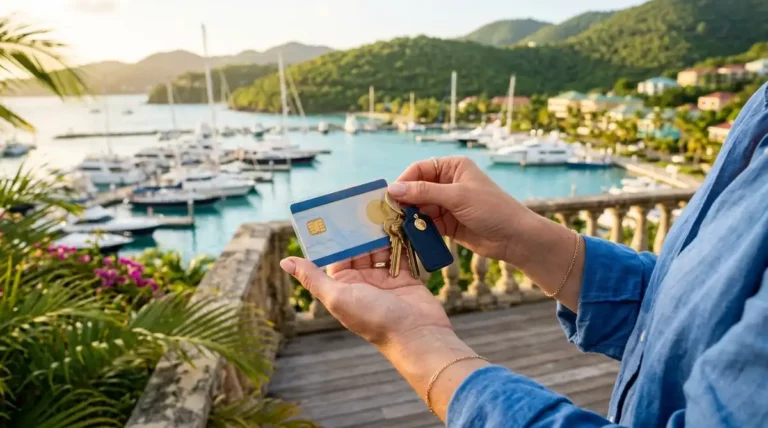
Securing residency in St Kitts and Nevis is the quieter cousin of the famous passport program, and for some people it is the smarter move. Not everyone needs full citizenship. Plenty just want the legal right to live in a tax-free Caribbean federation, hold property, and build a genuine base. That is what residency delivers.
Here is the honest framing. St Kitts is best known for selling passports, so residency gets less airtime. But the federation does offer real residence routes, mostly tied to property and self-sufficiency. And because there is no personal income tax, a residence here can anchor a serious tax-relocation plan.
This guide lays out every route, the property thresholds, the tax angle, how residency compares to citizenship, and the exact steps to follow.
Put your assets beyond reach in 57 jurisdictions.
Pick where you want your company. We handle the filing, the registered agent, and the bank introduction. From US$1,290, done in days, not months.
- Charging-order protection in jurisdictions courts can't pierce
- Zero tax on foreign income in 30+ territories
- Banking options available
- Fixed price. No surprise fees at closing
Why Pursue Residency in St Kitts and Nevis
The pull is simple, and it is mostly about tax and lifestyle. The federation levies no personal income tax, no capital gains tax on long-held assets, no wealth tax and no inheritance tax. For someone restructuring their life around a low-tax base, a residence right here is a genuine asset, not just a lifestyle perk.
Lifestyle does its part too. English-speaking, politically stable, warm year-round, and small enough to feel like a community. You get Caribbean living without the language barrier that trips up so many relocations. And unlike a tourist stay, residency gives you the legal footing to stay put, hold property, and call it home.
One caution up front. Residency alone does not rewrite your tax bill. You have to become genuinely tax resident here and properly exit your previous tax home, and Americans remain taxed by the IRS on worldwide income regardless. Getting that transition right is the entire game, and our residency planning service is built around it.

The Routes to Residency in St Kitts and Nevis
There is no cheap retiree visa with a low monthly-income test here, unlike some Latin American neighbours. The practical routes cluster around property and self-sufficiency.
| Route | Core requirement | Leads to |
|---|---|---|
| Homeowner / property residence | Own qualifying property and maintain it in good standing | Long-term residence; permanent track reportedly around $350,000 held 7 years |
| Temporary / annual residence | Prove self-sufficiency and health insurance; renew yearly | Rolling residence, a way to test commitment |
| Work residence | Signed contract with a local employer plus permits | Residence tied to employment |
| Citizenship by investment | Donate from $250,000 or buy $325,000 of property | Permanent citizenship and passport in months |
For most relocating individuals and families, the choice narrows to buying property for a homeowner residence or going straight to citizenship. The citizenship route is the only one that delivers a permanent, irrevocable status plus a strong passport, which is why so many people who research the federation’s residence options end up choosing the investment program instead. Our guide to Caribbean CBI programs compares the federation to its neighbours.

Residency vs Citizenship: Which Should You Choose?
This is the decision that actually matters, so let’s be clear about the trade-offs.
| Factor | Residency | Citizenship by investment |
|---|---|---|
| Entry cost | Property purchase or proof of means | From $250,000 donation |
| Permanence | Conditional, must maintain status | Permanent and heritable |
| Passport | No | Yes, ~155 destinations visa-free |
| Tax benefit | Same zero income tax once tax resident | Same, plus full mobility |
| Speed | Varies; property purchase plus processing | Roughly 4 to 6 months |
If you only want a tax-friendly Caribbean base and you are happy maintaining property and status, residency works and can cost less upfront if you would have bought property anyway. If you want permanence, a strong passport, and something you can pass to your children, citizenship is the cleaner answer. Compare the federation’s travel power on the Liberty Mundo Passport Freedom Index, and weigh it against options like the Bahamas and Belize.
How to Get Residency in St Kitts and Nevis: Step by Step
Step 1: Pick your route. Decide between a homeowner residence, an annual self-sufficiency permit, a work-based permit, or citizenship by investment for permanence.
Step 2: Secure the basis. Buy qualifying property, line up an employment contract, or assemble proof of stable income and health insurance, depending on your chosen route.
Step 3: Prepare documents. Gather passport, police clearance, proof of funds, medical and insurance records, and property or employment paperwork. Use a local attorney to file correctly.
Step 4: Submit and clear vetting. File your application with the relevant authority and pass background checks. Processing times vary by route and current government workload.
Step 5: Establish tax residency. To capture the zero-tax benefit, spend real time on the islands, cut ties with your old tax home, and take professional advice on the exit, especially if you are American.
Common Mistakes With Residency in St Kitts and Nevis
- Expecting a cheap retiree visa. The federation leans on property and self-sufficiency, not a low monthly-income permit like some neighbours offer.
- Thinking residency equals tax freedom. You must become genuinely tax resident and exit your old country. Americans still owe the IRS worldwide.
- Confusing residency with citizenship. Residency gives no passport and is conditional. Only the investment program delivers permanent, heritable citizenship.
- Buying property without due diligence. Island real estate is illiquid and titles can be complex. Use a local lawyer and never buy unseen.
- Ignoring the 2026 reforms. The federation is tightening physical-presence and connection requirements across its programs, so verify current rules before committing.
How Residency in St Kitts and Nevis Compares Regionally
| Country | Residency style | Tax on foreign income (resident) | Path to citizenship |
|---|---|---|---|
| St Kitts and Nevis | Property / self-sufficiency | 0%, no income tax | Investment program in months |
| Belize | QRP retiree program | 0% on foreign income (QRP) | 5 years residence then naturalisation |
| Mexico | Income-based temporary/permanent | Worldwide, residents up to 35% | 5 years (2 for Latin American/Iberian spouses) |
| Portugal | Golden visa / D7 | Taxed under NHR 2.0 rules | 10 years ordinary (7 for CPLP) |
| Turkey | Property / investment | Worldwide | 5 years; 3 months with $400,000 real estate |
The federation’s edge is the clean zero income tax and the option to leapfrog straight to citizenship. Where it loses is on cheap, simple residence permits, an area where Belize and Mexico are friendlier to budget relocators, though Mexico taxes worldwide income and is not tax-free. The recent St Kitts citizenship overhaul is reshaping how presence requirements work, so timing matters.
How do I get residency in St Kitts and Nevis?
How much property do I need to buy?
Does residency in St Kitts and Nevis make me tax-free?
Is residency the same as citizenship?
Can my family be included in my residency?
Do I have to live there full time?
How long does residency take to obtain?
Is residency in St Kitts and Nevis worth it over a cheaper country?
Residency in St Kitts and Nevis suits people who value a tax-free, English-speaking Caribbean base and are comfortable anchoring it with property. For anyone wanting permanence and a powerful passport, the investment program is usually the better destination, but the residence routes are real and useful. Get the tax-residency transition right and the rest follows. Read next: our guides to Paraguay and Belize.
Sources and References
- Government of St. Kitts and Nevis, Citizenship by Investment Unit
- St. Kitts Investment Promotion Agency, Invest St. Kitts
- Dawkins Brown (Dawgen Global), St. Kitts and Nevis Tax Guide
- Nevis Investment Promotion Agency, Invest Nevis
- Liberty Mundo, Passport Freedom Index