
Brussels declared victory in 2025. The European Court of Justice killed Malta’s golden passport program. Cyprus had already collapsed. Montenegro and North Macedonia followed into the graveyard. The era of buying EU citizenship through a structured investment program with a published price tag was over. Yet twelve months later, wealthy investors are still walking away with European passports. The route changed. The demand never blinked. Welcome to citizenship by exception, the shadow market that operates through provisions written into nationality laws centuries before anyone heard of “investment migration.”
Also called citizenship by merit, citizenship by decree, or citizenship by special grant, this mechanism exists in roughly 74% of all countries on earth. The legal basis predates modern citizenship by investment by a long shot. The criteria? Vague enough to drive a Bentley through. The processing? Months, not years. The visibility? Zero. And here is the kicker: Brussels cannot touch it, because every country on earth retains the sovereign right to decide who deserves its passport.
Put your assets beyond reach in 57 jurisdictions.
Pick where you want your company. We handle the filing, the registered agent, and the bank introduction. From US$1,290, done in days, not months.
- Charging-order protection in jurisdictions courts can't pierce
- Zero tax on foreign income in 30+ territories
- Banking options available
- Fixed price. No surprise fees at closing
The Word That Killed Citizenship by Investment: “Transactional”
One word ended a fifteen-year industry. On 29 April 2025, the European Court of Justice ruled in Case C-181/23 that Malta’s citizenship by investment scheme breached EU law. The Court called it “transactional.” That single label, drawn from Article 4(3) of the Treaty on European Union, dismantled the legal foundation Malta had defended for years. A naturalisation framework whose end product is “essentially granted in exchange for predetermined payments or investments” cannot stand inside a union built on solidarity and good faith between member states.
Malta closed the program formally on 24 July 2025. Cyprus had folded years earlier. Montenegro shut down in 2022. North Macedonia drifted away. The list of dead formal investment routes into European Union citizenship grew long enough to fill a graveyard. Brussels celebrated. EU Commissioner Didier Reynders had pushed this outcome since 2019, calling commodified citizenship incompatible with European values.
Here is what the Court did not address. Investor demand for alternative passports never softened. Tax pressure in high-rate countries kept rising. Wealth taxes appeared in places that never had them. Travel friction grew at every border. Political risk at home felt sharper after each election cycle. The motivations driving high-net-worth families to seek a second passport exist regardless of any court ruling. The advisors who built billion-dollar practices around investment migration did not pack up and go home. They adapted. Fast.
That ancient Chinese proverb fits perfectly: “Above there are policies, below there are countermeasures.” When authorities restrict something the wealthy genuinely want, demand finds a different channel. In this case, the channel was already there. It had been waiting in plain sight for decades.
What Citizenship by Exception Actually Is
This is a discretionary nationality grant. A head of state, a cabinet, or a parliament awards a passport to a specific individual whose contribution to the country is considered extraordinary. There is no application form labeled “citizenship by exception” sitting on any government website. There is no fee schedule. There is no published list of qualifying investments. The legal basis sits inside the country’s nationality act, usually a single clause buried beneath the standard naturalisation provisions.
The clause goes by different names in different jurisdictions. Spain calls it Carta de Naturaleza. Austria refers to Section 10(6) of the Federal Citizenship Act. Malta now uses the Citizenship by Merit framework under Act XXI of 2025. Serbia operates under Article 19 of its citizenship law. Albania’s special interest provision sits in Article 9 of Law No. 8389. Different statutes, identical underlying logic. The state retains the sovereign right to grant citizenship to anyone the government deems deserving.
The criteria are deliberately vague. Phrases like “extraordinary contribution,” “exceptional circumstances,” “national interest,” or “outstanding services to the Republic” appear in every relevant statute. That ambiguity is not a bug. It is the entire feature set. Vague language is what shields the practice from legal challenge while giving experienced advisors room to negotiate on behalf of qualified clients.
Let’s be blunt about what these statutes actually achieve in practice. Yes, governments use them to fast-track Olympic medalists, celebrated novelists, and Nobel laureates. They also use them, quietly and without press releases, for entrepreneurs who fund factories, biotech investors who underwrite university research, and philanthropists who endow museums. Spanish merit grants in 2025 included athletes, artists, and figures whose names rarely surfaced in any newspaper. The same is true everywhere this route exists.
Five Features That Keep Citizenship by Exception Alive
The shadow market survives where formal investment programs died because of five specific characteristics. Each one creates a legal moat around the practice that Brussels has so far been unable to cross.
Individual Assessment, Not Standardized Process
Citizenship by investment programs ran on checklists. Pay the donation. Submit the file. Pass due diligence. Receive the passport. That structure is exactly what the Court labeled transactional. The merit-based route works differently. Each application receives individual review by ministers and cabinet officials. There is no formula. There is no published threshold that automatically qualifies anyone. Without a process to audit, the EU loses the legal hook.
Undefined Criteria
The relevant statutes do not specify investment minimums, contribution amounts, or residency benchmarks. Austria’s Section 10(6) speaks of “extraordinary achievements” without defining the term. Spain’s Article 21 of the Civil Code grants citizenship “where exceptional circumstances exist.” Serbia’s Article 19 cites “interest of the Republic.” This calculated ambiguity shields the route from legal challenge while experienced firms understand the unwritten benchmarks that actually drive approvals.
Rapid Processing
Standard naturalisation in Western Europe takes between five and ten years of physical residence, a language test, civic exam, and a formal renunciation process in many countries. Investment programs compressed timelines to six to fourteen months by structuring the process. Discretionary grants skip structure entirely. A presidential or cabinet decree does not require residency, language, or civic testing. Months separate application from sworn-in citizen.
Complete Opacity
Investment programs sometimes published statistics, fee schedules, and even names of approved applicants. The merit route operates without any of that. No approved applicant lists. No price tags. No annual quotas. No press releases. Spain publishes the names of Carta de Naturaleza recipients in the Boletín Oficial del Estado, but only after the fact and without any public debate over the reasoning. Approvals move through executive branches quietly.
Sovereign Prerogative Defense
Brussels targeted formal programs aggressively because they could be characterized as commercial schemes. Discretionary grants are harder to attack because every country in the world retains the sovereign right to decide who deserves citizenship. That principle is foundational to international law. Removing it would require the EU to claim jurisdiction over a power that even its founding treaties leave in member-state hands. The legal hill is too steep for Brussels to climb.

5 Countries Granting Citizenship by Exception in 2026
Demand has flowed toward five jurisdictions in particular since the formal programs collapsed. Each one operates a slightly different version of citizenship by merit, and the practical implications for applicants vary widely. Here is the current landscape.
1. Austria: The Original Merit Route
Austria has run the most established discretionary citizenship route in Western Europe for decades. The legal basis is Section 10(6) of the Federal Citizenship Act 1985. The relevant phrase grants the Council of Ministers authority to award citizenship to anyone whose “extraordinary achievements” already serve, or are expected to serve, the interests of the Republic of Austria. The Federal Government must explicitly approve every grant. This is a political decision, not an administrative process.
Austria does not require residency, language proficiency, or civic testing for Section 10(6) applicants. Dual citizenship is permitted, even though Austria normally bans it for ordinary naturalisation. The Austrian passport sits in the Tier 1 club globally, with visa-free access to 185 destinations on the 2026 Henley Passport Index including the United States, Canada, the United Kingdom, Japan, and most of Latin America.
The unwritten benchmark for an “extraordinary economic contribution” hovers between €2 million and €10 million depending on the structure. A typical case involves a direct investment that creates Austrian jobs, expands export capacity, or funds research at an Austrian university. Pure donations rarely qualify. The contribution must be productive. Processing typically runs eighteen to thirty-six months from initial engagement to passport, longer than the old investment programs but considerably faster than the ten-year standard naturalisation track.
Austria’s Section 10(6) handed citizenship to hundreds of investors over the last decade while the EU was busy shouting at Malta. No formal complaints from Brussels arose. The legal distinction matters: provisions are not programs. Austria operates a provision. That distinction is the entire shield.
2. Malta: The 2025 Reset
Malta is the most interesting case in this landscape because the country was the immediate target of the 2025 ECJ ruling, and yet Malta has emerged with a refreshed merit-based framework that may absorb the old investor demand within the bounds of EU law. On 24 July 2025, Parliament passed Act XXI of 2025, which amended the Maltese Citizenship Act and replaced the old Maltese Exceptional Investor Naturalisation framework with a Citizenship by Merit pathway.
The new framework explicitly mirrors Austria’s Section 10(6) approach. There is no fixed minimum contribution. There is no published price tag. The categories of qualifying merit include scientists, researchers, athletes, artists, entrepreneurs, philanthropists, and technologists. The Council of Ministers retains complete discretion. Cases are assessed on overall merit, credibility, and national interest. Decisions remain final and unappealable.
Malta’s passport ranks 6th globally on the 2026 Henley Passport Index with visa-free access to 183 destinations. The country sits inside the European Union, the Schengen Area, and the eurozone, granting passport holders the right to live, work, and study in any of the 27 EU member states. That bundle of rights was always the real product Malta sold under the old investment program. The new merit framework keeps the bundle intact while changing the legal packaging. Pricing has shifted upward. Industry sources suggest contributions for serious cases now begin at €1.5 million and scale considerably higher.
3. Spain: The Carta de Naturaleza Route
Spain’s merit citizenship runs under Article 21 of the Civil Code. The mechanism is called Carta de Naturaleza, a “letter of naturalisation” issued by Royal Decree of the Council of Ministers. The legal threshold is “exceptional circumstances,” with no further definition in statute. Recipients are not required to demonstrate any period of legal residence in Spain, do not need to pass the standard CCSE civic test, and do not need DELE A2 Spanish language certification.
Spain has used Carta de Naturaleza for centuries. Famous recipients include Mario Vargas Llosa, the Peruvian Nobel laureate, and dozens of athletes who naturalized to compete for Spanish national teams. The route was used aggressively for Sephardic Jews between 2015 and 2019 under a special program tied to Article 21, which closed in 2019 but established considerable case law. In 2025, the Boletín Oficial del Estado published Royal Decrees granting Carta de Naturaleza to applicants ranging from sports figures to private individuals whose names never appeared in news coverage.
The Spanish passport offers visa-free access to 186 destinations on the 2026 Henley Passport Index and full EU citizenship rights. The unspoken price tag for a serious commercial case sits well above the seven-figure mark, but Spain holds a particular advantage: the route remains formally open to anyone, and humanitarian or cultural cases can sometimes secure approval at much lower contribution levels. Family members are not automatically included. Each applicant requires an individual case file.
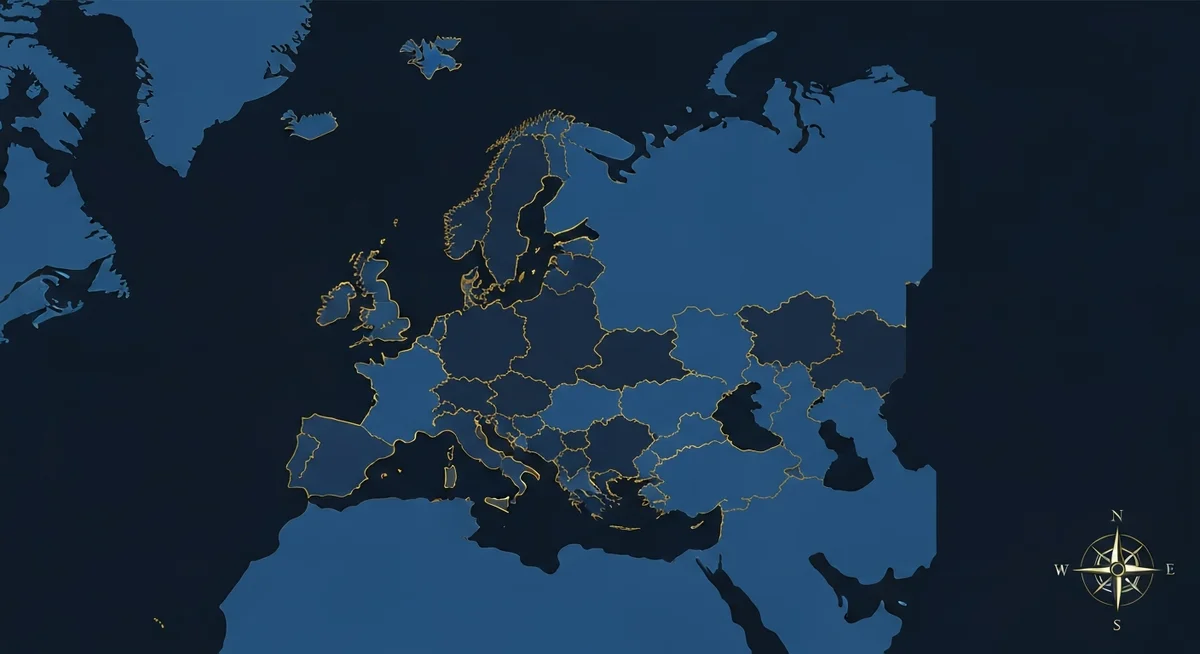
4. Serbia: The Balkan Workhorse
Serbia operates the most actively used merit-based route in the Balkans. The legal basis is Article 19 of the Law on Citizenship of the Republic of Serbia, which authorizes the Government to grant citizenship to foreign nationals whose admission is “in the interest of the Republic of Serbia.” That phrase is famously elastic.
Serbia’s Article 19 grants are not just a quiet investor channel. They are a public branding exercise too. Ralph Fiennes received a Serbian passport in 2017 after filming Coriolanus and The White Crow in country. Steven Seagal was handed Serbian citizenship in 2016 after publicly aligning with Belgrade on cultural and security matters. Ukrainian-born ballet star Sergei Polunin received a Serbian passport in 2017, as have a string of Russian and South American footballers, basketball players, and martial artists who agreed to represent Serbian sports clubs and national teams. None of these recipients spoke Serbian. None had any Serbian heritage. All cleared Article 19 because the government decided their visibility served the Republic.
The Serbian government has also applied Article 19 to a wide range of less famous cases over the last decade. Russian and Ukrainian entrepreneurs relocating capital after 2022 used the route heavily. Chinese and Middle Eastern investors funding manufacturing capacity in Serbia have followed. The unwritten threshold sits considerably lower than in EU member states, often below €1 million for the right kind of productive investment. Processing can run as fast as four to nine months once the file is properly built.
The Serbian passport is not an EU passport, though Serbia is a candidate country with active accession negotiations. Visa-free access covers 135 destinations on the 2026 Henley Passport Index including the entire Schengen Area, China, and Russia. Dual citizenship is permitted. For investors who want the optionality of a future EU passport without paying current EU prices, Serbia has been one of the most popular waypoints in 2025. The clock is ticking on this window. EU accession will tighten the rules, and rates inside Serbia have risen as demand has grown.
5. Albania: The NATO Outsider That Just Naturalised a Former NYC Mayor
Albania runs one of the most actively used merit grants in Europe today. The legal basis is Article 9 of Law No. 8389 on Albanian Citizenship, which allows the Council of Ministers, on a proposal from the President of the Republic, to grant citizenship to any foreign national whose naturalisation is of “scientific, economic, cultural or national interest” to the Republic. Recent amendments expanded the qualifying categories to include education, art, and sports. The President signs each grant by decree.
If you want a current case study, look no further than April 2026. Former New York City mayor Eric Adams was granted Albanian citizenship by special decree of President Bajram Begaj on April 10, 2026, dated only months after Adams left office. Adams had visited Albania during his tenure, met with Prime Minister Edi Rama, and hosted three flag-raising ceremonies in New York for the Albanian community. The decree formalised what Albanian officials called “an enduring relationship and mutual respect.” It also made Adams an EU candidate-state passport holder roughly three months after his last day in office on January 1, 2026. Whatever you think of Adams, the speed and discretion of the route are difficult to ignore. Liberty Mundo’s full Albania citizenship guide walks through how the same mechanism applies to private clients without political profiles.
Albania’s Article 9 has been used heavily since 2017. President Ilir Meta granted Albanian citizenship to 419 individuals on “special interest” grounds during his term alone. Current practice continues at similar volume. The bar is workable for serious investors with credible contributions in priority sectors, particularly tourism, energy, agribusiness, and tech. Pricing remains lower than EU member states. The Albanian passport offers visa-free access to roughly 120 destinations including the Schengen Area, and Albania holds firm EU candidate status with active accession talks. Dual citizenship is permitted. For applicants who want a fast, real merit-based path with eventual EU upside, Albania is the route most professionals are flagging in 2026.
Comparing the Five Citizenship by Exception Routes
| Country | Legal Basis | Indicative Contribution | Processing Time | Passport Strength | EU Status |
|---|---|---|---|---|---|
| Austria | Section 10(6) Federal Citizenship Act 1985 | €2M to €10M productive investment | 18 to 36 months | 185 visa-free | Full EU member |
| Malta | Act XXI of 2025 (Citizenship by Merit) | €1.5M to €5M+ | 12 to 24 months | 183 visa-free | Full EU + Schengen + eurozone |
| Spain | Article 21 Civil Code (Carta de Naturaleza) | Negotiable, often seven figures | 12 to 36 months | 186 visa-free | Full EU + Schengen + eurozone |
| Serbia | Article 19 Law on Citizenship | €500K to €2M productive | 4 to 9 months | 135 visa-free | EU candidate, not member |
| Albania | Article 9 Law No. 8389 on Albanian Citizenship | Negotiable, often €500K+ | 4 to 12 months | ~120 visa-free | EU candidate, NATO member |
Indicative contribution figures reflect industry observation rather than published government schedules. Discretionary citizenship grants have no official price list anywhere. The actual amount required varies by applicant profile, sector of contribution, current political climate, and the strength of the file presented.
The Economics of Citizenship by Exception
Citizenship by exception costs considerably more than the formal investment programs ever did. Without a published minimum, pricing depends on three factors: the applicant’s profile, the sector of contribution, and the depth of the advisor relationship into the granting government. Vanilla cases do not exist. Every file is custom.
Professional fees scale up to match. The old citizenship by investment programs ran on volume. Law firms charged five-figure retainers because the application process itself was largely a checklist exercise. Discretionary cases require negotiation, government relationship management, narrative construction, and ongoing case management for twelve to thirty-six months. Six-figure professional fees are now standard for serious files. Anything cheaper is either incomplete or fraudulent.
The economics also include risk pricing. Investment programs guaranteed approval if the applicant met the published criteria and passed due diligence. Merit grants offer no such guarantee. Approvals happen at executive discretion. A government that loses an election may rethink pending files. A minister who championed a case can be replaced. Sophisticated firms structure their fee arrangements to align incentives, with significant portions tied to actual approval rather than file submission.
One pattern is consistent across all five jurisdictions covered above. Productive investments outperform pure donations every time. A €5 million factory creating local jobs beats a €5 million government bond purchase. A research endowment at a national university beats a treasury contribution. Governments granting these passports want to be able to point to something tangible if anyone asks why a specific foreigner became a citizen. Tangible matters.

How to Apply for Citizenship by Exception: Step by Step
Step 1: Confirm baseline eligibility. Citizenship by exception is not a backup plan for applicants with disqualifying records. Clean criminal history, no sanctions exposure, no politically exposed person flags that cannot be explained, and no recent denials from any other naturalisation route are baseline requirements. Source-of-funds documentation must be airtight. Any jurisdiction granting passports under a discretionary route looks at vetting twice as carefully as a structured program ever did.
Step 2: Pick the right jurisdiction. Each of the five countries above has a distinct profile. Austria suits applicants with significant industrial or research-driven contributions and patience for an eighteen-month-plus process. Malta works for applicants who need full EU rights quickly and can structure a credible merit narrative. Serbia fits investors who want speed and acceptable cost while building toward future EU membership. Spain rewards applicants with cultural, athletic, or academic profiles. Albania is the fastest active route in the Balkans and welcomes investors in tourism, energy, agribusiness, and tech.
Step 3: Build the contribution narrative. The single most important deliverable in any merit-based case is the narrative. Why does this country benefit by granting you citizenship? What does the country gain that it would not gain otherwise? The narrative is anchored by the contribution itself, but it lives in supporting evidence: letters from local partners, university administrators, industry associations, and government officials. A thin narrative kills approvals even when the contribution is generous.
Step 4: Engage local counsel and government affairs. A discretionary citizenship file is not a paperwork exercise. Every successful case runs through a local team that maintains real relationships inside the relevant ministry. Pricing reflects this. Expect to engage local counsel in addition to your primary international advisor. The local team handles the in-country relationship management that no foreign firm can replicate.
Step 5: Execute the contribution. Once the narrative and government engagement reach a point where indicative approval is signaled, the contribution is executed. This is typically a productive investment, a research endowment, or a strategic philanthropic gift. Pure cash donations to government treasuries are accepted in some cases but rarely produce the strongest files. The execution paper trail must be flawless. Wires must come from documented funds. Holding structures must be transparent on request.
Step 6: Submit the formal file. The formal file goes to the relevant ministry, which conducts due diligence and prepares the case for cabinet review. Standard documentation includes notarised passport copies, criminal records from every country of residence in the last ten years, source-of-funds documentation, professional CV, proof of contribution, and the merit narrative. Files often run to several hundred pages.
Step 7: Cabinet or presidential approval. The final decision is made at the executive level. Austria requires Council of Ministers approval. Malta requires Council of Ministers approval. Spain requires Royal Decree by Council of Ministers. Albania requires presidential decree on Council of Ministers proposal. Serbia requires government decision. None of these decisions are appealable. If the cabinet refuses, there is no judicial recourse beyond procedural review.
Step 8: Citizenship oath and passport issuance. Approved applicants take a citizenship oath, often in person at an embassy or consulate. The passport is issued shortly after. Most countries do not require a public ceremony for these grants. Some require physical presence in-country for the oath. The new passport is operational immediately upon issuance, and visa-free travel rights kick in from that moment.
Common Mistakes Applicants Make
Merit-based applications fail for predictable reasons. Most failures trace back to one of five errors that experienced firms see repeatedly across jurisdictions.
Treating it like an investment program. Applicants who walked into an office expecting to write a check and receive a passport got rejected fast. Discretionary cases require narrative, relationships, and patience. The contribution is the floor, not the ceiling. Anyone telling you otherwise is selling something they cannot deliver.
Engaging the wrong advisors. The market is full of firms that previously sold investment programs and pivoted to “merit-based” without rebuilding their actual capability. Real citizenship by exception practice requires deep government relationships, sector expertise in contribution structuring, and case management discipline. Marketing materials are not capability. Verify references with actual approved clients before signing engagement letters.
Rushing the narrative. A contribution constructed in three weeks rarely produces a credible merit story. The strongest cases involve applicants whose contribution to the country has been building for years before the citizenship application. Where that history does not exist, it has to be created carefully and over time. Trying to compress the narrative into a transactional timeline triggers the exact red flag the EU Court called out.
Choosing the wrong jurisdiction. Each of the five countries has a different sweet spot. An applicant with a strong cultural profile is wasted in Serbia. An industrial investor is undervalued in Spain. The first conversation with a serious advisor should be about jurisdiction fit, not pricing.
Underestimating ongoing obligations. Some jurisdictions impose post-grant obligations. Tax residency assumptions can shift after citizenship is granted. Source-of-funds reporting may continue. Reputational expectations matter, since governments can revoke citizenship in cases of fraud or serious misconduct. The passport is not the end of the relationship. It is the beginning of a long one.
Citizenship by Exception vs Citizenship by Investment
| Feature | Citizenship by Investment (legacy) | Citizenship by Exception (current) |
|---|---|---|
| Legal status | Mostly closed in EU after 2025 | Active in all five featured countries |
| Process | Standardized checklist | Discretionary cabinet decision |
| Published price | Yes, on government websites | No, never published |
| Residency required | Sometimes (12 months in Malta) | Rarely |
| Approval guarantee | If criteria met, yes | None, fully discretionary |
| Typical timeline | 6 to 14 months | 4 to 36 months by jurisdiction |
| Indicative cost | €100K to €2M | €500K to €10M+ |
| EU passport possible | Was, until 2025 | Yes, four of five featured countries |
| EU legal exposure | Hostile (ECJ ruling) | Sovereign prerogative |
| Public visibility | Statistics published | Near zero |
The bottom line: citizenship by exception costs more, takes longer, and offers no approval guarantee. In return, it survives in a regulatory environment that killed the cleaner alternative. For high-net-worth families who genuinely need an EU passport and have been priced out of legacy programs anyway, the merit-based route is now the only viable game in town.
Where the Shadow Market Is Heading
Three trends shape the merit citizenship market into 2027 and beyond. None of them favor inaction.
Pricing keeps rising. The Maltese reset, in particular, set indicative price floors well above what the old MEIN program required. Austria’s market has tightened as demand has shifted from killed programs into Section 10(6). Albanian and Serbian pricing has caught up to the increased flow. Anyone waiting for prices to fall is misreading the market entirely.
New jurisdictions are studying the model. Several Balkan governments are reviewing their existing nationality statutes for merit provisions that could be revived or expanded. The Caucasus is watching closely. Latin American jurisdictions with longstanding presidential discretion provisions, including Argentina under its 2025 framework adjustments, are seeing renewed interest from EU-displaced demand. The pool of usable jurisdictions will expand, not contract.
Brussels keeps watching. The EU Commission has signaled interest in tightening member-state nationality practices generally, although the merit-based route is harder to attack legally than investment programs ever were. Expect ongoing rhetorical pressure. Expect occasional case-specific challenges. Do not expect a structural ruling that closes the merit-based route, because such a ruling would require Brussels to claim a power the founding treaties left in member-state hands.
The clock is ticking for applicants who want to lock in current pricing and current jurisdiction options. Wake-up call: the window is unlikely to widen.
Frequently Asked Questions About Citizenship by Exception
What does citizenship by exception actually mean?
Is citizenship by exception the same as citizenship by merit?
How much does citizenship by exception cost?
Why did Brussels not kill citizenship by exception along with citizenship by investment?
Can family members be included in a citizenship by exception application?
How long does the merit-based naturalisation process take?
Do I need to live in the country to qualify for merit citizenship?
Will my home country know I obtained a second citizenship?
Can a discretionary citizenship grant be revoked later?
Does a discretionary citizenship grant trigger tax residency in the country?
Is citizenship by exception legal under EU law?
Are there other countries beyond these five that offer citizenship by exception?
Final Thoughts: The Shadow Market Is the Market Now
Citizenship by investment is dead. Long live citizenship by exception. The same families that bought Maltese passports for €750,000 in 2022 are now writing seven-figure checks for the same product under a different legal label. Brussels won the headline battle and lost the underlying war. Demand for alternative citizenship has not softened. Wealthy families still need backup passports for tax pressure, political risk, and travel friction. The advisors who built the old industry have rebuilt around the new framework.
The five countries featured here are where serious applications flow today. Austria offers the most established route. Malta has reset the EU-wide template. Spain runs a centuries-old letter-of-naturalisation system that rewards cultural and athletic profiles. Serbia is the Balkan workhorse used by Ralph Fiennes, Steven Seagal, and a long list of athletes. Albania is the fastest active route in Europe, recently used by former NYC mayor Eric Adams and dozens of investors before him. Each country rewards careful jurisdiction selection, strong narrative, and disciplined execution.
Liberty Mundo helps clients navigate the merit-based citizenship process from first jurisdiction conversation through passport in hand. The work is long, the cases are custom, and the outcomes matter for decades. If you have been priced out of investment migration or watched your preferred program close, the merit-based route is where to look next. Read more on alternative passport strategies in our guides on second citizenship, asset protection, and global residency. Country-specific resources exist for Austrian incorporation, Maltese incorporation, Spanish corporate structures, Serbian incorporation, and Albanian citizenship by special interest. Longer-form analysis sits in our pieces on tax residency planning and the Liberty Mundo strategy call service for clients ready to move beyond research into execution.
Sources and References
- Court of Justice of the European Union, Judgment in Case C-181/23, Commission v Malta (29 April 2025)
- Republic of Austria, Federal Citizenship Act 1985, Section 10(6)
- Republic of Malta, Maltese Citizenship Act, as amended by Act XXI of 2025
- Government of Spain, Civil Code of Spain, Article 21 (Carta de Naturaleza)
- Republic of Serbia, Law on Citizenship of the Republic of Serbia, Article 19
- Republic of Albania, Law No. 8389 on Albanian Citizenship, Article 9
- European Commission, Investor Citizenship and Residence Schemes in the EU
- OECD, Residence and Citizenship by Investment Schemes