
For fifty years, Costa Rican citizenship extradition was a contradiction in terms. A Costa Rican passport was not just a travel document. It was a legal wall. Article 32 of the constitution said no Costa Rican could be forced to leave the country against their will, and the courts read that to mean citizens, by birth or by naturalization, could not be handed to a foreign government. Full stop. Word got around. Financiers, corrupt ministers, fraudsters and a few drug men all worked out the same thing: get the passport, keep your freedom.
That world ended in May 2025. Costa Rica amended Article 32 and, for the first time in its history, allowed its own nationals to be extradited. In March 2026 it actually did it, putting two citizens on a plane to the United States. But the reform is narrower than the headlines suggest, and the old shield still stands for most people. Let’s be blunt about what changed, who exploited the gap over the years, and where the protection genuinely still holds.
Put your assets beyond reach in 57 jurisdictions.
Pick where you want your company. We handle the filing, the registered agent, and the bank introduction. From US$1,290, done in days, not months.
- Charging-order protection in jurisdictions courts can't pierce
- Zero tax on foreign income in 30+ territories
- Banking options available
- Fixed price. No surprise fees at closing
Why a Costa Rican Passport Blocked Extradition for Fifty Years
The protection came from one line in the constitution. Article 32 read that no Costa Rican could be compelled to leave the national territory. Costa Rica’s extradition statute layered on top of it, protecting citizens by birth and by naturalization alike. A foreign national who naturalized got exactly the same immunity as someone born in San José. There was no asterisk for how you got the passport or what you were running from.
Two things made this unusually attractive. First, Costa Rica is stable, pleasant and democratic, not some pariah state where you trade freedom for misery. Second, its treaty network has always had big holes. It has an extradition treaty with the United States, and with Spain, Italy, Belgium, Colombia, Mexico and a handful of others. It has no treaty with the United Kingdom, Germany, France, or most of Europe. Pair the citizen shield with a missing treaty and you get one of the softest landing spots on earth for someone with a warrant behind them.
We see this pattern constantly in our own work. People fixate on whether a country has a treaty and forget the far bigger lever is whether it will surrender its own nationals at all. A treaty gap slows things down. A constitutional bar on extraditing citizens stops them cold. Costa Rica had both, and for decades that combination did the heavy lifting for people who understood how the pieces fit. For the wider picture on that second lever, see our guide to countries that won’t extradite their citizens.
The Costa Rica Extradition Loophole in Plain English
The Costa Rica extradition loophole worked because citizenship, not just residency, was the trigger for immunity, and Costa Rica handed out citizenship through routes that were easy to game. Marriage to a Costa Rican, a few years of residency, or an investment could all lead to naturalization. Once naturalized, the constitutional shield attached and a foreign warrant lost its bite.
Here’s the kicker. Costa Rica does not sell citizenship. There is no passport-for-cash program, which is one reason the country never drew the same scrutiny as the Caribbean CBI shops. People built genuine-looking lives instead: a local spouse, a company, an address. Public debate in Costa Rica has long focused on foreigners, some from Colombia and Mexico, who used marriage, residency or investment to acquire nationality and then waved away extradition requests from home. The mechanics were dull and bureaucratic, which is exactly why they worked. If you want the legitimate version of this path, our guide to a second passport in Costa Rica lays out the real seven-year naturalization process.
Robert Vesco: The Original Blueprint
Long before the marriage-and-naturalization crowd, there was Robert Vesco. The American financier fled to Costa Rica in February 1973 with roughly 200 million dollars looted from investors and a fraud case building behind him in the United States. He did not naturalize. He did something arguably smarter. He bought political protection.
Vesco poured money into a company linked to then-president José Figueres. Just before Figueres left office in 1974, the legislature passed a bill, popularly nicknamed the “Vesco Law,” that handed the president the final say over extradition decisions. Translation: as long as Vesco had the president onside, no court could ship him out. He lived openly in Costa Rica until 1978, when a new president, Rodrigo Carazo, repealed the law. Vesco read the room and left, first for the Bahamas, then Antigua, then eventually Cuba, where he died in 2007.
Vesco never held a Costa Rican passport. But his story set the template that later fugitives refined: Costa Rica would tolerate you if you embedded yourself, and the legal system could be shaped to keep you safe. The naturalization crowd simply swapped presidential favors for a marriage certificate and Article 32.

The Romanian Fugitives Who Made Costa Rica Home
The clearest modern case study is Romanian. Around 2017 and 2018, two of the most powerful women in Romanian public life turned up in San José as fugitives. Alina Bica had been Romania’s chief anti-organized-crime prosecutor before she was convicted on corruption-related charges. Elena Udrea was a former Tourism Minister and one-time presidential candidate, later sentenced to six years for bribery tied to a 2009 campaign. Both ran. Both chose Costa Rica.
Why there? Romania and Costa Rica have no extradition treaty, and Costa Rica does not surrender its own protected persons. Bica and Udrea applied for refugee status, which, if granted, shields a person from extradition much as citizenship does. The clock is the fugitive’s friend here. Refugee claims, appeals, and Costa Rica’s slow courts can stretch a case out for years, and years bought abroad are exactly the point.
They did not arrive alone. An investigation by OCCRP and Semanario Universidad traced a whole entourage of Romanian defendants and a local fixer, Mihai Radulescu, a Romanian businessman with his own checkered past. Radulescu had entered Costa Rica in 2012 and, within a month, married an 18-year-old local woman he could not plausibly have met before the wedding. That marriage got him naturalized. As the reporters put it bluntly, no Costa Rican citizen, naturalized or otherwise, could be extradited. He divorced roughly three years later, prenuptial agreement intact, money untouched.
| Fugitive | Home country | Route used in Costa Rica | Outcome |
|---|---|---|---|
| Robert Vesco | United States | Political protection (“Vesco Law”) | Protected 1973 to 1978, left after repeal |
| Mihai Radulescu | Romania | Naturalization via marriage | Became a citizen, immune from extradition |
| Alina Bica | Romania | Refugee claim, no Romania treaty | Fought extradition through domestic courts for years |
| Elena Udrea | Romania | Refugee claim, no Romania treaty | Fought extradition through domestic courts for years |
The shield was never quite absolute, though. Romania did claw a few people back. In 2014 it repatriated Emil Dan Sirbu, a drug trafficker serving a 13-year sentence. In August 2015 it returned Vergil Hampu, convicted in a fraud case worth about 370,000 dollars. Both came back not through a bilateral treaty but through UN conventions and diplomatic channels, the slow, uncertain, case-by-case path that a treaty gap forces on a requesting state. Possible, yes. Reliable, not even close. That gap between “possible” and “reliable” is where the whole strategy lived.
What Changed in 2025: The Article 32 Reform
Costa Rica changed Article 32 on May 28, 2025, when the Legislative Assembly voted 44 to 13 to allow the extradition of Costa Rican citizens for the first time. The amendment is deliberately narrow. It covers international drug trafficking and terrorism only. Every other offence, from fraud to money laundering to corruption, still cannot get a Costa Rican national extradited.
Read that scope again, because it matters more than the fact of the reform itself. The pressure for change came from Washington and from Costa Rica’s own surge in drug violence, so lawmakers aimed the amendment squarely at cartels and traffickers. They left everything else alone. A Costa Rican citizen accused of running a wire-fraud empire out of San José is still, today, constitutionally unextraditable. Critics have called the scope razor thin, pointing out that organized crime also runs extortion, cyber fraud, illegal mining and human trafficking, none of which trigger the new rule. That criticism is fair. It is also exactly why the old shield survives for so many people.
The Gamboa Case: Costa Rica’s First Citizen Extraditions
Theory became reality in March 2026, when Costa Rica extradited two of its own citizens to the United States for the first time ever. The lead figure was no small fish. Celso Gamboa Sánchez had been a deputy attorney general, a national intelligence and security director, and a magistrate on the Supreme Court’s criminal chamber. US prosecutors in the Eastern District of Texas accused him of using those posts to help traffickers move cocaine. His co-defendant, Edwin López Vega, went with him. Both had been sanctioned by the US Treasury in 2025.
The legal engine was a 500-page ruling from the San José Criminal Court of Appeals on February 3, 2026. One part of it should get everyone’s attention. The court called the alleged crimes “continuous or permanent” offences that ran past the May 28, 2025 amendment date, so it sidestepped the ban on retroactive laws. Crimes that began before the reform but kept going after it fall inside the new framework. That doctrine quietly widens the door well beyond what the plain text of the amendment suggests.
The court did not hand Washington a blank cheque. It imposed hard conditions, and they now bind every future citizen case.
| Condition imposed on the US | Requirement |
|---|---|
| Sentence cap | No life sentence and no term over 50 years |
| Time credit | Detention served in Costa Rica counts toward the US sentence |
| Formal assurance | Diplomatic guarantees within two months, renewable |
| Death penalty | Guaranteed off the table |
| Specialty principle | Prosecution limited to the offences in the extradition order |
| Humanitarian access | Defendants allowed to say goodbye to minor children before transfer |
President Rodrigo Chaves called Gamboa “the tip of the iceberg.” Attorney General Carlo Díaz called the day historic. Over a dozen similar cases are reportedly in the pipeline, all drug cases. Worth noting: a third co-defendant, Jonathan Álvarez Alfaro, had his extradition revoked on appeal. Even in the new era, the courts are not rubber-stamping anything.
Where Costa Rican Citizenship Still Blocks Extradition
Costa Rican citizenship still blocks extradition for every offence outside international drug trafficking and terrorism, provided the nationality is genuine and was not obtained by fraud. That is the honest bottom line after 2025. Fraud, tax crimes, money laundering, corruption, cybercrime, extortion: a real Costa Rican citizen cannot be extradited for any of them today. The reform narrowed the shield. It did not remove it.
Two conditions carry the whole thing, and both deserve attention. The nationality has to be real and lawfully obtained, and the person has to be clear of the international drug trade. Miss either and the protection evaporates.
Start with the fraud problem. Costa Rica has never treated a fraudulently obtained passport as a valid one. Under the Law of Options and Naturalizations, citizenship acquired through false information or a sham can be declared null after a formal process. Once the naturalization is annulled, the person reverts to being a foreign national and faces the ordinary treaty-based extradition process like anyone else. Costa Rica sharpened this back in 2009, when it moved specifically against fake marriages: notaries, witnesses and bogus spouses can face up to five years in prison, and the authorities can void the marriage and strip the citizenship that flowed from it. A marriage-mill passport was always a weak foundation. It is weaker now.
Then there is the naturalization window. The old carve-out that predates 2025 still bites: crimes committed during the naturalization process itself may fall outside the nationality shield. If the underlying conduct happened while the paperwork was still pending, the protection you think you bought may never have existed. This is the kind of detail official summaries skip and defendants discover far too late.
- Nationality is genuine and lawfully obtained, not a product of fraud or a sham marriage
- The offence is not international drug trafficking or terrorism
- The conduct did not occur during the naturalization window
- No “continuous offence” that ran past May 28, 2025 in a drug or terrorism matter
Clear all four and, as the law stands in 2026, a Costa Rican national keeps one of the strongest citizen shields in Latin America. This is not a licence to evade a legitimate prosecution, and it is not advice to do so. It is simply how the framework reads today, and the framework can and does change under political pressure, so treat any read of it as a snapshot, not a guarantee.
The European Treaty Gap Still Matters
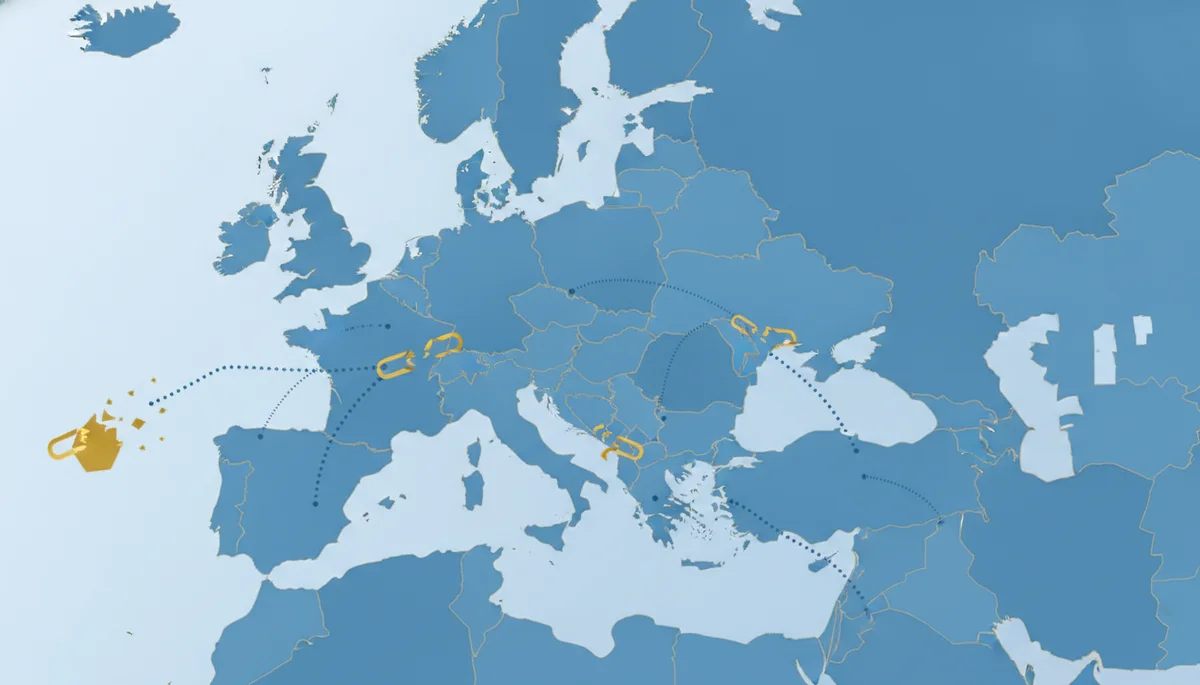
The 2025 reform did nothing to Costa Rica’s treaty map, and that map is the other half of the story. Costa Rica has no extradition treaty with the United Kingdom, Germany, France, the Netherlands, or most of the EU. Only Spain, Italy and Belgium have bilateral agreements. Costa Rica sits outside the European Arrest Warrant system and is not party to the European Convention on Extradition of 1957.
For someone whose exposure is European rather than American, that gap is doing more work than Article 32 ever did. No treaty means no binding obligation to comply. A requesting country has to go the ad hoc route through diplomatic channels and Costa Rica’s own courts, with no treaty-based procedural rights and a much higher bar. Romania proved it is possible. It also proved it is slow and uncertain. If your concern is a UK or German warrant, our guides to extradition to the UK and the broader list of non extradition countries explain how these gaps play out in practice.
How Costa Rica Tightened the Screws: Step by Step
Step 1: Amend the constitution. On May 28, 2025, the Legislative Assembly voted 44 to 13 to amend Article 32, permitting extradition of nationals for international drug trafficking and terrorism.
Step 2: Build the precedent. The San José Criminal Court of Appeals issued a 500-page ruling on February 3, 2026, approving the Gamboa extradition and setting mandatory conditions, including a 50-year sentence cap.
Step 3: Beat the retroactivity ban. The court classified the crimes as continuous offences extending past the amendment date, allowing conduct that began earlier to fall inside the new framework.
Step 4: Execute. In March 2026, Gamboa and López Vega were physically transferred to US custody, the first citizens Costa Rica has ever extradited.
Costa Rica Versus Other Latin American Shields
Costa Rica now sits in the middle of the regional spectrum. Panama still fully protects its nationals from extradition. Colombia has extradited its citizens to the US for decades and has the broadest scope of any country in the region. Ecuador carved out a drugs-and-terror exception in 2024, a year before Costa Rica did the same. The direction of travel across Latin America is one way, and Washington is doing the pushing. If a Latin passport is part of your plan B, that ship is sailing on drug exposure specifically. For other offences, the protections mostly hold.
| Country | Extradites own citizens? | Scope | EU treaty coverage |
|---|---|---|---|
| Costa Rica | Since 2025, limited | Drug trafficking and terrorism only | Spain, Italy, Belgium only |
| Panama | No | Full protection for nationals | Limited |
| Ecuador | Since 2024, limited | Drugs and terrorism | Limited |
| Colombia | Yes | Broad | Several EU nations |
The regional lesson is a wake-up call for anyone still treating a single Latin American passport as a fortress. Diversification beats any one jurisdiction. A second nationality in a country that flatly refuses to surrender its citizens is a stronger position than betting everything on one constitution that a 44-vote majority can rewrite in an afternoon. Our roundup of countries with no extradition and the deeper second citizenship guide both dig into how to build that kind of redundancy, and Argentina’s newer citizenship by investment route is one regional option worth understanding.

What This Means If You Actually Live There
If you are a foreign national with Costa Rican residency, nothing about your extradition exposure changed in 2025. Residency never gave you the citizen shield. You have always been subject to Costa Rica’s treaty network, and you still are. People conflate residency and citizenship all the time, and it is an expensive mistake. Our Costa Rica residency and retire in Costa Rica guides are clear that a residency card is an immigration status, not a legal firewall.
If you are a naturalized Costa Rican citizen, you are now exposed on drug trafficking and terrorism, and shielded on everything else, assuming your naturalization was clean. Most people reading this are ordinary expats and entrepreneurs with zero drug exposure, and for them the practical answer is simple: the passport still does what a strong passport should. On strength, Costa Rica’s document ranks around 24th worldwide with roughly 148 visa-free destinations according to Liberty Mundo’s Passport Freedom Index, which is a genuinely useful travel and residency asset quite apart from any extradition question.
Frequently Asked Questions About Costa Rican Citizenship Extradition
Can Costa Rica extradite its own citizens now?
Did people really use Costa Rican citizenship to avoid extradition?
Does Costa Rican citizenship still protect against extradition after 2025?
What happens if citizenship was obtained by fraud?
What was the Vesco Law?
Who were Alina Bica and Elena Udrea?
Does residency in Costa Rica protect against extradition?
What is the continuous offence doctrine in the Gamboa case?
Does Costa Rica have an extradition treaty with the UK or Europe?
Is Costa Rica a non-extradition country?
Final Thoughts: A Narrower Door, Not a Closed One
Costa Rica spent half a century as one of the most reliable citizen shields on the planet, and a single 44-vote amendment rewrote that in an afternoon. That alone is the lesson. Any protection that rests on one clause of one constitution can move, and this one moved under direct pressure from Washington. The people who leaned on it hardest, from Vesco to the Romanian entourage, are a reminder that the gap was real, and so is its closing.
What survives is worth stating plainly. For a genuine Costa Rican national who came by the passport honestly and has nothing to do with the international drug trade, the shield still stands across the entire non-drug, non-terror universe of offences. That is a narrower door than 2024, but it is not a closed one. The smart move was never to bet everything on it anyway. Build redundancy, understand exactly which lever protects you, and keep reading: our guide to the countries that don’t have extradition treaties with the US is a good next step.
Sources and References
- US Congress, Treaty Document 98-17: Extradition Treaty with Costa Rica
- US Department of Justice, List of Participating Countries in International Criminal Cooperation
- OCCRP, A Welcoming Caribbean Shore for High-Level Romanian Fugitives
- OCCRP, Costa Rica’s Long and Winding Road to Extradition
- Library of Congress, Costa Rican Law on the Extradition of its own Nationals
- Organization of American States, Description of the Costa Rican Extradition System
- Human Rights Library, Constitution of the Republic of Costa Rica