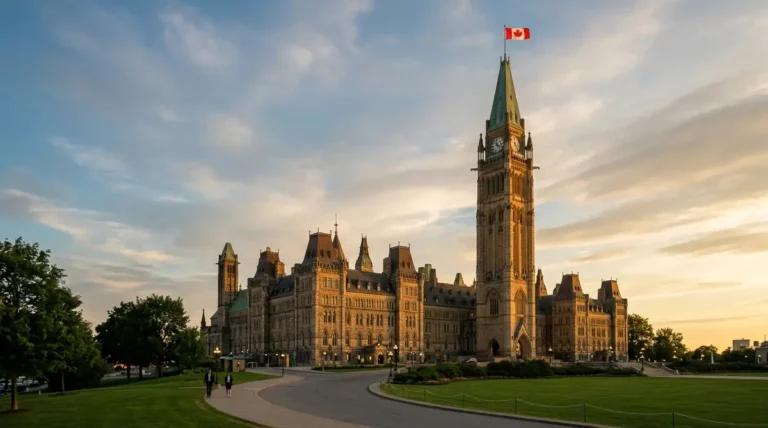
Bill C-3 citizenship certificates are being pulled back by Ottawa, just months after the government handed them out. Immigration, Refugees and Citizenship Canada has started telling recipients of citizenship-by-descent certificates to surrender their documents while it re-examines their files. For thousands of people who thought their Canadian status was finally settled, the ground has shifted overnight.
OTTAWA, Canada — 19 June 2026
The reversal lands on one of the most talked-about reforms in years. Bill C-3, the “Lost Canadians” law, came into force on 15 December 2025 and scrapped the first-generation limit that had blocked many Canadians born abroad from passing citizenship to their own children born abroad. The change was retroactive and automatic, and IRCC estimated more than 110,000 people worldwide were suddenly recognised as citizens from birth.
Then came the letters. On 15 June 2026, IRCC began notifying an undisclosed number of certificate holders that it had information suggesting they “may not be entitled” to the certificate they were issued. The notices, signed by Registrar of Canadian Citizenship Peggy Sun, ask recipients to return the documents pending review.
Put your assets beyond reach in 57 jurisdictions.
Pick where you want your company. We handle the filing, the registered agent, and the bank introduction. From US$1,290, done in days, not months.
- Charging-order protection in jurisdictions courts can't pierce
- Zero tax on foreign income in 30+ territories
- Banking options available
- Fixed price. No surprise fees at closing
What the Bill C-3 citizenship letters actually say
Let’s be blunt. Getting a letter from a national government asking for your citizenship certificate back is the kind of thing that ruins your week. The wording is cold. “The purpose of this letter is to inform you that I have information in my possession that indicates that you may not be entitled to hold a Canadian certificate of citizenship,” the notices read.
Here is the important nuance. This is not a revocation. Under Canada’s Citizenship Act, stripping someone of citizenship is a separate legal process reserved for fraud, false representation, or knowingly hiding material facts. The current letters do not allege any of that. They lean on a provision of the Citizenship Regulations that lets the Registrar demand the surrender of a certificate when there is reason to believe the holder may not be entitled to it. Recipients can submit more evidence, and IRCC says it will return the certificate if the review confirms the claim.
Cold comfort if you have already booked a move. Some people had relocated to Canada, or were mid-move, when the notice arrived. They are now stuck in a legal grey zone, holding a document the government wants back but no formal decision either way.

Why certificates got flagged
The numbers tell the story. Between 15 December 2025 and 31 March 2026, IRCC issued 4,075 citizenship certificates under the new Bill C-3 citizenship by descent rules. Nearly half, 1,955, went to US-born applicants. Immigration lawyers speaking to Canadian media estimate at least several hundred of those recipients have now been told to hand the documents back, though IRCC has not confirmed a figure.
The letters point to two documentation failures. First, the records submitted were not from an original source authority. Second, where original documents were not available, the applicant did not include a written explanation of why they could not be obtained and what efforts were made to find them. In plain English, IRCC flagged files where the ancestral chain leaned on commercial genealogy websites rather than certified copies straight from the civil registrar that created the record.
That sits awkwardly with IRCC’s own published guidance, which leaves the door open to “any other evidence” of a parent’s Canadian citizenship. The numbers don’t lie, and neither does the paperwork: if your proof of Canadian citizenship by descent rested on a screenshot from a family-tree platform, you were always exposed.
| Detail | What we know |
|---|---|
| Certificates issued (15 Dec 2025 to 31 Mar 2026) | 4,075 |
| Issued to US-born applicants | 1,955 (nearly half) |
| Suspension letters sent | Undisclosed, estimated several hundred |
| Legal basis | Citizenship Regulations, surrender provision |
| Is it a revocation? | No, documentation review only |
| Can you respond? | Yes, submit additional source documents |
The road from the first-generation limit to Bill C-3
None of this came out of nowhere. The first-generation limit dates to a 2009 rule that allowed citizenship by descent to pass only one generation born outside Canada. Children of that first foreign-born generation were shut out, even with deep Canadian roots. In 2023, the Ontario Superior Court of Justice ruled that limit unconstitutional, which forced Parliament to act. Bill C-3 was the answer.
The reform opened the door to potentially millions of people with Canadian ancestry, especially Americans with French-Canadian or Maritime heritage. Crucially, applicants under the Bill C-3 citizenship rules are not “applying for citizenship” in the usual sense. They are applying for proof of a status the law says they have held since birth. That distinction matters, because it raises a thorny question: can IRCC pull back a certificate on paperwork grounds after it already approved the underlying file? That is the fight headed for the courts.
Is the Bill C-3 citizenship suspension a revocation?
How many certificates were affected?
Why were the certificates flagged?
What should affected recipients do now?
Does a Canadian passport reduce my US taxes?
The direction here could not be clearer. Governments give, and governments take away, often with little warning. The smart response is not panic, it is diversification. If Canada is part of your plan, get your Canadian citizenship by descent evidence airtight, and read our full breakdown of the Bill C-3 reform so you know exactly what IRCC expects. Then build a second option, because the people who sleep well are the ones who never bet everything on a single flag.
Sources and References
- Government of Canada, Changes to citizenship rules in 2025 (Bill C-3)
- Government of Canada, Proof of citizenship beyond the first generation
- CBC News, Government abruptly suspends citizenship certificates issued under ‘Lost Canadians’ law
- EY, Bill C-3, the Lost Canadians Act, comes into force