
If you are thinking about where to retire in Japan, 2026 is a curious year to run the numbers. The yen is still historically weak against the dollar and euro, long-term stay visas remain open for self-funded retirees, and the healthcare system is arguably the best in the world for the price. On the other hand, Japan has tightened several immigration rules this year, expanded taxation of foreign income for long-stayers, and kicked in a new defense surtax that hits corporate income from April 2026.
The short version: you can still retire in Japan comfortably, but you have to pick the right visa, understand how Japanese tax residency works, and keep the US Treasury (if you are American) in the loop. This guide lays out the whole playbook with verified 2026 numbers from the National Tax Agency, the Immigration Services Agency, and primary consular sources.
There is no dedicated Japanese retirement visa. Never was. So the practical route to retire in Japan combines a long-term stay visa based on savings or income, a spouse visa if you are married to a Japanese national, or a business manager visa if you actively run something on the ground. Each route has a different timeline, cost, and tax outcome, and the differences matter.
Japan has five realistic visa routes for retirees, and only one or two will fit your specific profile. Get it wrong and you spend two years on a work-around. Liberty Mundo maps your finances against each available visa, then handles the application end-to-end.
Why Retirees Move to Japan
Ask any expat who has made the jump why they chose to retire in Japan and the same four answers come up. Safety, healthcare, food, and quality of public infrastructure. All four rank among the best in the world by any objective measure, and all four cost less than in the United States, the UK, or most of Europe.
The crime rate is so low that Tokyo routinely posts annual murder counts in the single digits. Public transport runs on time to the minute. Tap water is potable everywhere. Medical care is universal, with cost caps that prevent catastrophic bills. A couple can live comfortably in a regional city for $2,000 to $2,500 a month, including rent. Tokyo runs higher, but not alarmingly so.
The weak yen adds a tailwind for anyone earning in USD, EUR, or GBP. A pension that pays $3,000 USD a month translates to roughly JPY 450,000 at current rates, which is well above the JPY 250,000 minimum for the long-term stay visa and comfortably funds a retirement in most parts of the country outside central Tokyo.

The Visa Options to Retire in Japan in 2026
Japan does not issue a visa called “retirement visa.” You have to find a status that fits your situation. These are the six routes that work for retirees.
| Visa | Duration | Key Financial Test | Fit For |
|---|---|---|---|
| Long-Term Stay (Designated Activities) | 6 months to 3 years, renewable | JPY 30M savings OR JPY 250K monthly income | Self-funded retirees from visa-waiver countries |
| Spouse of Japanese National | 1 to 5 years, renewable | Marriage certificate + stable household income | Anyone married to a Japanese citizen |
| Spouse of Permanent Resident | 1 to 5 years, renewable | Marriage certificate + stable household income | Anyone married to a PR holder |
| Business Manager | 1 to 5 years, renewable | JPY 30M paid-in capital + employee + business plan | Active business owners |
| Highly Skilled Professional | 5 years | 70+ points on HSP scoresheet | Consultants, academics, executives |
| Digital Nomad | 6 months, non-renewable | JPY 10M annual income | Short-term trial period only |
The long-term stay visa is the workhorse for people who want to retire in Japan without a Japanese employer or spouse. It sits under the broad “Designated Activities” category (Tokutei Katsudo) and is issued to applicants from visa-waiver countries who can demonstrate they will not become a burden on Japanese public assistance. The financial bar is either JPY 30 million in liquid savings (about $200,000 at current exchange rates) or JPY 250,000 a month in pension, annuity, or other predictable passive income.
If you are from one of the countries on the bilateral visa-waiver list (US, UK, Canada, Australia, most of Western Europe, among others), this path is open. If your country is not on the list, the long-term stay option is not available and you need to look at the HSP, spouse, or business manager routes instead.
The Long-Term Stay Visa in Detail
The long-term stay visa is the closest thing Japan has to a retirement visa. It is issued under Designated Activities item 11 (長期滞在, Chouki Taizai), commonly referred to internally at immigration offices as the “Sightseeing and Recreation Stay for Long-Term Guests.” The official framing is that you are visiting Japan for an extended period of leisure, not working.
Financial requirements have not changed in 2026. You still need to prove either JPY 30 million in liquid assets (bank certificates, brokerage statements) or JPY 250,000 per month in stable passive income. If you apply as a couple, the assets or income apply to the household, not each person individually.
The catch that most applicants miss: this visa does not permit any work, paid or unpaid, inside Japan. Writing a blog with ad revenue. Consulting remotely for a US employer. Running a YouTube channel. All of it sits in a gray zone that immigration officers may or may not enforce, but the rule as written says you are here for leisure.
The long-term stay visa officially bars any paid activity, and several retirees have had renewals denied for running “hobby” YouTube channels that generated revenue. Liberty Mundo helps you structure pre-move finances, pick the right visa, and stay on the right side of the work rules without killing your passive income.
Cost of Living When You Retire in Japan
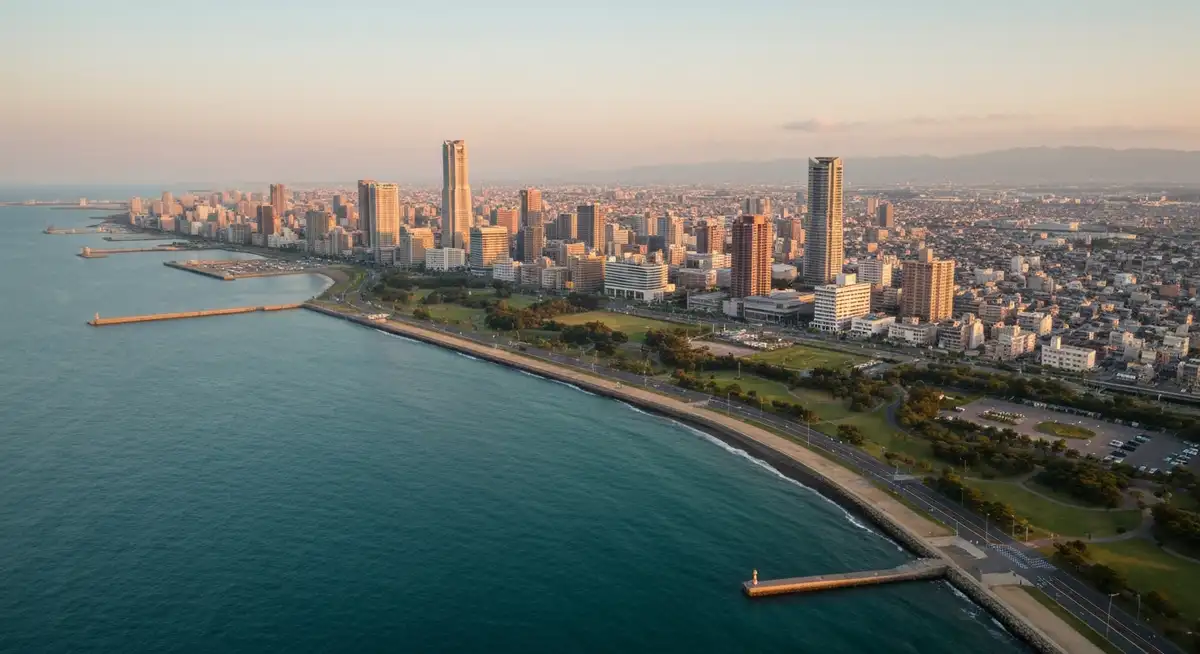
Cost of living to retire in Japan varies wildly by city. Tokyo and Yokohama are the expensive outliers. Osaka and Fukuoka offer major-city life for 20% to 30% less. Regional cities like Sendai, Okayama, and Kanazawa run cheaper still. Here’s what retirees actually spend, based on average expat budgets reported to JETRO and Numbeo (cross-checked against local sources).
| Category | Single in Tokyo (JPY/month) | Couple in Fukuoka (JPY/month) | Couple in Rural Prefecture (JPY/month) |
|---|---|---|---|
| Rent (1-bedroom, decent area) | 120,000 – 180,000 | 70,000 – 100,000 | 50,000 – 80,000 |
| Utilities (electric, gas, water, internet) | 15,000 – 25,000 | 18,000 – 28,000 | 18,000 – 28,000 |
| Groceries | 40,000 – 60,000 | 50,000 – 70,000 | 40,000 – 60,000 |
| Public transport | 10,000 – 15,000 | 8,000 – 12,000 | 5,000 – 10,000 (car likely) |
| Healthcare contributions | 15,000 – 35,000 | 15,000 – 35,000 | 15,000 – 35,000 |
| Entertainment and dining out | 30,000 – 80,000 | 25,000 – 60,000 | 15,000 – 40,000 |
| Total monthly (JPY) | 230,000 – 395,000 | 186,000 – 305,000 | 143,000 – 253,000 |
| Total monthly (USD approx) | $1,550 – $2,670 | $1,260 – $2,060 | $965 – $1,710 |
A couple aiming to retire in Japan on $2,000 to $2,500 USD per month lives comfortably almost anywhere outside central Tokyo. That includes healthcare, internet, a modest entertainment budget, and enough left over for domestic travel. Stretch the budget to $3,500 a month and you are living in Tokyo, eating out three times a week, and taking the bullet train to Kyoto on weekends.
Healthcare for Expats Who Retire in Japan
Universal health insurance is mandatory for every resident, including long-term stay visa holders and foreign retirees. The system runs on two tracks. Employees enrolled through an employer use shakai hoken (employer-sponsored insurance). Everyone else, including retirees and self-employed, enrolls in kokumin kenko hoken (National Health Insurance), administered by your local municipality.
Premiums are income-based. Someone with JPY 0 declared taxable income (common in the first year before worldwide taxation kicks in) pays the minimum, usually JPY 180,000 to JPY 250,000 per year. Higher-income retirees pay more, capped around JPY 890,000 per year at the top end. Most self-funded retirees land at JPY 200,000 to JPY 400,000 per year for the household.
Coverage is generous. The patient pays 30% of the billed cost at point of service, with the rest reimbursed directly by insurance. For retirees aged 70 and above, the co-pay drops to 20%, then 10% for lower-income seniors. The high-cost medical care system (Kogaku Iryohi) caps your monthly out-of-pocket spend based on income, so even a hospital stay will not wipe out your retirement savings.
Japanese Tax Rules for Retirees
Japan distinguishes between three types of resident taxpayers, and the category you fall into determines what is taxable.
| Tax Category | Definition | What Is Taxed |
|---|---|---|
| Permanent Resident Taxpayer | Japanese national, OR foreign national domiciled 5+ years in past 10 | Worldwide income |
| Non-Permanent Resident Taxpayer | Foreign national domiciled in Japan 5 or fewer years in past 10 | Japan-source income + foreign income remitted to Japan |
| Non-Resident Taxpayer | Domiciled outside Japan, present less than 1 year | Japan-source income only |
The non-permanent resident category is the main tax planning tool for new retirees. For the first five years you are a tax resident in Japan, foreign pensions, dividends, and rental income are only taxed by Japan to the extent you remit the money into Japan. Keep your US pension flowing into a US account, pull only what you need for Japanese living expenses, and most of your retirement income escapes Japanese tax.
At year five, you flip into permanent resident tax status and worldwide taxation kicks in. Japanese progressive income tax runs from 5% to 45% nationally, plus a flat 10% local inhabitant tax and a 2.1% reconstruction surtax, for a combined top marginal rate of about 55.9%. Not a trivial jump if you have a substantial pension.
Pension income is taxable in Japan once you are a permanent resident taxpayer, but Japan allows a significant “public pension deduction” (JPY 600,000 to JPY 1,100,000 depending on age and total pension income). Private US pensions typically qualify; the US-Japan tax treaty also assigns primary taxing rights to the country of residence, so most US retirees end up paying Japanese tax and claiming a foreign tax credit on their US return.
The US Tax Trap Every American Must Understand
Here’s what actually happens for a US retiree. You pay Japanese income tax on pensions, interest, dividends, and capital gains once you flip into permanent resident tax status. You also pay US federal income tax on the same income. The US-Japan tax treaty lets you claim a foreign tax credit (Form 1116) for the Japanese tax paid, which reduces your US tax bill dollar-for-dollar on the same income. In practice, most US retirees pay no additional US federal tax because Japanese rates are higher than equivalent US rates.
But you still have to file every year. You also have to file FBAR (FinCEN Form 114) to report Japanese bank accounts if aggregate balances exceed $10,000 at any point in the year, and FATCA Form 8938 if specified foreign assets exceed the threshold ($200,000 for married filing jointly residing abroad). Penalties for non-filing are brutal. The minimum FBAR penalty is $10,000 per account per year for non-willful violations.
Social Security is taxable in Japan (after the non-permanent resident window closes) under the treaty. But the US-Japan Totalization Agreement helps with avoiding dual social security coverage on earned income, if you are still working. For retirees drawing Social Security benefits, expect to owe Japanese tax on those benefits once you hit year six of residence.
Used right, the first five years of Japanese residence can shield most of your foreign pension and investment income from Japanese tax entirely. Used wrong, you surrender the benefit in year one by remitting too much. Liberty Mundo walks you through cash-flow structuring, banking setup, and treaty claims so the non-permanent resident window actually saves you the money it should.
Step by Step: How to Retire in Japan
Step 1: Confirm your visa-waiver eligibility and income qualification. Check whether your nationality is on Japan’s bilateral visa-waiver list. If so, confirm you meet the JPY 30M savings or JPY 250K monthly income threshold. Order certified bank statements and pension verification letters going back at least 12 months.
Step 2: Apply for the Certificate of Eligibility. File the Certificate of Eligibility (COE) application with the regional Immigration Services Agency office. Required documents include application form, passport copies, proof of income or savings, proof of health insurance, and a travel plan or sponsor letter. Processing takes 1 to 3 months.
Step 3: Convert the COE to a visa at your home consulate. Take the approved COE to a Japanese embassy or consulate in your home country. Submit the COE along with your passport, photos, and visa application form. Standard visa fees apply (approximately JPY 3,000 for a single entry, JPY 6,000 for multiple). Visa is issued within 5 business days.
Step 4: Enter Japan and complete landing procedures. On arrival, immigration issues your residence card at the airport. Within 14 days, register your address at the local city office and enroll in National Health Insurance and the National Pension system (mandatory for all residents aged 20-59, optional for 60+).
Step 5: Open a Japanese bank account and set up utilities. Most Japanese banks require six months of residency before opening an account. Start with Japan Post Bank or Shinsei, which accept new residents immediately. Use a registered seal (hanko) where required. Set up utilities, mobile phone, and home internet.
Step 6: Plan for renewal and year-five tax pivot. Visa renewals start three months before expiry. File tax returns annually in February-March. Model your finances for the year-five switch from non-permanent to permanent resident taxpayer status, which brings worldwide taxation and requires treaty-based foreign tax credits for US citizens.
Common Mistakes When You Retire in Japan
First mistake: remitting too much money too fast. Retirees in the non-permanent resident window accidentally make all their foreign income taxable by wiring large sums into Japanese accounts every month. Structure remittances carefully or you lose the five-year tax holiday.
Second mistake: ignoring the National Pension system. Everyone aged 20 to 59 who is a resident must contribute (JPY 17,510 per month in 2026). Retirees aged 60 or older can opt out but often choose to voluntarily contribute to qualify for Japanese pension payouts, which stack with US Social Security.
Third mistake: picking Tokyo. Cost of living ratchets up fast in the capital. Fukuoka, Sendai, and Kanazawa offer bigger apartments, better weather, and lower taxes for the same quality of life.
Fourth mistake: treating the long-term stay visa as a permanent solution. It is not a permanent resident visa. It renews every one to three years at the discretion of the Immigration Services Agency. Plan to qualify for permanent residency or HSP-fast-track status if you want to stay indefinitely.
Citizenship, residency, asset protection, banking, income. Five pillars of international freedom, and retirement moves expose weak spots in every single one. Take the free 2-minute Freedom Score quiz and see exactly where your retirement plan has gaps.
How Japan Stacks Up Against Other Asian Retirement Destinations
| Country | Retirement Visa | Minimum Income / Assets | Worldwide Taxation for Retirees | Healthcare Rating |
|---|---|---|---|---|
| Japan | Long-Term Stay (Designated Activities) | JPY 30M savings OR JPY 250K/month income | After 5 years (non-permanent resident window) | Excellent, universal |
| Thailand | Long-Term Resident Visa (Wealthy Pensioner) | $80K passive income OR $250K investment | Territorial; foreign income taxed only if remitted same year | Good private system, paid at point of use |
| Malaysia | MM2H | MYR 1.5M fixed deposit (age 50+) | Territorial; foreign pensions generally tax-free | Good private system, affordable |
| Portugal | D7 Visa (passive income) | EUR 870/month minimum | Worldwide; NHR regime ended Jan 2024 | Excellent universal SNS |
| Spain | Non-Lucrative Visa | EUR 2,400/month | Worldwide after 183 days | Excellent universal system |
Japan sits in an interesting spot on this list. The income bar is lower than Thailand LTR or Spain’s NLV, the healthcare is arguably the best in class, and the non-permanent resident tax window gives a five-year worldwide-income shield that Portugal and Spain no longer offer. The downside is the pathway to permanent residency (still 10 years for most, 1-3 years for HSP) and the absolute prohibition on dual citizenship if you ever want to naturalize.
Retire in Japan FAQ
How much money do I need to retire in Japan?
Does Japan have a dedicated retirement visa?
Can US citizens avoid US tax by moving to retire in Japan?
How long can I stay on the long-term stay visa?
Can I work part-time after I retire in Japan?
Is healthcare really free when you retire in Japan?
What happens to my pension if I retire in Japan?
Can my spouse accompany me on the long-term stay visa?
Do I have to speak Japanese to retire in Japan?
Can I buy property when I retire in Japan?
Final Thoughts: Is It Worth It to Retire in Japan?
For the right profile, absolutely. If you have $200,000 in liquid assets or $1,700 per month in stable income, enjoy city life or small-town Japanese rhythms, and can tolerate the initial language barrier, Japan delivers a retirement that very few countries can match. Safety, healthcare, food, and infrastructure are genuinely world-class, and the five-year non-permanent resident tax window offers a rare opportunity to shield foreign pension and investment income.
The profile it does not fit: anyone who cannot commit to at least 5 to 7 years in-country (because of the permanent residency timeline), anyone whose retirement income is too low to clear JPY 250,000 monthly, or anyone who thinks they can skate by on English alone in a rural prefecture. For those readers, Thailand, Malaysia, or Portugal usually make more sense.
Japanese immigration is notoriously detail-oriented, and a single paperwork error gets your COE rejected without explanation. Liberty Mundo handles the long-term stay visa filing, COE paperwork, and Japanese tax residency setup so you can focus on finding the right apartment instead of chasing documents.
Before you commit, run the numbers against alternatives. Check the retire-abroad guides on Thailand, Malaysia, and Portugal. If you plan to keep working part-time or run a business, incorporating in Japan via a GK or KK structure may give you a better visa path than the long-term stay route. And if you want to lock in long-term tax planning early, the residency in Japan options (including HSP fast-track) can get you to permanent residency in as little as 1 year.
Sources and References
- Immigration Services Agency of Japan, Visa Information and Residence Status Categories
- National Tax Agency Japan, Income Tax Guide for Foreign Residents
- Ministry of Foreign Affairs of Japan, Visa Application Procedures and Waiver List
- Ministry of Health, Labour and Welfare, National Health Insurance and Pension Systems
- PwC Worldwide Tax Summaries, Japan Individual Tax Summary
- US Internal Revenue Service, FEIE and US Citizens Abroad
- OECD, US-Japan Income Tax Treaty Text