
Foreign entrepreneurs who decide to incorporate in Japan in 2026 are stepping into a market that just rewrote its immigration rulebook for business owners, added a new corporate defense surtax, and nudged every large company’s effective tax rate above 31%. The country is still the world’s third-largest economy, the yen is still historically weak, and credibility with Japanese customers is still impossible to build without a local entity. But the cost of entry jumped in October 2025, and the window to transition under old rules is closing.
The two structures that matter are the Kabushiki Kaisha (KK, stock company) and the Godo Kaisha (GK, similar to an LLC). A small number of foreign owners use the Japan branch of a foreign parent or a representative office, but those are niche tools. For almost every new market entry, the question is KK or GK. Picking the wrong one can cost you six figures in unnecessary setup and restructuring fees later.
This guide breaks down what it actually costs and takes to incorporate in Japan in 2026, what the new Business Manager visa rules require, and how corporate taxation works under the new defense surtax that kicks in April 2026. Every rate, fee, and timeline here comes from JETRO, the Ministry of Justice commercial registration office, the National Tax Agency, and confirmed Big 4 updates (PwC, EY, Baker McKenzie).
Why Foreigners Incorporate in Japan
Japan is a trust-heavy market. Japanese clients, suppliers, distributors, and regulators do most of their serious business with Japanese legal entities. Selling into Japan from an overseas LLC rarely works beyond small transactions. To land meaningful accounts, you need an entity registered in the Japanese commercial register. That alone explains why every serious market entry plan starts with incorporation.
The second reason is the Business Manager visa. Foreign owners who want to live in Japan and run their own company must hold a Business Manager visa, and that visa cannot be issued without a Japanese entity. The company is the predicate for the visa, not the other way around.
Third, tax positioning. A Japanese entity can access the US-Japan tax treaty benefits, the network of Japanese bilateral tax treaties (over 70 countries), and the local deduction structures that foreign-parent structures cannot. For groups that plan to build long-term Japan revenue, this matters at scale.
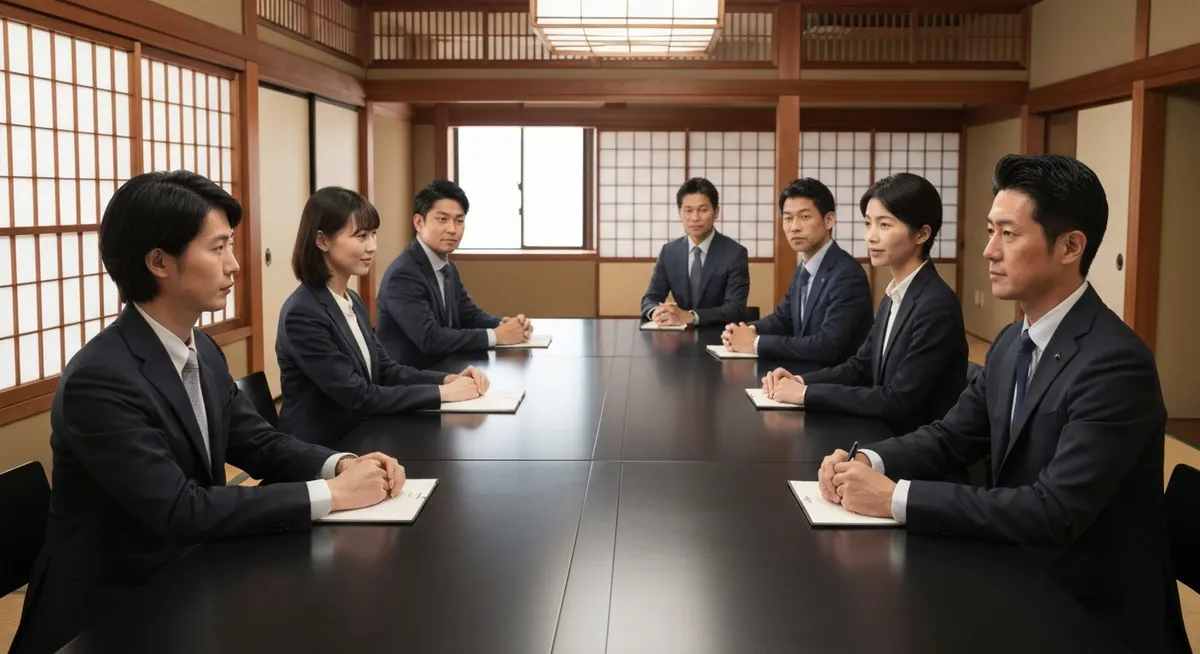
KK vs GK: Which Entity to Incorporate in Japan
Kabushiki Kaisha (KK) and Godo Kaisha (GK) are the two private-company forms under the Japanese Companies Act. Both offer full limited liability to owners. Both can be single-owner structures. Both can open Japanese bank accounts, hire employees, and sponsor visas. The differences come down to cost, governance, and market perception.
| Feature | Kabushiki Kaisha (KK) | Godo Kaisha (GK) |
|---|---|---|
| Minimum capital (statutory) | JPY 1 (but JPY 30M for Business Manager visa) | JPY 1 (but JPY 30M for Business Manager visa) |
| Registration tax | JPY 150,000 minimum | JPY 60,000 minimum |
| Articles of Incorporation notarization | Required (JPY 30,000-50,000) | Not required |
| Total setup cost (gov. fees) | JPY 200,000 – 250,000 | JPY 70,000 – 102,000 |
| Setup timeline | 2 to 3 weeks | 1 to 2 weeks |
| Governance structure | Shareholders elect directors; formal meetings required | Members are managers (no separation) |
| Director residency requirement | No Japanese resident director required (since 2015) | No Japanese resident member required |
| Equity transferability | Shares easily transferable by resolution | Member consent typically required |
| Annual filing requirement | Annual financial statements, director’s report | Lighter, no auditor requirement for small GK |
| Market perception in Japan | Higher (historical default for “real companies”) | Still improving, accepted but seen as smaller |
| Typical user | VC-funded startup, listed subsidiary, any customer-facing brand | Solo founders, consulting firms, single-member SPVs, US LLC parent subsidiaries |
For most foreign founders, the GK is the right answer. It costs about a third of a KK to set up, takes less time, and the Japanese Companies Act treats it identically for tax and liability purposes. Amazon Japan, Apple Japan, Google Japan, and several other major US multinationals operate through GK structures in Japan. Any argument that a GK “lacks credibility” is mostly outdated.
When does a KK make more sense? If you plan to raise Japanese equity capital from VC or local strategic investors, if you plan to IPO in Japan eventually, or if your customer base is dominated by old-school Japanese enterprises that still ask “Why isn’t this a KK?” during procurement due diligence. For everyone else, GK wins on cost, speed, and flexibility.
The Business Manager Visa Rules That Changed in October 2025
The old Business Manager visa bar was low by global standards: JPY 5 million in paid-in capital or two Japanese employees. For years, foreign entrepreneurs could incorporate in Japan with a small capital contribution and get a visa to run their own company. That ship has sailed. Starting October 16, 2025, the requirements tightened substantially, and the grace period for existing holders expires October 16, 2028.
| Requirement | Pre-October 2025 | Post-October 2025 |
|---|---|---|
| Minimum paid-in capital | JPY 5 million (or 2 employees) | JPY 30 million (approximately $200,000 USD) |
| Full-time employees | Not required if capital met | At least 1 Japanese national, PR, long-term resident, or spouse of such |
| Language proficiency | Not required | Applicant or designated employee must hold B2 / JLPT N2 |
| Management experience | Not explicit | 3 years management experience OR master’s degree in business |
| Business plan certification | Not required | Required, signed by Japanese CPA or SME Management Consultant |
| Stated minimum annual remuneration | Not specified | Suggested JPY 20 million (approximately $135,000 USD) to clear muster |
For existing Business Manager visa holders already in Japan, the grace period runs to October 16, 2028. That means if you hold the visa today, your next renewal may fall under the new rules. The Immigration Services Agency has indicated case-by-case discretion for long-established businesses, but the default assumption should be that the new tests apply at renewal time.
Practically, this means the “incorporate in Japan with $50,000 and get a visa” route is dead. If you want a Business Manager visa in 2026, plan for JPY 30 million minimum capitalization, a Japanese-national employee on payroll from day one, and a formal business plan stamped by a Japanese CPA. Budget JPY 50 million or more if you want the application to go smoothly without edge-case risk.
Put your assets beyond reach in 57 jurisdictions.
Pick where you want your company. We handle the filing, the registered agent, and the bank introduction. From US$1,290, done in days, not months.
- Charging-order protection in jurisdictions courts can't pierce
- Zero tax on foreign income in 30+ territories
- Banking options available
- Fixed price. No surprise fees at closing
Step by Step: How to Incorporate in Japan
Step 1: Choose entity type and reserve a company name. Decide between KK and GK based on the factors above. Run a name search at the Legal Affairs Bureau for your proposed registered address to confirm no identical name exists in the same municipality. Japan no longer requires national uniqueness but does require local uniqueness, so the name check matters.
Step 2: Prepare Articles of Incorporation. Draft the company’s teikan (articles) in Japanese. Required contents include company name, purpose (specific enough for commercial register), registered office, capital amount, shareholder or member details, and officer structure. For a KK, the articles must be notarized by a Japanese notary (JPY 30,000-50,000 plus electronic certification fees). For a GK, no notarization is needed.
Step 3: Deposit capital into a founding bank account. Before registration, the founder or first-listed member must deposit the capital into a temporary bank account in their personal name. If the founder is non-resident, a Japanese-resident collaborator must hold the capital in their account (common with the founding shareholder/member structure). Capital certification letters are generated from this deposit.
Step 4: File registration with the Legal Affairs Bureau. Submit the registration application with articles, capital proof, officer acceptance forms, and registration tax receipts. KK registration tax: 0.7% of capital with JPY 150,000 floor. GK registration tax: 0.7% with JPY 60,000 floor. The registered date on your certificate is the date your entity legally exists. Expect 1 to 2 weeks for the certificate to issue.
Step 5: Obtain corporate seal and register it. Japanese companies still rely heavily on a physical corporate seal (kaisha inkan) even in 2026. Commission the seal from a shop (JPY 10,000-30,000) and file the seal registration with the Legal Affairs Bureau. The seal certificate will be required for every future filing, contract, and bank account opening.
Step 6: Open a Japanese corporate bank account. With the registration certificate and seal, approach Japanese banks. Most major banks (MUFG, SMBC, Mizuho) take 2 to 4 weeks to approve a new corporate account and increasingly refuse applications from entities without a Japanese-resident officer. Shinsei, Rakuten, and GMO Aozora are more foreigner-friendly. Budget for back-up options.
Step 7: Register with tax, pension, and labor authorities. File notifications with the national tax office, local tax office, social insurance office (health insurance and welfare pension), and labor standards office. If you have employees, registration with the Hello Work employment office is also required. All of this must happen within 2 months of incorporation.
Corporate Tax When You Incorporate in Japan in 2026
Japanese corporate tax is not a single rate. It is a layered stack: national corporate tax, local corporate tax (surtax on national), local inhabitant tax, and enterprise tax. Add the new defense surtax effective April 1, 2026, and the total effective rate lands higher than most foreign founders expect.
| Tax Layer | Rate (Large Corporation) | Rate (SME, First JPY 8M Profit) |
|---|---|---|
| National corporate tax | 23.2% | 15% (reduced SME rate) |
| Local corporate tax (10.3% surtax on national) | ~2.4% | ~1.5% |
| Defense surtax (4% on national from April 2026) | ~0.9% | ~0.6% |
| Local inhabitant tax (corporate, ~7% on national) | ~1.6% | ~1.1% |
| Enterprise tax (progressive, 3.5%-7% of income) | ~3.5% (top rate) | ~3.5% |
| Approximate effective rate (2026) | ~31.52% | ~21.6% (on first JPY 8M) / ~35.43% above |
For small and medium enterprises (SMEs, defined as capital of JPY 100 million or less), the reduced 15% national rate applies to the first JPY 8 million of annual profit. Profit above that line hits the full 23.2%. So an SME profitable above JPY 8 million ends up with a blended effective rate somewhere between 22% and 35%, depending on scale.
A large corporation with no SME benefits crosses the 31% effective rate line once all four or five layers stack. That is considerably higher than Ireland’s 12.5%, Singapore’s 17%, or Hong Kong’s 16.5%. Japan is not a low-tax jurisdiction, and anyone promising it is either confused or not reading the same tax code.
One upside: Japan has an extensive network of bilateral tax treaties (over 70 countries), so group-level tax planning with holding structures in Ireland, Luxembourg, or the Netherlands can reduce the blended burden. The US-Japan treaty, for example, reduces the dividend withholding rate to 0% on qualifying 50%-plus holdings.

What It Really Costs to Incorporate in Japan
Setup costs extend well beyond the government filing fee. Here’s a realistic all-in budget for a foreign founder launching a Japanese entity, based on quoted rates from Tokyo and Osaka-based gyoseishoshi (administrative scriveners) and shihoshoshi (judicial scriveners) as of Q1 2026.
| Cost Category | KK (JPY) | GK (JPY) |
|---|---|---|
| Registration tax (minimum) | 150,000 | 60,000 |
| Articles of Incorporation notarization | 30,000 – 50,000 | 0 |
| Electronic certification of articles | 5,000 | 5,000 |
| Corporate seal set | 20,000 – 50,000 | 20,000 – 50,000 |
| Gyoseishoshi / shihoshoshi fees | 150,000 – 400,000 | 100,000 – 250,000 |
| Virtual office for registered address (12 months) | 50,000 – 200,000 | 50,000 – 200,000 |
| Accounting setup and first-year bookkeeping | 300,000 – 600,000 | 200,000 – 400,000 |
| Paid-in capital (Business Manager visa route) | 30,000,000 | 30,000,000 |
| Total cash out (non-capital) | 705,000 – 1,455,000 | 435,000 – 965,000 |
| Total with Business Manager visa capital | 30.7M – 31.5M (~$205K – $211K) | 30.4M – 31.0M (~$204K – $207K) |
Note the paid-in capital is not a fee. It is the company’s own money, sitting in the corporate bank account, available for operations. But for Business Manager visa purposes you cannot spend it down below the JPY 30 million threshold without risking renewal rejection. Treat it as operating float.
Banking When You Incorporate in Japan
Opening a corporate bank account is the most painful part of incorporating in Japan for a foreign-controlled entity. Major banks (MUFG, SMBC, Mizuho) now routinely reject applications from GK or KK structures that do not have a Japanese-resident representative director or member. The banks cite anti-money-laundering risk and CRS reporting burdens.
The workaround: open with one of the newer digital-first banks. GMO Aozora Net Bank, Rakuten Bank Business, and SMBC Trust’s Prestia unit accept foreign-controlled entities more readily. Shinsei Bank has a dedicated foreign business line that handles English-language onboarding. Expect application-to-approval timelines of 2 to 6 weeks, and always open at least two banking relationships in case one closes for review.
If you need outbound international wires frequently, add a Wise Business or Revolut Business corporate account alongside the Japanese bank. That combination keeps domestic payroll and tax payments running through the Japanese bank while avoiding the 3,000-5,000 yen per-wire fees on international transfers.
Common Mistakes When You Incorporate in Japan
First mistake: naming the entity something that conflicts with an existing registered company at the same municipal address. The registration just gets rejected. Do the name check before drafting articles.
Second mistake: under-capitalizing for the Business Manager visa. Founders deposit JPY 29 million thinking “close enough” and find the visa application rejected. The JPY 30 million threshold is treated as firm minimum by immigration, not a negotiable target. Deposit JPY 35 million to leave buffer for operating expenses during the first year.
Third mistake: skipping the CPA business plan certification. Immigration Services Agency now requires the plan be signed by a Japanese CPA or SME Management Consultant. DIY plans get flagged. Budget JPY 150,000 to JPY 300,000 for the certification service.
Fourth mistake: treating the representative office as a cheap alternative. Representative offices cannot legally generate revenue or sign binding commercial contracts in Japan. If you plan to sell anything, you need a KK, GK, or branch. Representative offices are marketing-only placeholders.
Fifth mistake: incorporating at a home address. Immigration Services Agency scrutinizes “home-based” business applications. A proper commercial address (virtual office is fine, physical lease is better) signals legitimacy. Budget JPY 50,000 to JPY 200,000 per year for a virtual office in Tokyo.

Japan vs Other Asia-Pacific Incorporation Jurisdictions
| Jurisdiction | Setup Time | Headline Corporate Tax | Residency Visa for Founder | Typical All-In Setup Cost |
|---|---|---|---|---|
| Japan (GK) | 1-2 weeks | ~31.52% large / ~21.6% SME first JPY 8M | Business Manager (JPY 30M capital) | $3,000 – $7,000 (excl. capital) |
| Singapore (Pte Ltd) | 1-2 days | 17% headline, 0% on first S$100K (partial) | EntrePass or Employment Pass | $2,500 – $5,000 |
| Hong Kong (Limited) | 4-7 days | 16.5% on profits, 8.25% first HK$2M | Investment as Entrepreneur Visa | $2,000 – $4,000 |
| UAE Free Zone (LLC) | 3-5 days | 9% on profits over AED 375K, 0% below (and 0% in some free zones) | Investor Visa (2 years) | $5,000 – $10,000 |
| South Korea (Yuhan Hoesa) | 1-2 weeks | 24% headline (9% on first KRW 200M) | D-8 Investor Visa (KRW 100M min) | $3,500 – $7,000 |
Japan is not the cheapest or fastest option for Asia-Pacific incorporation. Singapore and Hong Kong beat it on both counts and offer lower headline tax rates. What Japan offers is access to the world’s third-largest consumer economy, a legal system that actually enforces contracts (not always true in some lower-tax jurisdictions), and a long-term residency path for the founder via the Business Manager visa.
Incorporate in Japan FAQ
Can a foreigner incorporate in Japan without being a resident?
What’s the fastest way to incorporate in Japan?
What is the minimum capital to incorporate in Japan?
How long does it take to get a Business Manager visa after incorporation?
Can I incorporate in Japan as a US LLC subsidiary?
What is the effective corporate tax rate when I incorporate in Japan in 2026?
Do I need a Japanese address to incorporate in Japan?
Can I run the Japanese entity remotely from overseas?
What is the consumption tax (VAT) when you incorporate in Japan?
Can I use a Japanese GK to hold real estate or investments?
Final Thoughts: Should You Incorporate in Japan?
If your business has real Japan customers, a long-term commitment to the market, and capital to clear the new Business Manager visa bar, the answer is yes. A Japanese entity unlocks market access that no offshore LLC can match, positions you for the trust-heavy procurement cycles that dominate enterprise B2B Japan, and puts a real foothold under your residency and eventual permanent residency plans.
If your Japan activity is occasional, low-revenue, or purely digital, a branch of your home-country company or a representative office may be enough. For pure offshore holding structures, Japan is one of the most expensive jurisdictions in Asia, and Singapore, Hong Kong, or a UAE free zone will almost always win the comparison.
Put your assets beyond reach in 57 jurisdictions.
Pick where you want your company. We handle the filing, the registered agent, and the bank introduction. From US$1,290, done in days, not months.
- Charging-order protection in jurisdictions courts can't pierce
- Zero tax on foreign income in 30+ territories
- Banking options available
- Fixed price. No surprise fees at closing
For related reading, check the Liberty Mundo guides on offshore company formation, the residency in Japan pathways (including HSP fast-track), and our country-specific guides on incorporating in Singapore and incorporating in Hong Kong. For founders exploring tax-free setups alongside their Japanese entity, our partners at TaxFreeCompanies.com have specific offshore structures that pair with Japanese subsidiaries.
Sources and References
- JETRO (Japan External Trade Organization), Types of Business Entities in Japan (KK vs GK)
- Ministry of Justice Japan, Commercial Registration (Houmukyoku)
- National Tax Agency Japan, Corporate Tax Guide for Japan
- PwC Worldwide Tax Summaries, Japan Corporate Tax Summary 2026
- Immigration Services Agency of Japan, Business Manager Visa Requirements
- EY Global Tax Alerts, Japan 2025/2026 Corporate Tax Reform
- Baker McKenzie, Japan Revises Business Manager Visa Requirements