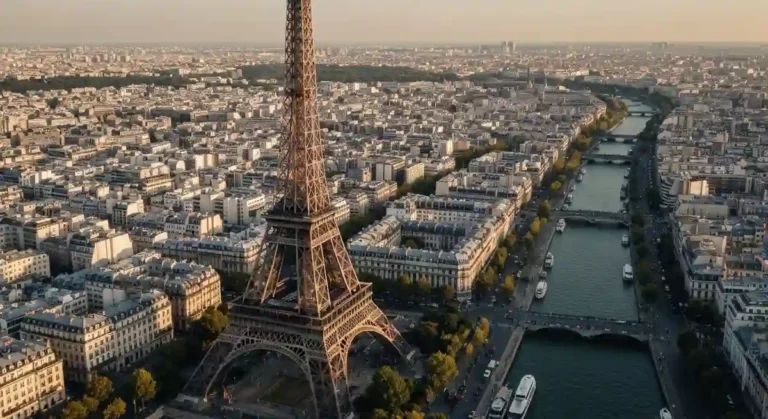
Getting a second passport in France opens doors to one of Europe’s most powerful travel documents. The French passport ranks third globally on the Henley Passport Index, granting visa-free or visa-on-arrival access to 185 destinations. But here’s the kicker – there’s no magic shortcut. France doesn’t have a citizenship-by-investment program. What you do have are legitimate routes that range from straightforward to genuinely challenging.
Travel power is only half the story. Visa-free access tells you where France’s passport can take you, not how free the country behind it leaves you. The Liberty Mundo Passport Freedom Index re-ranks 197 passports on tax, extradition protection, conscription and civil liberties, not just visa-free travel, so you can see where France really lands once freedom is in the mix.
If you’re serious about acquiring French citizenship and holding a second passport in France, you need to understand what’s actually possible, what it costs, and how long it takes. This guide breaks down every citizenship pathway, the tax implications that’ll make your accountant nervous, and whether France actually makes sense for your situation.
The numbers don’t lie. France has the world’s fifth-largest economy, a stable political system, and the kind of passport that opens wallets and borders alike. But the citizenship process is one of Europe’s most demanding. Most people get lost in the bureaucracy. Don’t be one of them.
Why a French Passport Actually Matters
Let’s cut through the mythology. A French second passport in France isn’t about ego. It’s about practical freedom. Rank three on the Henley Index means your passport gets you into 185 countries visa-free or with visa-on-arrival. Compare that to the US (193), and yeah, France is slightly behind. But compare it to most countries globally, and it’s genuinely elite.
The real value sits elsewhere. France is an EU member state. That means you’re not just getting a passport – you’re getting the right to live, work, and do business anywhere in the EU and European Economic Area. That’s 27 countries (EU) plus Iceland, Liechtenstein, and Norway. Dead simple: one passport, 30 countries with unrestricted access. Try getting that from most other nationalities.
For business owners, this is transformational. You can relocate your company headquarters to any EU country with minimal bureaucracy. You can hire staff across the EU without work permit complications. You can bank, invest, and conduct business across the entire bloc with a single set of regulations to learn.
France also has a centuries-old diplomatic presence. French citizens get consular protection from 202 embassies and consulates worldwide. When crises hit – political upheaval, natural disasters, economic collapse – France typically evacuates its citizens. That’s not trivial if you’re living in fragile regions.
The taxation angle reveals itself gradually. France taxes based on residence, not citizenship. If you don’t live in France, you don’t pay French income tax on foreign income. That’s different from the US, which taxes worldwide income regardless of where you live. For passport diversification purposes, a French passport paired with non-French residency is actually tax-neutral. You’re getting the benefits without the burden. This matters if you’re building a passport portfolio.

The Six Routes to French Citizenship
France offers six legitimate pathways to citizenship that actually lead to a second passport in France. Four of them are the well-known standard routes. Two are fast-tracks that most English-language guides miss entirely – and one of them (the exceptional services decree) is exactly what George and Amal Clooney used in December 2025 to get French citizenship without meeting the language or residency requirements that apply to everyone else. Each route has distinct requirements, timelines, and costs. Knowing which one fits your situation separates the dreamers from the people who actually pull it off.
Route 1: Naturalization Through Residency
This is the route most people attempt. It’s also the one that trips them up catastrophically. Here’s what the law says: you need five consecutive years of legal residence in France immediately before your application. Not five years out of the last seven. Not five years total. Five consecutive years, ending right when you apply.
That timeline just changed. As of January 2026, the French language requirement jumped from B1 to B2 proficiency. That’s a meaningful escalation. B1 means you can handle basic conversations. B2 means you can participate in professional meetings, write formal letters, and handle complex discussions. If you’re not already fluent, budget 12-18 months of intensive study plus 2,000-3,000 euros in courses.
The application triggers a civic exam. It’s 45 minutes long, covers French history, government, and values. The pass rate is 80%. Miss that, and you restart the entire process. Not permanently, but it creates delays. The exam is dead simple if you’re motivated, because the government publishes the entire question bank. There’s no legitimate excuse to fail it.
After you apply, processing takes roughly two years. Two years. You’re not waiting for citizenship during that window – you’re in limbo. Your fingerprints are with the authorities. Your background is being investigated. If anything sketchy emerges, it’s rejected. The average rejection rate hovers around 15%, mostly for criminal records or fraud. If you’re clean, you’re probably fine.
Here’s the catch nobody mentions: you have to be living in France during those five years. Not spending weekends there. Living there. That means paying French income tax on any worldwide income over the minimum threshold (EUR 11,600 annually). It means contributing to French social insurance. It means playing by French rules for five years straight.
The costs are deceptive because they’re spread across five years. Visas (if required), residency permits, French language courses, the civic exam fee, legal fees for the application, translation services – they stack up. Expect EUR 8,000-15,000 total over the five-year period, not counting living expenses.
Route 2: Marriage to a French Citizen
This is the accelerated path, and it doesn’t do what people think. You don’t get citizenship by marrying a French person. You get eligibility to apply after four years of marriage. The processing still takes about two years after application. So the total timeline is actually six years minimum – four years married, then two years in the application queue.
The language requirement still applies. You still need B2 French. The civic exam is still mandatory. The only advantage is you don’t need to meet the consecutive five-year residency requirement, though in practice you’re probably living with your spouse in France anyway.
This route creates unexpected complications. If the marriage is deemed fraudulent, everything collapses. French authorities are increasingly skeptical of marriages that appear timed around citizenship applications. Couples who marry, apply immediately, then separate within a year? That screams fraud to French immigration officials. Real relationships pass scrutiny. Strategic marriages don’t.
There’s also a residency requirement you won’t find in the textbooks. Many prefectures (administrative regions) expect married couples to have a shared residence in France. One prefecture might be lenient, the next extremely strict. This is where a local immigration lawyer earns their fee – they know the prefecture you’re dealing with.
Route 3: Citizenship by Descent
France uses “jus sanguinis” – citizenship by blood. If your parent was a French citizen when you were born, you’re automatically French, regardless of where you were born or where you live. This is hands-down the fastest route, but it has brutal limitations.
First limitation: it only works with direct descent. Parent to child. You can’t skip generations. If your parent was French but your grandparent never registered as French, the line is broken. You’re not entitled to it.
Second limitation: the 50-year rule. If your French parent was born more than 50 years before you, and they never actually lived in France after a certain age, complications emerge. These are edge cases, but they exist. A lawyer can clarify whether the rule applies to your situation.
Third limitation: you have to actually register. Citizenship by descent doesn’t automatically grant a French passport. You have to go through a registration process with French authorities. It’s typically faster and cheaper than naturalization – usually a few hundred euros and 6-12 months. But it’s still bureaucracy.
The advantage is seismic. You’re not learning French. You’re not taking exams. You’re not proving anything to anyone. You’re claiming a right that’s yours by birth. Processing is straightforward because you just need to prove the descent through birth certificates and other vital records. Get them translated, submit them, wait. Most people get citizenship by descent processed within 12 months, often faster.
This is the route to prioritize if it’s available to you. The other routes are backup plans.
Route 4: Talent Passport Programs
France has created specialized visa pathways for high-value workers and entrepreneurs. These aren’t citizenship routes, but they lead to residency, which is the stepping stone to naturalization. They matter because they compress the timeline if you’re financially strong.
The qualified employee pathway requires EUR 39,582 annual income or higher. That’s a standard work visa for skilled professionals. Nothing special. It gets you a residency permit, which counts toward your five-year naturalization clock.
The EU Blue Card route requires EUR 59,373 annual income. This is for highly skilled workers in shortage fields. It provides additional protections and faster processing than standard work visas. It also counts toward naturalization residency requirements.
The new business pathway requires you to invest EUR 21,876.40 in a French business. This is shockingly low. You don’t need to hire anyone. You don’t need to generate revenue. You need to register the business, make the investment, and prove you’re the beneficial owner. Processing takes 3-6 months. You get a residency permit. After five years of holding this status while maintaining the business, you can apply for naturalization.
These pathways matter because they’re designed for people with resources. If you’re an entrepreneur or a high earner, you can get legal residency faster than the standard immigration queue. That’s worth understanding.
Route 5: The Education Fast-Track (Two Years)
This is the route almost nobody mentions in English-language guides, and it’s the single fastest naturalization pathway available to anyone without French ancestry. Article 21-18 of the French Civil Code reduces the standard five-year residency requirement to just two years if you have successfully completed at least two years of higher education in France and obtained a diploma awarded by a French institution.
The qualifying diplomas include the BTS (brevet de technicien superieur), the DUT (diplome universitaire de technologie), the DEUST (diplome d’etudes universitaires scientifiques et techniques), a Licence (bachelor’s degree equivalent), a Master’s, or any higher French state-delivered diploma. A Master’s from a French Grande Ecole or an equivalent university program is the most common qualifying credential for the adults who use this route. If you studied in Paris, Lyon, or any accredited French institution and walked out with a recognized French diploma, Article 21-18 applies to you.
Here’s the catch that matters. Your years spent on a student residence permit do not count toward the two-year clock. The two-year residency is calculated from the point you hold a post-study residence permit (employment, entrepreneur, talent passport, or similar). In practice this means: finish your Master’s, transition to a working residence permit, accumulate two years on that permit, then apply. Your total time in France from day one of university to passport in hand is typically around four to six years – still dramatically faster than the standard seven-plus year naturalization timeline.
The other requirements do not disappear. You still need B2 French proficiency, though if you actually earned a French diploma you almost certainly already have it. You still need stable income, a clean criminal record, and the civic exam. What changes is only the residency period. For any young professional planning their route to a second passport in France, studying for a Master’s in France and converting to a talent passport is structurally the shortest path available short of descent or marriage.
Route 6: Exceptional Services to France (The Clooney Route)
This is the route most people assume is mythical until they see it happen in real life. Article 21-21 of the French Civil Code allows the French government to naturalize any foreigner whose contributions bring prestige or economic benefit to France. There is no residency requirement. There is no language test in practice. There is no civic exam. The grant is made by decree of the French government, published in the Journal Officiel.
Skeptical? Read the Journal Officiel from late December 2025. George Clooney, his wife Amal Clooney, and their two children were all naturalized French by decree under exactly this provision. The French Foreign Ministry justified the decree by pointing to George’s stature as a global movie star (benefiting the French cinema industry) and Amal’s work with academic institutions and international organizations in France. The decree was issued despite George reportedly speaking little French, and despite the fact that new naturalization rules requiring B2 French and a 40-question civic exam came into force just days later on January 1, 2026.
The legal mechanism is precise. Article 21-21 requires that the applicant “contributes by his eminent deeds to the influence of France and to the prosperity of its international economic relations.” In practice this has been applied to Nobel laureates, world-class athletes representing France, distinguished academics who hold chairs at French universities, top-tier cultural figures, and major investors who have relocated substantial economic activity to France. The file is prepared by the Ministry of Foreign Affairs, reviewed by the Council of State, and signed by decree. Typical processing is 6-18 months once the ministerial sponsorship is secured.
Is this route realistic for regular applicants? Honestly, no. You need someone inside the French government willing to champion your file to the foreign minister, and you need a documented record of contribution to France’s “rayonnement” (global influence) or economy. But if you’re a public intellectual with a French publishing deal, an artist who has exhibited at major French institutions, a scientist with meaningful ties to French research, or a business owner who has moved substantial employment to France, it’s worth consulting a French nationality lawyer. The route exists. It gets used. The Clooney decree is only the most visible recent example – roughly 100-200 Article 21-21 naturalizations are granted annually, most to people you’ve never heard of.
Understanding French Tax Before You Apply
This section will save you thousands of euros if you pay attention. French tax is genuinely complicated, but the fundamentals are clear once you separate hype from reality.
France taxes residents on worldwide income. Residents are defined as people who spend more than 183 days in France during a tax year, or who have their economic center of interest in France. If you meet either threshold, you’re resident for tax purposes. That triggers worldwide income taxation, wealth tax, and inheritance tax complications.
The income tax brackets for 2026 are progressive and frankly brutal above EUR 84,578:
- 0% on income up to EUR 11,600
- 11% from EUR 11,601 to EUR 29,579
- 30% from EUR 29,580 to EUR 84,577
- 41% from EUR 84,578 to EUR 181,917
- 45% above EUR 181,917
These rates apply after standard deductions. The effective rates end up slightly lower than the marginal rates, but not dramatically. A Parisian earning EUR 150,000 annually is losing roughly 45-48% to income tax, social contributions, and local taxes combined. That’s not competitive with most developed countries.
Capital gains taxation is where it gets weird. France uses a flat tax called “Prélèvement Forfaitaire Unique” (PFU) on most capital gains: 31.4% as of 2026. That’s composed of 12.8% income tax plus 18.6% social contributions. If you sell appreciated investments, you’re looking at roughly one-third gone to taxation immediately. There are some escape hatches (long-term investment accounts, certain retirement accounts) but the baseline is flat and harsh.
Wealth tax exists but only on real estate. There’s no wealth tax on cash, stocks, or other assets. The threshold is EUR 1.3 million in French real estate. Above that, you pay wealth tax on the excess at rates running 0.55% to 1.6% depending on the amount. It’s not confiscatory, but it’s a factor if you own French real estate.
Corporate tax is 25% for standard businesses. Small and medium enterprises (SMEs) get a break: 15% on the first EUR 42,500 of profit annually, then 25% on profit above that threshold. That’s genuinely competitive in European terms.
Here’s the critical insight: if you get a French passport but don’t become a French tax resident, you avoid the worldwide income taxation. You’re only taxed on French-source income. That matters for your overall tax strategy. Many people getting a second passport in France structure their residency specifically to avoid becoming a full-year tax resident.
Put your assets beyond reach in 57 jurisdictions.
Pick where you want your company. We handle the filing, the registered agent, and the bank introduction. From US$1,290, done in days, not months.
- Charging-order protection in jurisdictions courts can't pierce
- Zero tax on foreign income in 30+ territories
- Banking options available
- Fixed price. No surprise fees at closing

Complete Cost Breakdown for French Citizenship
Most people underestimate the actual cost of acquiring a second passport in France. It’s not just visa fees and application processing. It’s visas, housing, food, language courses, legal fees, and a thousand small expenses that creep in over five years. Here’s a realistic cost matrix for each route.
| Cost Category | Naturalization (5 years) | Marriage Route (4 years) | Descent Route (6-12 months) | Business Visa (5 years) |
|---|---|---|---|---|
| Visas / Residency Permits | EUR 1,200-2,000 | EUR 1,200-2,000 | EUR 0 | EUR 2,000-3,500 |
| French Language Courses (B2) | EUR 2,000-3,500 | EUR 2,000-3,500 | EUR 0 | EUR 2,000-3,500 |
| Application & Processing Fees | EUR 500-800 | EUR 500-800 | EUR 200-400 | EUR 500-800 |
| Document Translation & Certification | EUR 800-1,500 | EUR 800-1,500 | EUR 300-600 | EUR 500-800 |
| Legal Fees (Immigration Lawyer) | EUR 3,000-6,000 | EUR 2,500-5,000 | EUR 500-1,500 | EUR 2,000-4,000 |
| Business Registration / Investment | N/A | N/A | N/A | EUR 21,876 + setup |
| Background Check & Medical (if required) | EUR 300-600 | EUR 300-600 | EUR 0-200 | EUR 300-600 |
| TOTAL DIRECT COSTS | EUR 8,600-15,400 | EUR 7,800-14,400 | EUR 1,000-2,700 | EUR 29,200-37,700 |
These are direct costs only. They don’t include housing, food, transportation, insurance, or living expenses during your residency period. For naturalization, if you’re moving to France from another country, expect minimum EUR 15,000-25,000 annually for housing and basic living costs in most French cities. That multiplies across five years.
The descent route is cheap because there’s minimal process. If you qualify, you’re looking at EUR 1,000-2,700 total to get your application filed and passport issued. That’s the bargain route, but you either have the ancestry or you don’t.
The business visa route requires upfront capital (EUR 21,876 minimum) but gets you legal residency immediately, which is valuable if you want to avoid the standard immigration queue or if you’re relocating your business to France.
Timeline Reality Check
This is where wishful thinking crashes into bureaucratic reality. The timelines that matter are not the legal minimums. They’re what actually happens in practice when you’re dealing with French administration.
Naturalization route: 5 years residency + 2 years processing = 7 years minimum. In practice, if you apply at year 4.5 and wait until year 6.5 to receive citizenship, that’s more realistic. Some prefectures are faster, some slower. Three years from application to passport in hand is optimistic but possible.
Marriage route: 4 years marriage + 2 years processing = 6 years minimum. Same caveat applies. You’re not getting a decision in 24 months if the authorities decide to investigate the marriage more carefully.
Descent route: 6-12 months typically. This is the fast path. Once your documentation is submitted and verified, you’re looking at 6-12 months to receive your naturalization decree and request a passport. Some prefecture offices move faster (Paris sometimes does 6-8 months), others slower. But this is legitimately the quick option.
Business visa + naturalization: You get residency within 3-6 months, then wait 5 years for naturalization eligibility, then 2 years for processing. So 7-8 years total if you use the business visa as your entry. The advantage is immediate legal residency status and the ability to run a business in France while you’re accumulating residency time.
One brutal reality: if your paperwork has any errors or if the prefecture requests additional documentation, timelines extend dramatically. Missing documents can add 6-12 months. This is why hiring a local immigration lawyer is not optional – it’s insurance against bureaucratic delays.
French Lifestyle and Culture: The Real Test
Here’s what nobody tells you. The paperwork and timelines matter far less than whether you actually want to live in France for 5+ years. Most people give up on the naturalization route not because of bureaucracy, but because they hate living there.
France is exceptional in many ways. The healthcare system is world-class and cheap by American standards. The public transportation in Paris and major cities is legitimate world-class infrastructure. The wine is good, the food is genuinely excellent, and the culture is intellectually engaging if you’re into that.
France is also genuinely difficult if you’re not compatible with it. The bureaucracy is legendary for a reason – everything requires paperwork, and that paperwork often has unexplained requirements. Opening a bank account can take three months. Getting a residency card renewed can take six months. The French also have a reputation (somewhat deserved) for being reserved with foreigners. You can live there five years and never be truly integrated into local social circles. That’s isolating if you’re used to more open societies.
The cost of living is high. Paris is expensive even by European capital city standards. Most other French cities are cheaper but still not bargain destinations. If you’re on a tight budget, five years in France is exhausting.
The climate varies by region. Paris gets gray and gloomy November through March. The Côte d’Azur has better weather but costs correspondingly more. The Pyrenees are beautiful but cold and remote. You need to identify which region actually appeals to you before committing five years.
Language is non-negotiable. You need B2 French to pass the exam and function in daily life. The government doesn’t recognize degrees from English-language universities. You can’t get around it. If learning French feels like torture, this route isn’t for you, period.
For remote workers and digital entrepreneurs, France is actually excellent. The visa situation is clean, the internet is reliable, and co-working spaces are abundant in major cities. If you’re building a business or earning remote income, France works fine. You just need that five-year commitment if citizenship is the goal.
French Citizenship vs. Other European Options
A second passport in France is powerful, but it’s not your only option in Europe. Understanding how France stacks up against Spain, Italy, Portugal, and Germany helps you make an informed choice. These countries all offer EU citizenship with different routes and timelines.
| Country | Passport Rank | Visa-Free Destinations | Naturalization Timeline | Language Requirement | Cost (Approximate) |
|---|---|---|---|---|---|
| France | 3 | 185 | 5 years + 2 years processing | B2 French (raised Jan 2026) | EUR 8,600-15,400 |
| Spain | 3 | 185 | 10 years residency | A2 Spanish (Basic) | EUR 6,000-12,000 |
| Italy | 3 | 185 | 10 years residency | No official requirement | EUR 5,000-11,000 |
| Portugal | 5 | 184 | 10 years residency (2025 reform) | A2 Portuguese | EUR 7,000-13,000 |
| Germany | 3 | 185 | 5-8 years residency | B1 German | EUR 8,000-14,000 |
Spain requires 10 years to naturalize but has a lower language barrier (A2 vs. B2). If you’re willing to stay longer, Spain might be cheaper overall.
Italy offers citizenship by descent more easily than France if you have Italian ancestry. It also has no official language requirement for naturalization, though practical Italian is necessary. The 10-year timeline is long but the cultural integration is smoother for many people.
Portugal used to be the dark horse on timeline, but Portugal’s 2025 nationality reform doubled the residency requirement for naturalization from 5 years to 10 years. Passport rank is slightly lower (5 vs. 3), and you get 184 visa-free destinations, which is nearly identical to France. Language requirements are lower. The cost is comparable. But Portugal has lost its timeline advantage – if speed to an EU passport matters, France now clearly wins over Portugal. Portugal’s real estate Golden Visa route was also eliminated in October 2023, leaving only investment funds and cultural donations as Golden Visa pathways.
Germany requires 5-8 years depending on your situation and has B1 German requirement. The country is economically strong and has easier integration for many international professionals.
The decision comes down to lifestyle fit, cost, timeline, and language capacity. If you already have Italian ancestry, explore descent first. If you speak Spanish fluently and don’t mind a 10-year timeline, Spain is solid. If you want the fastest EU route with a powerful passport, France or Germany are competitive despite the language demands.
Business Considerations and Residency Planning
If you’re an entrepreneur or business owner, a second passport in France creates specific opportunities and challenges. Understanding the interaction between your citizenship status and your business structure is critical.
First, the EU business registration advantage. Once you have French citizenship, you’re an EU citizen. That means you can register a business in any EU country with minimal bureaucracy. You don’t need to establish residency in that country. You don’t need work permits. You can run a company in Portugal, employ people in Germany, and operate an office in Spain, all with French citizenship as your legal foundation. That kind of flexibility is genuinely valuable for entrepreneurs with pan-European operations.
Second, the France-specific business environment. France has a 25% corporate tax rate (15% for SMEs on the first EUR 42,500), which is competitive. The country has strong property rights, enforceable contracts, and a sophisticated legal system. If you’re registering a business in France specifically, the tax structure is reasonable.
Third, the talent visa angle matters if you’re moving to France as a business owner. The new business talent visa requires EUR 21,876 investment in a French business. That’s cheap. You can register an SARL (limited liability company) for that investment, maintain it for five years while you accumulate residency time, then apply for naturalization. You’ve got legal residency status the entire time and can claim that business investment as a tax deduction.
Fourth, residency planning. If you’re applying for naturalization, the tax residency implications matter. Five years of being a full-time French tax resident could trigger French wealth tax on overseas assets if you have significant holdings. Many successful entrepreneurs structure their residency carefully to minimize tax exposure while maintaining the residency requirement for naturalization. That’s where a cross-border tax advisor becomes essential.
Fifth, the EU business registration advantage applies even after you get citizenship. You can own businesses in multiple EU countries, shift profits between jurisdictions (within legal limits), hire staff across borders, and operate pan-European without the visa and work permit complications that slow down non-citizens. For serious entrepreneurs, that’s the hidden value in an EU passport.
Here’s the reality check: if your business is entirely outside France and you have no intention of operating in France, getting French citizenship doesn’t unlock significant business advantages beyond EU mobility. If you’re planning to expand across Europe or establish a French presence, the citizenship status becomes genuinely valuable.
Common Mistakes That Kill French Citizenship Applications
The difference between people who successfully get French citizenship and people who give up is often just avoiding predictable disasters. Here are the mistakes that appear consistently.
Mistake 1: Not getting a lawyer. French administrative law is genuinely complex. You think you’re ready to apply, but you’re missing documentation requirements that aren’t published clearly anywhere. A local immigration lawyer who knows your prefecture costs EUR 2,000-5,000. That’s insurance. People who skip this step waste months chasing requirements they didn’t know about. Get a lawyer.
Mistake 2: Interrupting your residency clock. The five-year residency requirement needs to be consecutive. Leaving France for more than a few weeks can reset it depending on how your prefecture interprets the rules. Some prefectures are lenient (a few months abroad is fine). Others are strict. Know your prefecture’s interpretation before you plan any extended travel. One major trip could add a year to your timeline.
Mistake 3: Underestimating language requirements. B2 French is not “conversational.” It’s upper-intermediate professional proficiency. You need to write formal letters, understand complex documents, and discuss nuanced topics. If you’re currently at A1 or A2, expect 12-18 months of serious study to reach B2. Showing up unprepared for the language exam wastes your application and resets your timeline. Budget the study time realistically.
Mistake 4: Failing the civic exam. The 45-minute civic exam covers French history, government structure, and values. The pass rate is 80%, which sounds forgiving until you realize you’re one of the 20% who failed. The government publishes the entire question bank. You can prepare. Most people who fail simply didn’t prepare at all. Don’t be that person.
Mistake 5: Not understanding the marriage route constraints. If you’re marrying a French citizen to accelerate citizenship, be aware that authorities scrutinize these applications heavily. The marriage needs to be genuine. You need to demonstrate shared living arrangements, shared finances, and a real relationship. Getting married then immediately applying for citizenship then separating a year later screams fraud. These applications get rejected regularly. The marriage route only works if the marriage is real.
Mistake 6: Ignoring tax implications during residency. You’re living in France as a tax resident, which means worldwide taxation applies. You need to file French tax returns and may trigger wealth tax on certain assets. A careless approach here creates compliance issues that haunt you after you get citizenship. Work with a cross-border tax advisor from year one.
Mistake 7: Letting documents expire. Your passport might expire while you’re waiting for citizenship. Your visa might expire. Your residency card might need renewal. Keep everything current. One expired document at the wrong moment in the application process delays everything by months. Set calendar reminders for every expiration date.
Mistake 8: Not preparing translations properly. Official documents need certified translations into French. Not just any translation – certified translations completed by authorized translators. Using Google Translate or hiring an amateur translator wastes money because your application gets rejected and you need to redo it. Use official translators from the start.
Mistake 9: Assuming different prefectures have identical rules. The prefecture where you live controls how your residency rules are interpreted. Paris prefecture is different from Lyon prefecture is different from Marseille prefecture. What’s accepted in one location gets rejected in another. Know your specific prefecture’s requirements and talk to people who have gone through the process in that exact location.
Mistake 10: Giving up when processing takes longer than expected. Two years is the average processing time after application. Some people get citizenship in 18 months. Others wait 36 months. That’s normal range for French administration. People who call lawyers or prefectures demanding answers usually get nothing because the process is genuinely slow. Patience is not optional.
How to Get a Second Passport in France: Step by Step
If you’ve decided the French citizenship route makes sense, here’s the actual process broken down into actionable steps. This assumes the naturalization route (five years residency) since that’s the most common pathway.
Step 1: Determine Your Eligibility. Before anything else, confirm which route applies to you. Do you have a French parent or grandparent (descent)? Are you married to a French citizen (marriage route)? Do you plan to relocate to France and work there (naturalization)? Each route has different requirements. Use our citizenship by descent guide if you’re exploring the ancestry route. Your eligibility determines everything that follows.
Step 2: Secure Your Visa Status. You need legal residency in France to begin the clock. Options include: standard visitor visa (requires EUR 1,400/month income), student visa (if you’re studying), work visa (if you have a job offer), talent visa (entrepreneur or employee), or family reunification visa (if you have family in France). The residency visa you choose doesn’t matter much for naturalization purposes – they all count equally toward the five-year requirement. Apply for a visa that matches your actual situation.
Step 3: Move to France and Begin Residency. Physical relocation is non-negotiable. You need to establish residency which means registering at your local city hall (mairie), getting a French address, registering for the healthcare system, and opening a bank account. These steps take time but they’re how you prove continuous residency. Keep all documentation. Every rental agreement, every tax filing, every utility bill is evidence of residency.
Step 4: Study French to B2 Level. You have time to do this, so use it strategically. Start French language courses in year one or year two. By year four, aim to be at B2 proficiency. This isn’t something you cram in three months. You need genuine language acquisition. Take formal courses, use language apps, practice with native speakers. The civic exam requires understanding formal French. Half-measures fail.
Step 5: Hire an Immigration Lawyer. By year four of residency, hire a French immigration lawyer who specializes in naturalization. They’ll review your documentation, identify missing pieces, and prepare your file. This costs EUR 2,000-5,000 but prevents disasters. They also know your specific prefecture’s preferences and hidden requirements.
Step 6: Gather and Translate All Documents. You’ll need: birth certificate, marriage certificate (if married), divorce decrees (if applicable), criminal record clearance from your home country, employment contracts, tax returns from your five years in France, and evidence of residency (rental agreements, utility bills, tax records). Everything needs certified French translation. Start collecting these in year four. Don’t wait until year five to realize you’re missing something.
Step 7: Pass the Civic Exam. Schedule the 45-minute civic exam testing French government, history, and values. The government publishes the entire question bank online. Study it. The exam is legitimately passable if you’ve prepared. Failing means you restart the timeline. Don’t fail.
Step 8: Submit Your Naturalization Application. Work with your lawyer to file the application with your local prefecture. Include all translated documents, your civic exam results, proof of residency, proof of language proficiency, and a letter explaining why you want French citizenship. The application triggers a background investigation which takes 4-6 weeks.
Step 9: Wait for Processing. After submission, processing takes approximately two years. The prefecture will request additional information periodically. Respond promptly. Don’t ignore requests. The slowness is normal. Don’t expect updates. Your lawyer can check status periodically but don’t expect dramatic movement. Just wait.
Step 10: Receive Your Naturalization Decree. You’ll receive official notification that you’ve been granted French citizenship. This is the naturalization decree (décret de naturalisation). Keep multiple copies. This document is your proof of citizenship.
Step 11: Request Your French Passport. Take your naturalization decree to your local city hall (mairie) and apply for a French passport. Bring your current passport, birth certificate, and proof of address. The mairie will take your application and photos. Processing takes 4-8 weeks typically. You’ll receive a passport booklet with your new French identity. That’s your second passport in France.
This process is genuinely achievable if you’re organized and committed. The timeline is long but not infinite. Thousands of people complete it every year. The key is treating each step seriously and maintaining documentation throughout.
Comparing France to Alternative Residency Routes
Getting a second passport in France is one approach to building international mobility. But there are alternatives worth understanding. Sometimes a faster residency program beats a longer citizenship timeline, especially if you just need the right to live and work in Europe.
Portugal offers a five-year residency pathway parallel to France, but naturalization into Portuguese citizenship now requires 10 years of legal residency after the 2025 nationality law reform. Residency in France compared to Portuguese residency shows that Portugal has more accessible entrepreneurship routes (invest EUR 35,000 minimum, get immediate residency). That might be faster than the French talent visa approach for residency – but France wins decisively on citizenship speed.
Greece and Spain both offer longer residency timelines (Spain requires 10 years for citizenship, Greece has a second passport in Greece pathway with similar structure to France). For immediate residency without the citizenship goal, retire in Greece programs exist (EUR 500/month income requirement) and retire in Portugal programs exist (EUR 1,275/month income requirement). These give you residency and EU mobility without the naturalization gauntlet.
If EU citizenship is the ultimate goal but France feels too demanding, the traditional fallback was Portugal – but Portugal’s 2025 reform extended naturalization to a 10-year residency requirement, making the “just go to Portugal instead” argument far weaker. Italy’s descent route (if you qualify by ancestry) and Germany’s 5-8 year pathway now look more attractive than Portuguese naturalization as backup options. Evaluate all alternatives with updated timelines before deciding.
If you just need EU residency without citizenship ambitions, the entrepreneur visa routes in most EU countries are faster and cheaper. You get legal status, business registration rights, and EU mobility without the citizenship processing delays.
The choice depends on your timeline and endgoal. Citizenship is powerful but slow. Residency is faster but doesn’t give you the full EU mobility that citizenship provides. Understand what you’re actually optimizing for before you commit.
Frequently Asked Questions About French Citizenship
Does France allow dual citizenship for a second passport?
Can I get French citizenship through investment or a golden visa program?
What happens if I fail the French language exam or civic exam?
How much does French citizenship actually cost over five years?
Can I get French citizenship through marriage if my spouse is not a French citizen?
What is the actual difference between B1 and B2 French language proficiency?
Can I apply for French citizenship while working remotely for a foreign company?
Is the 50-year rule a hard barrier for citizenship by descent?
What tax implications come with getting French citizenship?
How does getting French citizenship affect my ability to diversify my passport portfolio?
Can I really get a second passport in France in just two years if I studied at a French university?
How did George Clooney get French citizenship without speaking French or living in France for five years?
Final Checklist for French Second Passport Success
Before you commit to the French citizenship path, use this checklist to validate your decision.
- Do you have confirmed eligibility for one of the six routes (standard naturalization, marriage, descent, talent visa leading to naturalization, Article 21-18 education fast-track, or Article 21-21 exceptional services)?
- Are you willing to learn or improve French to B2 level (upper-intermediate professional proficiency)?
- Do you have the financial capacity for EUR 80,000-150,000 total out-of-pocket costs over 5-7 years?
- Can you commit 5+ years to France without extended absences that reset the residency clock?
- Are you comfortable with French bureaucracy and willing to hire a lawyer to navigate it?
- Have you evaluated alternative routes (Portugal, Germany, Italy) and confirmed France is the right choice?
- Do you understand the tax implications of being a French resident for 5 years?
- Have you identified which French region you actually want to live in?
- Do you have stable income to qualify for a residency visa?
- Are you prepared to wait 2+ years for your citizenship application to process after submission?
If you checked most of these boxes, proceed. If you have doubts about several, reconsider whether France is actually the right path. The goal is not to force France, but to make a deliberate choice that fits your actual life and capabilities.
The Bottom Line on Getting a Second Passport in France
A second passport in France is achievable but demanding. It requires years of commitment, serious language study, financial investment, and psychological resilience to survive French bureaucracy. It’s not a shortcut. It’s a long-term project with a clear endpoint.
The value justifies the effort if you actually want to live in Europe, build a pan-European business, or gain access to the EU single market. The French passport is genuinely powerful. It opens 185 destinations visa-free. It makes you an EU citizen with rights across 27 countries. It grants you consular protection from 202 French embassies worldwide.
The alternative routes (Spain, Italy, Portugal, Germany) are all viable and some are actually easier depending on your specific situation. The ancestry route (citizenship by descent) is the massive exception – if you qualify, take it. It’s 80% cheaper and 70% faster.
Start by confirming your eligibility, then hire a French immigration lawyer to validate the timeline and costs for your specific situation. Don’t guess about the process. Don’t trust YouTube videos about “hidden loopholes.” The process is boring, standardized, and predictable. The best approach is professional guidance combined with patient execution.
Five years seems like forever when you’re starting. It flies when you’re embedded in it. By year five, you’re fluent in French, integrated into French life, and navigating the citizenship process as a natural continuation of your five-year journey. That’s when the passport arrives, and you realize the work was worth it.
Sources and References
- Service Public, Acquisition of French nationality by naturalisation
- Wikipedia, Henley Passport Index – Global Passport Rankings
- French Ministry of Interior, Official French Government Immigration Resources
- PwC France, French Tax and Legal Guidance
- Wikipedia, Citizenship of France
- KPMG France, French Business and Tax Advisory