
Want to retire in Latvia without burning through your savings or your patience? You are looking at a quiet, green, low-cost corner of the European Union where a couple can live comfortably on a fraction of what the same lifestyle costs in France or Spain. Riga has the old-world charm, the Baltic coast has the calm, and the whole country sits inside the Schengen Area.
It is not for everyone. The winters are long and dark, and the Latvian language is a wall for newcomers. But for retirees who value affordability, safety, and genuine European living, the case to retire in Latvia is stronger than most people expect.
Put your assets beyond reach in 57 jurisdictions.
Pick where you want your company. We handle the filing, the registered agent, and the bank introduction. From US$1,290, done in days, not months.
- Charging-order protection in jurisdictions courts can't pierce
- Zero tax on foreign income in 30+ territories
- Banking options available
- Fixed price. No surprise fees at closing
Why Retire in Latvia at All?
Start with the money, because for most retirees that is the whole game. Latvia is one of the cheaper EU countries to live in, yet it delivers full European standards: clean cities, reliable infrastructure, good public transport, and a healthcare system that works. You get the EU stamp of quality without the EU price tag.
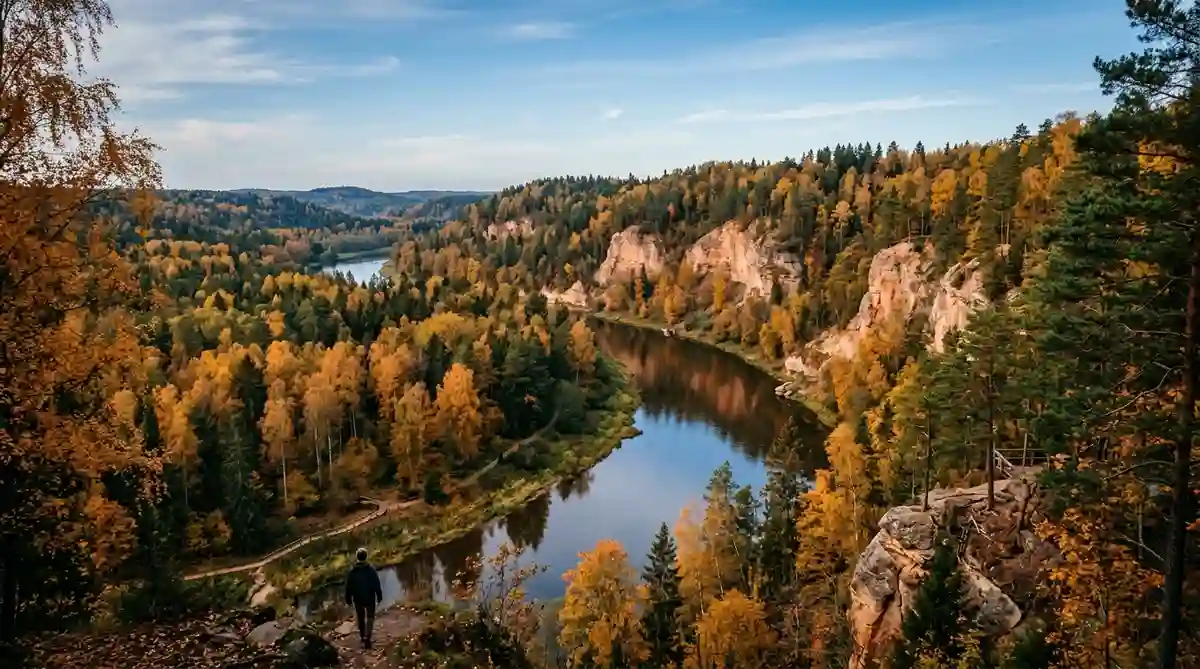
Riga is the draw. The capital is a UNESCO-listed beauty with one of the finest collections of Art Nouveau architecture in the world, a walkable old town, and a real cafe culture. Step outside the city and you find pine forests, the long sandy beaches of Jurmala, and the river valleys of Gauja National Park. For a retiree who wants nature and culture in the same week, that mix is hard to beat.
Then there is mobility. Latvia is in Schengen, so once you are resident you can roam the continent without border checks. The passport that eventually comes with citizenship ranks among the strongest on earth, which you can verify on the Liberty Mundo Passport Freedom Index. You would not be retiring to the edge of Europe, you would be retiring to the middle of it.
The Real Cost to Retire in Latvia
Let’s put numbers on it. A single retiree can live comfortably in Riga on roughly 1,300 to 1,400 euro per month including rent. Strip out rent and day-to-day costs fall to around 880 euro. A one-bedroom apartment in the city centre runs about 500 euro a month, and you can shave that to roughly 345 euro by moving just outside the centre.
| Expense (single retiree, Riga) | Approximate monthly cost |
|---|---|
| One-bedroom rent, city centre | 500 euro |
| One-bedroom rent, outside centre | 345 euro |
| Utilities (heating, electricity, water) | 250 to 300 euro |
| Groceries and dining | 350 to 450 euro |
| Transport and incidentals | 100 to 150 euro |
| Total including rent | 1,300 to 1,400 euro |
Heating is the line item that catches people out. Latvian winters are cold and long, so utility bills spike from October to March. Budget for it rather than be surprised by it. A couple who relocate together do not pay double for everything, so two people often live well on roughly 2,000 to 2,300 euro a month combined.

How Pensions and Income Are Taxed
This is where you need to pay attention. Latvia taxes its tax residents on worldwide income. If you become a Latvian tax resident, your foreign pension is generally taxable in Latvia, subject to any double-tax treaty between Latvia and the country paying your pension. There is no special tax-free regime for foreign retirees, so do not expect a Portugal-style holiday on pension income.
The personal income tax rate is 25.5% on income up to 105,300 euro a year, rising to 33% above that, with an extra 3% on income over 200,000 euro. Most retirees sit comfortably in the bottom band. Latvia also grants a fixed allowance, and pensioners get a larger one (1,000 euro versus the standard 550 euro), which trims the taxable amount a little.
Tax residency hinges on the 183-day rule or having your declared, permanent home in Latvia. If you split your year carefully, where you owe tax can change. This is exactly the kind of planning we handle when clients build a cross-border residency and tax strategy, because the difference between getting it right and wrong can be thousands of euro a year. Business owners weighing the same move often combine it with a plan to incorporate in Latvia. Treaties matter, timing matters, and assumptions are expensive.
Healthcare for Retirees
Latvia runs a public healthcare system funded through taxation, and legal residents can access it, though many expats top up with private insurance for faster service and English-speaking doctors. Private care is affordable by Western standards: a specialist consultation costs a fraction of what you would pay in the United States or Western Europe. Riga has the best hospitals and the widest choice of private clinics, which is one more reason most retirees who settle here choose the capital or its suburbs.
Non-EU retirees applying for residence will usually need private health insurance as part of the permit application, so factor that premium into your annual budget from the start.
Getting Residency to Retire in Latvia
If you hold an EU, EEA, or Swiss passport, this part is easy. You exercise freedom of movement, register locally, and you are done. No visa, no fuss.
For everyone else, there is no dedicated “retirement visa,” so you obtain a temporary residence permit on another basis. The most common routes are proof of stable, sufficient income to support yourself, family reunification if you have close relatives in Latvia, or one of the investment routes. The investment options and a pending 2026 immigration law change are covered in depth in our guide to Baltic residency and across Liberty Mundo’s wider residency programs. Whatever the basis, you hold the permit, renew it, and after five years of permanent residence you can pursue a second passport in Latvia if you want it too.
Lifestyle: What Daily Life Actually Looks Like
Slow, safe, and seasonal. That sums up daily life here. Crime is low, the pace is unhurried, and the country is small enough that nothing feels far away. Summers are glorious, with long days, midsummer festivals, and warm beaches. Winters demand the opposite mindset: short days, real cold, and a need for indoor hobbies and good lighting at home.
English is widely spoken in Riga among younger Latvians and in the service sector, so you can function day to day without fluent Latvian. That said, learning even basic Latvian opens doors and earns goodwill, and you will need it anyway if you ever go for citizenship. Outside the capital, English thins out and a phrasebook helps.
Common Mistakes Retirees Make
The biggest one is ignoring the tax question until after they move. People assume an EU country must tax pensions lightly, then discover Latvia taxes worldwide income and there is no retiree carve-out. Plan first, move second.
The second mistake is underestimating winter. Plenty of sun-loving retirees arrive in June, fall in love, and quietly struggle by January. Visit in the dark months before you commit. The third is treating residency as an afterthought. Non-EU retirees who show up on a tourist stamp and hope to sort papers later create problems for themselves. Sort the permit before you ship your life over.
How Latvia Compares for Retirement
Latvia is not the only affordable EU retirement option, so weigh it honestly against the alternatives.
| Country | Monthly cost (single, with rent) | Tax on foreign pension (resident) | Naturalisation timeline |
|---|---|---|---|
| Latvia | 1,300 to 1,400 euro | Taxable (worldwide income, treaty-dependent) | 5 years permanent residence (about 10 total) |
| Portugal | Higher than Latvia | Taxable under current rules (old NHR replaced by IFICI) | 10 years ordinary (7 years for EU, CPLP, Sephardic) |
| Bulgaria | Similar to Latvia, often lower | Flat 10% income tax | 5 years |
| Estonia | Similar to Latvia | Taxable (worldwide income) | 8 years including permanent residence |
Bulgaria wins on the headline tax rate with its flat 10%. Portugal wins on weather and a bigger expat scene, though its old pension tax holiday is gone now that the NHR regime was replaced. Latvia’s edge is the balance: a genuinely beautiful EU capital, low costs, strong infrastructure, and Schengen access, all without the crowds. For the right retiree, that combination is the sweet spot.
Retire in Latvia: Frequently Asked Questions
How much money do I need to retire in Latvia?
Are pensions taxed if I retire in Latvia?
Can a non-EU citizen retire in Latvia?
Is Latvia a safe place to retire?
Do I need to speak Latvian to retire in Latvia?
What is healthcare like for retirees in Latvia?
Is it better to retire in Latvia or Portugal?
Can I get Latvian citizenship after I retire there?
Final Thoughts
The decision to retire in Latvia comes down to whether you value substance over sunshine. You will not get Mediterranean heat, but you will get a beautiful, affordable, safe EU country with world-class architecture, real nature, and a passport path that ends in one of the strongest documents on earth. Sort your tax position and your residence permit before you move, visit in winter as well as summer, and you will know quickly whether Latvia is your place. When you are ready, explore our wider country guides or talk to Liberty Mundo about the residency route that fits you.
Sources and References
- PwC Worldwide Tax Summaries, Latvia: Taxes on Personal Income
- State Revenue Service of Latvia (VID), Personal Income Tax Rates
- Office of Citizenship and Migration Affairs (OCMA), Residence Permits
- Numbeo, Cost of Living in Riga
- Liberty Mundo, Passport Freedom Index