
Want to retire in Hungary? You get central European charm, thermal spa towns, world-class healthcare, and a cost of living roughly 40 to 50% below the United States. Budapest alone draws retirees who want grand architecture and a riverside lifestyle without the Western European price tag. The numbers don’t lie: your pension stretches a lot further on the Danube than on the Mediterranean.
This is not a sun-and-sangria retirement cliche. Hungary is for people who want four real seasons, deep culture, fast trains into the rest of Europe, and a flat 15% income tax instead of the punishing progressive brackets of France or Germany. Let’s walk through exactly how to retire in Hungary, what it costs, which visa fits, and how the tax actually works.
Put your assets beyond reach in 57 jurisdictions.
Pick where you want your company. We handle the filing, the registered agent, and the bank introduction. From US$1,290, done in days, not months.
- Charging-order protection in jurisdictions courts can't pierce
- Zero tax on foreign income in 30+ territories
- Banking options available
- Fixed price. No surprise fees at closing
Why Retire in Hungary Instead of the Usual Spots
Most retirement guides funnel everyone toward Portugal, Spain, or Greece. Those are fine. But they are crowded, and prices have climbed hard. Hungary stayed under the radar, which is exactly why your money goes further here.
Start with the obvious. Rent for a one-bedroom apartment in central Budapest runs roughly EUR 450 to 700 a month, a fraction of Lisbon or Madrid. A single person spends about EUR 640 to 860 a month excluding rent. A monthly transit pass is around EUR 22, a doctor’s visit privately runs USD 40 to 80, and a mid-range dinner for two rarely breaks the bank. Living costs in Budapest sit around 44% below Paris and roughly 50% below London.
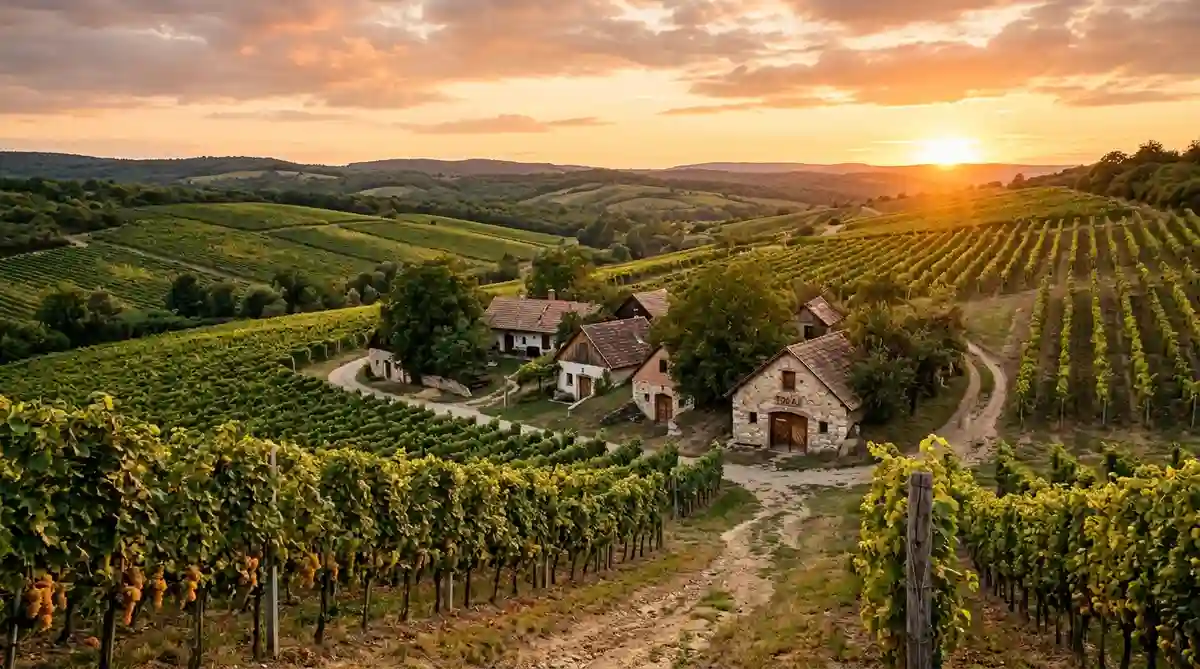
Then there’s the lifestyle. Hungary is the land of thermal baths, and many spa towns built entire economies around mineral waters that retirees swear by. Add the wine regions of Tokaj and Eger, the cafe culture, and the central position that puts Vienna, Bratislava, and Prague within a short train ride, and the case for choosing to retire in Hungary writes itself.
The Cost to Retire in Hungary: A Real Monthly Budget
Here is an honest budget for a single retiree and a couple, based on current Budapest figures. Smaller cities like Debrecen, Szeged, or Pecs run cheaper still.
| Expense | Single retiree | Couple |
|---|---|---|
| Rent (1 to 2 bed, central) | EUR 500 to 700 | EUR 600 to 850 |
| Utilities and internet | EUR 100 to 150 | EUR 120 to 180 |
| Groceries | EUR 250 to 350 | EUR 400 to 550 |
| Private health insurance | EUR 100 to 250 | EUR 200 to 450 |
| Transport and leisure | EUR 150 to 300 | EUR 250 to 450 |
| Total per month | EUR 1,100 to 1,750 | EUR 1,570 to 2,480 |
Bottom line: a couple can retire in Hungary comfortably on a combined EUR 2,000 to 2,500 a month, and live well rather than merely getting by. That is the kind of math that makes people reconsider retiring in Spain or retiring in Greece, where coastal rents have surged.
Visa Routes to Retire in Hungary
Hungary does not have a visa literally named “retirement visa,” but two routes do the job cleanly for non-EU retirees, and EU citizens barely need to think about it.
Residence Permit Based on Financial Means
This is the workhorse for retirees. You apply for a residence permit by proving regular income, typically around EUR 1,200 a month from a pension or investments, plus valid health insurance covering Hungary, a registered address, and a clean criminal record. The initial permit is usually granted for one to two years and renews. Stack five years of continuous residence and you can apply for EU permanent residence, which is the real long-game prize.
The Guest Investor Golden Visa
For retirees with capital who want certainty, the Guest Investor Program is the premium option. Invest EUR 250,000 in an approved real-estate investment fund and you receive a residence permit valid for 10 years, renewable. It uses an invest-after-approval model, so funds move only once the visa is granted. We break down the full mechanics in our guide to European residency by investment, and you can compare it with the broader residency options Liberty Mundo arranges.
EU and EEA citizens skip all of this. Freedom of movement lets them settle in Hungary and simply register their residence. If you hold a second EU passport, that ship has already come in.
Healthcare When You Retire in Hungary
Hungary’s public health system, NEAK, covers insured residents and is genuinely solid, especially in Budapest and university cities. Once you are a contributing resident or covered through the social system, public care costs little to nothing at the point of use.
Most expat retirees pair public coverage with private insurance for speed and English-speaking doctors. Private health insurance runs roughly EUR 100 to 250 a month. A private GP visit is around USD 40 to 80, and specialist consultations are modest by Western standards. Dental tourism is so well developed that people fly into Hungary specifically for treatment, which tells you something about the value.

How Tax Works When You Retire in Hungary
This is where Hungary quietly outperforms. The personal income tax is a flat 15% on worldwide income for tax residents, with no progressive ladder climbing to 45% the way it does across much of Western Europe. You become a Hungarian tax resident by spending 183 or more days a year in the country, or by basing your permanent home and centre of vital interests there.
Pension taxation depends on where the pension comes from and which double-taxation treaty applies. Hungary has a wide treaty network, so many foreign pensions are not taxed twice. State pensions in particular are often taxable only in the source country under treaty rules, which can be a pleasant surprise. The practical point: model your specific pension against the relevant treaty before you move, because the result varies by country.
Capital gains and dividends are also taxed at 15%, with a capped 13% social tax applying to certain investment income up to an annual threshold of roughly EUR 19,968 of base in 2026. For a retiree living off a portfolio, that flat structure is far simpler and usually lighter than the worldwide progressive systems back home.
How to Retire in Hungary: Step by Step
Step 1: Choose your city and budget. Decide between Budapest and a cheaper regional city, then map your monthly budget against real rents and costs.
Step 2: Pick the right residence route. Use the income-based residence permit if you have pension income, or the Guest Investor golden visa if you prefer an investment-backed 10-year permit.
Step 3: Arrange health insurance and an address. Secure valid health coverage and a registered Hungarian address, both required for the permit application.
Step 4: Apply and establish tax residency. File your residence permit, then plan your days so your tax residency position is clear and your pension treaty treatment is optimised.
Step 5: Build toward permanent residence. Renew your permit and accumulate five years of continuous residence to qualify for EU permanent residence, then optionally pursue citizenship.
Common Mistakes People Make When They Retire in Hungary
- Assuming the White Card digital nomad permit works for retirement. It does not, and it never counts toward permanent residence.
- Ignoring the 183-day rule and accidentally triggering Hungarian tax residency before planning for it.
- Skipping the double-taxation treaty analysis on a pension and overpaying as a result.
- Underbudgeting winter heating costs in older Budapest apartments.
- Forgetting that EU permanent residence needs five continuous years, so breaks in residence reset the clock.
Retire in Hungary vs Other European Bases
| Country | Income tax | Couple monthly budget | Path to PR |
|---|---|---|---|
| Hungary | Flat 15% | EUR 2,000 to 2,500 | 5 years |
| Portugal | Progressive (NHR 2.0 / IFICI for some) | EUR 2,500 to 3,200 | 5 years; citizenship now 10 years ordinary |
| Spain | Progressive to 47% | EUR 2,600 to 3,400 | 5 years; citizenship 10 years (2 for treaty countries) |
| Greece | Progressive; 7% flat option for foreign pensions | EUR 2,200 to 3,000 | 5 years; citizenship 7 years |
| Bulgaria | Flat 10% | EUR 1,700 to 2,300 | 5 years |
Hungary lands in the sweet spot: cheaper than the Mediterranean heavyweights, with a flat tax that only retiring in Bulgaria undercuts. If your priority is culture, central location, and value rather than a beach, the choice to retire in Hungary is hard to argue with.
How much money do I need to retire in Hungary?
Is there a retirement visa for Hungary?
How is foreign pension income taxed in Hungary?
Is healthcare good if you retire in Hungary?
Can I get permanent residence if I retire in Hungary?
Where is cheapest to retire in Hungary?
Do I need to speak Hungarian to retire in Hungary?
Is Hungary safe for retirees?
Final Thoughts on Choosing to Retire in Hungary
Hungary is the value play of European retirement. Low flat tax, strong healthcare, deep culture, and a budget that lets a couple live well on what a beach town in Spain would burn through in rent alone. Get the residence route and the pension tax treaty right from day one, and the rest is enjoying the thermal baths. To plan the move properly, compare it with residency in Greece and explore the full residency programs Liberty Mundo helps clients secure. Running a business too? See how to incorporate in Hungary at a flat 9% corporate tax, and once you have the years in, turn residence into a second passport in Hungary.
Sources and References
- National Tax and Customs Administration of Hungary (NAV), A Short Summary on the Taxation of Private Persons
- PwC Worldwide Tax Summaries, Hungary Individual Residence
- National Directorate-General for Aliens Policing, Temporary Residence Permit Factsheet
- Numbeo, Cost of Living in Hungary
- OECD, Hungary Tax Residency Rules