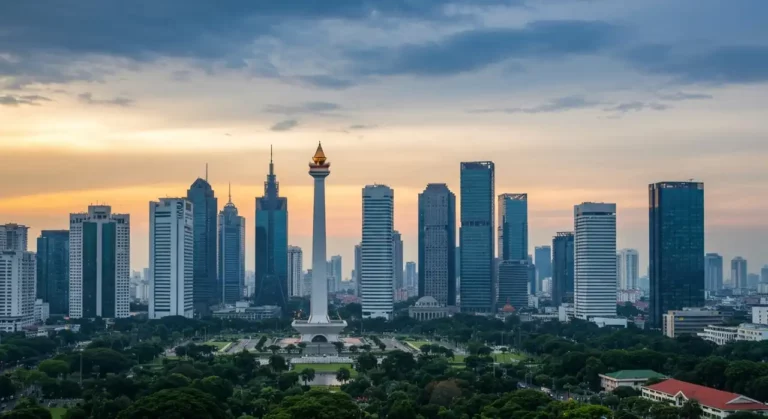
A second passport in Indonesia is the route nobody in the nomad circles talks about, and that is exactly why it deserves a serious look. With a Henley Passport Index ranking of 63rd in 2026 and visa-free or visa-on-arrival access to roughly 70 destinations, the Indonesian document will never outperform a Brazilian or Chilean passport on mobility. But the real play here is not mobility. It is jurisdictional optionality at the heart of Southeast Asia, backed by a Golden Visa program that lets investors and company founders hold residency for up to ten years on a single approval.
Travel power is only half the story. Visa-free access tells you where Indonesia’s passport can take you, not how free the country behind it leaves you. The Liberty Mundo Passport Freedom Index re-ranks 197 passports on tax, extradition protection, conscription and civil liberties, not just visa-free travel, so you can see where Indonesia really lands once freedom is in the mix.
The catch worth understanding upfront: Indonesia does not allow dual citizenship for adults. If you naturalize as Indonesian, you must renounce your prior nationality. That single rule disqualifies most readers looking for a collectible passport portfolio. For the minority who are genuinely relocating their lives to Bali, Jakarta, or the Riau Islands, the equation changes. Indonesian citizenship opens full labor rights in the fourth-largest population on earth, full property ownership (including freehold land, which foreigners cannot otherwise touch), and access to an ASEAN economic bloc projected to be the fourth-largest economy by 2030.
This guide walks through every legal pathway to a second passport in Indonesia, the real timelines, the Bahasa Indonesia language rule, the renunciation requirement, and the residency-first structures that most applicants use to build the clock. The numbers come from the Directorate General of Immigration (Direktorat Jenderal Imigrasi), the Ministry of Law and Human Rights, Law No. 12/2006 on Indonesian Citizenship, and the BKPM (Ministry of Investment). No marketing site fees, no inflated timelines.
Why a Second Passport in Indonesia Is Worth a Serious Look
The standard dismissal of Indonesian citizenship goes like this: 63rd in the world is mediocre mobility, Bahasa is difficult, you lose your original nationality, and five years is a long commitment for a passport that does not even deliver Schengen access. All fair. And all missing the actual picture of what a second passport in Indonesia really delivers.
Indonesian citizens receive visa-free or visa-on-arrival access to roughly 70 destinations including Singapore, Malaysia, Thailand, Vietnam, the Philippines, Hong Kong, Macau, Brunei, Cambodia, Laos, Myanmar, Japan (visa-free for passport chip holders through IC passport registration), and most of South America. The Schengen Area still requires a Schengen visa. But the ASEAN mobility layer is what second passport in Indonesia holders use week to week.

The deeper value lives in the rights Indonesian citizenship unlocks inside the country itself. Foreigners cannot hold freehold land in Indonesia under any visa, full stop. Hak Milik title is reserved for Indonesian citizens. Foreign investors rent through right-of-use leases (Hak Pakai) or structure through a PT PMA that holds Hak Guna Bangunan (right-to-build) title. Naturalize with a second passport in Indonesia, and freehold property across all 17,000 islands becomes available to you directly. For anyone planning a serious long-term life in Indonesia with real estate exposure, that single property rule often justifies the entire path.
Add labor market access without sponsorship, voting rights, access to state university pricing for your children, and unrestricted company ownership outside the Negative Investment List. The passport itself is the least visible piece of the second passport in Indonesia package. The rights package behind it is what matters.
The Legal Routes to a Second Passport in Indonesia
Indonesian nationality law (Undang-Undang Nomor 12 Tahun 2006) grants a second passport in Indonesia through three doors: by birth to an Indonesian parent (ius sanguinis, not ius soli), by marriage to an Indonesian national (streamlined but still time-gated), and by naturalization. The vast majority of expat readers will use the naturalization route, built on top of a long-term residency foundation.
Naturalization by Residency (Standard 5-Year Path)
For naturalization into a second passport in Indonesia, Article 9 of Law 12/2006 requires applicants to have resided in Indonesia for at least five consecutive years immediately prior to application, or ten years non-consecutive. You must be at least 18 years old (or already married), physically and mentally healthy, fluent in Bahasa Indonesia, knowledgeable about Pancasila and the 1945 Constitution, have no criminal record, have a stable income or employment, and have paid the naturalization fee of IDR 50,000,000 (roughly USD 3,200) to the state treasury. Upon approval, you must appear in person before a court to swear allegiance to the Republic, and then formally renounce your prior citizenship within three years.
Naturalization by Marriage
Article 19 permits a foreign spouse of an Indonesian citizen to apply for a second passport in Indonesia after five years of continuous residence in Indonesia as a married couple, or ten years in a legally recognized marriage overall. The same language test, Pancasila acknowledgement, and renunciation requirements apply. This is the most common pathway in practice, since it combines KITAP permanent residency eligibility (obtainable after two years of marriage-KITAS) with a faster route to citizenship than the standard investor path.
Citizenship by Birth (Jus Sanguinis)
Any child born to at least one Indonesian citizen parent acquires Indonesian nationality at birth, regardless of where the birth takes place. Children born in Indonesia to two foreign parents do not receive Indonesian citizenship automatically. There is no territorial birthright citizenship. For children of mixed marriages, Indonesia permits dual citizenship until the age of 17, at which point the child must choose one nationality within three years.
Citizenship by Merit (Extraordinary Contribution)
Article 20 allows the President to grant citizenship to foreign nationals who have rendered extraordinary service to Indonesia or whose naturalization is deemed in the national interest. This is a discretionary grant, typically reserved for elite athletes, internationally recognized scientists, or strategic investors of national significance. It is not a pathway for the average applicant.
The Golden Visa as a Residency Bridge (Not a Passport)
Launched in August 2024 through Kementerian Hukum dan HAM regulations, the Indonesia Golden Visa (E28A through E28F classifications) grants 5 or 10-year residency based on investment thresholds. A personal investor qualifies at USD 350,000 (5-year) or USD 700,000 (10-year) placed in government bonds, IDX-listed shares, or mutual funds. Company founders qualify at USD 2.5M (5-year) or USD 5M (10-year). Unlike Caribbean CBI schemes, the Golden Visa is not a direct path to a second passport in Indonesia. It is residency that feeds into the five-year naturalization clock, provided you also satisfy the physical presence, language, and renunciation requirements.
Indonesian Passport Strength in 2026
The second passport in Indonesia sits in the middle of the global pack on mobility. The table below shows how it compares to regional and alternative options readers often weigh against it.
| Passport | 2026 Henley Rank | Visa-Free Destinations | Path to Citizenship |
|---|---|---|---|
| Indonesia | 63 | 70 | 5 yrs residency + language + renunciation |
| Malaysia | 11 | 181 | 10 yrs residency + renunciation |
| Singapore | 1 | 194 | 2 yrs PR + renunciation |
| Thailand | 58 | 82 | 5 yrs residency + renunciation |
| Philippines | 75 | 66 | 10 yrs residency (dual allowed) |
| Brazil | 15 | 168 | 4 yrs residency (dual allowed) |
| Paraguay | 26 | 145 | 3 yrs residency (dual allowed) |
The honest read on a second passport in Indonesia: it is outperformed on pure mobility by every neighbor except the Philippines. But the Philippines allows dual citizenship and Indonesia does not, which swings the calculation entirely depending on what you want the passport to do. For a dual citizenship portfolio passport, Indonesia is not the answer. For a permanent relocation with land rights, it remains one of the strongest in ASEAN.
Indonesia Citizenship Cost Breakdown
The government-side fees for a second passport in Indonesia are modest. What adds up is the residency foundation you need in place before you can even apply.
| Cost Item | Amount (USD) | Source |
|---|---|---|
| Naturalization application fee | 3,200 | Law 12/2006 (IDR 50M) |
| Bahasa Indonesia language test (UKBI) | 100-200 | Badan Bahasa |
| Document apostille + sworn translation | 800-1,500 | Private notary fees |
| Legal representation (full service) | 5,000-15,000 | Indonesian immigration lawyers |
| Renunciation fees (origin country) | Varies (USD 0 – USD 2,350 for US) | Country-specific |
| Golden Visa investment (optional residency) | 350,000+ | Ministry of Law & HAM |
| KITAS/KITAP fees across 5 years | 2,500-4,000 | Direktorat Jenderal Imigrasi |
| Living costs during qualifying period | 15,000-36,000/year | Mercer/ExpatArrivals |
Total out-of-pocket for a second passport in Indonesia outside investment and living costs falls in the USD 12,000 to USD 25,000 range for a complete application handled by a qualified law firm. That is a fraction of any Caribbean CBI scheme, but the hidden cost is time and the renunciation penalty.
Indonesia Citizenship Timeline
The path from first landing to a second passport in Indonesia in hand runs long. Plan in years, not months.
- Year 0: Arrive on a visa-on-arrival, convert to KITAS (investor, retirement, work, family, or Golden Visa). KITAS validity ranges 1 to 10 years depending on class.
- Years 1-3: Build Bahasa Indonesia fluency. Aim for UKBI intermediate level by end of year 2 to allow buffer for retakes.
- Year 3-5: Convert KITAS to KITAP (permanent residency) after 3 years on an eligible class, or 4 years continuous residency on most work/investor streams.
- Year 5: Eligible to file naturalization application. Submit through Kementerian Hukum dan HAM.
- Years 5-6: Ministry review, verification, background check. Typical processing 9 to 18 months.
- Year 6-7: Presidential decree, oath of allegiance at local District Court (Pengadilan Negeri), renunciation of prior nationality within 3 years.
- Year 7: Issuance of Indonesian identity card (KTP) and first Indonesian passport.
Total elapsed time from arrival to a second passport in Indonesia: typically 6 to 7 years. Faster is possible through the marriage route (qualifying clock still starts at year 5 of marriage residency but can overlap with earlier relationship periods). Slower is common when language proficiency is underbuilt or renunciation delays surface at the home country end.
Lifestyle and Culture: What Indonesian Citizenship Actually Looks Like
A second passport in Indonesia is not built during a vacation. Most readers building a five-year residency foundation will live primarily in Jakarta, Bali (Canggu, Ubud, Seminyak), Yogyakarta, Bandung, or the Riau Islands. Each of those destinations comes with a different calculation on cost, infrastructure, and community.
Bali delivers the expatriate stereotype: English-friendly businesses, tropical climate, digital nomad coworking, and a real estate market priced three to five times above mainland Indonesia. Jakarta operates as the financial and government center, with international schools, medical infrastructure, and traffic patterns that compete with Manila and Bangkok for worst in the region. Yogyakarta offers the cultural heartland (Javanese arts, Borobudur, Prambanan) and student-town affordability. Bandung delivers highland climate three hours from Jakarta by toll road.
Bahasa Indonesia is the make-or-break piece of any second passport in Indonesia application. The language itself is one of the easier major Asian languages for English speakers (Latin alphabet, no tones, regular grammar), but citizenship-grade fluency demands real commitment. UKBI intermediate level (the passing threshold for naturalization purposes) maps roughly to B1 in the European framework. Budget for 12 to 18 months of immersive study with a qualified instructor plus daily practice in the community.
For retirees, Bali’s cost of living sits roughly 40 to 60 percent below Portugal’s Algarve or Mexico’s Riviera Maya, and the Retirement KITAS (age 55+, USD 18,000 annual income) offers a low-friction entry point that can feed into the five-year clock if you later pivot to citizenship. The retire in Indonesia guide goes deeper on that structure.
Business Considerations for Naturalization Applicants
Anyone using the investor or Golden Visa track to build the five-year foundation for a second passport in Indonesia will interact with PT PMA (Perseroan Terbatas Penanaman Modal Asing), Indonesia’s foreign-investment company structure. PT PMA requires minimum authorized capital of IDR 10 billion (roughly USD 645,000) with IDR 2.5 billion (roughly USD 161,000) paid-up, at least two shareholders, one resident director, and one commissioner.
Once naturalized with a second passport in Indonesia, the foreign investment restrictions fall away. Citizens can hold unlimited ownership in domestic-only sectors (agriculture, retail below certain size thresholds, certain financial services) that PT PMA structures are locked out of. For founders building long-term Indonesian operations, the citizenship path removes a layer of compliance overhead that PT PMA adds each year. Full details on the entity selection process live in the incorporate in Indonesia guide.

Tax residency is the other consideration. Indonesia treats anyone present 183+ days per year or holding a KITAS with intent to reside as a tax resident, subject to progressive rates from 5 to 35 percent on worldwide income by default. Law No. 11/2020 (Job Creation Law) and UU HPP (Law No. 7/2021) carve out a four-year territorial treatment for qualifying foreign experts in STEM and specialized roles, taxing only Indonesian-source income. That window does not extend through the full five-year naturalization clock, so year 5 carries worldwide exposure. Plan the structuring accordingly.
Put your assets beyond reach in 57 jurisdictions.
Pick where you want your company. We handle the filing, the registered agent, and the bank introduction. From US$1,290, done in days, not months.
- Charging-order protection in jurisdictions courts can't pierce
- Zero tax on foreign income in 30+ territories
- Banking options available
- Fixed price. No surprise fees at closing
Indonesia vs. Other ASEAN Second Passport Options
Most readers weighing a second passport in Indonesia are also looking at Malaysia, Thailand, Singapore, or the Philippines. Each has a different profile worth comparing head to head.
| Country | Residency to Citizenship | Passport Rank 2026 | Language Test | Dual Citizenship |
|---|---|---|---|---|
| Indonesia | 5 years continuous | 63 | Bahasa Indonesia B1 | No |
| Malaysia | 10 years | 11 | Bahasa Malaysia | No |
| Singapore | 2 years PR + strict eligibility | 1 | English only | No |
| Thailand | 5 years PR (rare approvals) | 58 | Thai | No (de facto) |
| Philippines | 10 years residency | 75 | English, Filipino | Yes |
| Vietnam | 5 years | 91 | Vietnamese | No (exceptions) |
Malaysia and Indonesia both demand renunciation and sit in overlapping cost and lifestyle categories. Malaysia doubles the residency timeline but delivers a passport 52 spots higher on Henley. Singapore is the gold standard but practically out of reach for most applicants outside professional work visa pipelines. The Philippines is the only ASEAN jurisdiction that permits dual citizenship by descent, which changes the conversation entirely for anyone with Filipino ancestry.
Common Mistakes That Kill Indonesian Naturalization Applications
The failure modes for a second passport in Indonesia are consistent across the immigration lawyers I have spoken with in Jakarta and Denpasar. These are the errors that cost applicants additional years or outright rejection.
Breaking the five-year continuity rule for a second passport in Indonesia. Article 9 of Law 12/2006 requires five years of continuous legal residency immediately prior to application. Leaving Indonesia for more than six months resets the clock. Many KITAS holders travel extensively for work and miss this single line. Track every exit and entry.
Underestimating the Bahasa Indonesia requirement. The language test is not a polite formality. Applicants who arrive at UKBI assessment with tourist-level Bahasa typically fail, and the test can only be retaken every 90 days. Budget 12 to 18 months of live instruction.
Ignoring the renunciation math for Americans pursuing a second passport in Indonesia. US citizenship renunciation requires appearance at a US consulate, a USD 2,350 fee, and exposure to the exit tax under IRC Section 877A for covered expatriates (net worth over USD 2M, or high average tax liability over five years). This can mean six-figure tax bills on unrealized capital gains. The renunciation step is not an afterthought.
Relying on marketing-site fee estimates. Several agencies quote inflated Indonesian naturalization fees in the USD 15,000 to USD 30,000 range for government-side costs alone. The actual Ministry fee under Law 12/2006 is IDR 50,000,000 (roughly USD 3,200). Verify every figure against official sources before paying anyone.
Assuming dual citizenship is possible. Indonesia will not accept a naturalization application without commitment to renounce. Some applicants pursuing a second passport in Indonesia arrive expecting a loophole. There is none. Either commit to the renunciation or use the KITAP permanent residency path, which keeps your original passport intact and still delivers most of the on-the-ground benefits.
Freedom Score Quiz
How to Get a Second Passport in Indonesia: Step-by-Step
Step 1: Choose your residency pathway for a second passport in Indonesia. Decide between Golden Visa (E28A-E28F), Investor KITAS (via PT PMA), Retirement KITAS, Work KITAS, or Family Reunification KITAS. Your nationality, income, capital availability, and age drive this decision. The qualifying clock starts once you arrive and convert from visitor status.
Step 2: Enter Indonesia and convert to KITAS. Most applicants enter on a Visa on Arrival (B1) and convert to the appropriate KITAS class through evisa.imigrasi.go.id. Biometric capture at the local immigration office (Kantor Imigrasi) must happen within 30 days of arrival under the new KITAS.
Step 3: Register NPWP and open an Indonesian bank account. NPWP is your Indonesian tax identification number, required for any long-term residency and for the eventual citizenship application. Open a local bank account at BCA, Mandiri, or BNI. These are the paper trail anchors the Ministry will check at application time.
Step 4: Build Bahasa Indonesia fluency for your second passport in Indonesia application. Begin formal instruction within the first six months of arrival. Target UKBI intermediate level (roughly CEFR B1) by year 2 or 3. Use one-on-one tutors through schools like Cinta Bahasa (Bali) or Wisma Bahasa (Yogyakarta). The oral interview is where most applicants fail.
Step 5: Convert KITAS to KITAP permanent residency. After 3 to 4 years of continuous KITAS (depending on your class), apply to convert to KITAP. KITAP is valid 5 years and renewable indefinitely, simplifying the final years of your qualifying period and removing annual renewal friction. Not strictly required for citizenship but strongly recommended.
Step 6: Accumulate continuous residency and paper trail. Stay in Indonesia as your primary residence. Keep travel absences under six months per trip and under 18 total months across the five-year qualifying window. Maintain tax filings, utility bills, lease agreements, and health insurance enrollment. These are your residency proofs.
Step 7: Take and pass the UKBI Bahasa Indonesia exam. Schedule through Badan Pengembangan dan Pembinaan Bahasa. The test covers listening, speaking, reading, and writing. The passing score for naturalization purposes is Intermediate level (560-640) or above. Book the exam in your fourth year to leave margin for one retake.
Step 8: File the second passport in Indonesia naturalization application. Submit the complete file to Kementerian Hukum dan HAM through your KITAS sponsoring entity or your legal representative. Required documents: KITAS/KITAP history, NPWP, UKBI certificate, Pancasila acknowledgement, clean police clearance from every country you have lived in for five years, birth and marriage certificates apostilled and sworn-translated, and proof of stable income.
Step 9: Attend the Presidential decree and oath ceremony. Upon approval (typical processing 9 to 18 months), your naturalization is confirmed by Presidential decree. You then appear at a District Court (Pengadilan Negeri) to swear allegiance to the Republic and Pancasila.
Step 10: Renounce prior citizenship and apply for Indonesian passport. Complete the renunciation of your prior nationality at the relevant consulate within 3 years of the Presidential decree. Submit the renunciation certificate to Kementerian Hukum dan HAM. Then apply for your KTP (Indonesian ID card) and first Indonesian passport through the Directorate General of Immigration.
FAQ: Second Passport in Indonesia
How long does it take to get a second passport in Indonesia?
Does Indonesia allow dual citizenship?
Can I get a second passport in Indonesia by investment alone?
What is the Indonesian passport ranked in 2026?
Do I need to speak Bahasa Indonesia to get a second passport in Indonesia?
Can I get Indonesian citizenship through my grandparents?
What happens to my US taxes if I become an Indonesian citizen?
Can I get permanent residency in Indonesia without naturalizing?
How much does a second passport in Indonesia actually cost?
Can I own land in Indonesia with a second passport?
Can I pass Indonesian citizenship to my children?
Is a second passport in Indonesia worth it for Americans?
Final Thoughts on a Second Passport in Indonesia
A second passport in Indonesia is a fit for a narrow but real category of applicants: serious long-term residents who have committed to building a life in the archipelago, who want freehold land rights, and who are prepared to renounce their prior nationality. For everyone else, the smarter play is the KITAP permanent residency path, which preserves the original passport while delivering most of the on-the-ground benefits.
The second passport in Indonesia equation is not about mobility. It is about depth of integration into one of Asia’s largest economies, at a fraction of what any Caribbean CBI scheme charges. If that fits your life, the five-year commitment pays off. If not, there are better routes.

For readers comparing Indonesia to other options in the region, the 7 easiest citizenships guide is a useful companion read. Those with ancestry in a Portuguese, Italian, Irish, or German line should review citizenship by descent pathways, which can dramatically shortcut the timeline. For the full tax and entity analysis of setting up a business in Indonesia, the incorporate in Indonesia guide covers PT PMA structures in depth.
Other country comparisons worth reviewing: Brazil’s four-year route, Paraguay’s three-year timeline, Italian citizenship by descent, Georgia second passport options, residency options in Indonesia, retirement in Indonesia, the full second passports category, and a dedicated strategy call for anyone ready to lock in the fastest path for their specific situation.
Sources and References
- Undang-Undang Nomor 12 Tahun 2006 tentang Kewarganegaraan Republik Indonesia, Peraturan BPK
- Direktorat Jenderal Imigrasi, Kementerian Hukum dan HAM, KITAS, KITAP and Golden Visa Information
- Kementerian Investasi BKPM, PT PMA and Foreign Investment Framework
- PwC Indonesia Tax Summaries, Indonesia Individual Taxes on Personal Income
- Badan Pengembangan dan Pembinaan Bahasa, UKBI Bahasa Indonesia Proficiency Exam
- Wikipedia, Visa Requirements for Indonesian Citizens (2026 Henley Passport Index data)
- OECD, Indonesia Country Profile and Economic Surveys
- Kementerian Luar Negeri Republik Indonesia, Consular and Naturalization Services