
The Paraguay Investor Pass is the country’s first real attempt at a direct permanent residency program for foreign capital, and it landed on 17 April 2026 with terms that quietly embarrass most Latin American golden visas. Invest from USD 150,000. Skip temporary residency. Enter Paraguay once every three years. Keep your foreign income tax-free under a territorial system that was already one of the friendliest in the Americas.
Paraguay’s Ministry of Industry and Commerce (MIC) launched the program in Brazil alongside the Dirección General de Migraciones because the country is already drowning in inbound applications. Residency filings jumped from roughly 28,000 in 2024 to more than 47,000 in 2025, and Asunción is projecting 80,000 new residents in 2026. This new instrument is how the government plans to capture the higher-net-worth slice of that wave without clogging the existing immigration queue.
This guide walks through every detail that matters: the three investment tracks, the real tax implications, how the program compares to the older SUACE route, how it stacks up against Uruguay and Panama’s equivalents, and the quiet traps that burn first-time applicants. No marketing fluff. No recycled press-release paragraphs. Just the operator’s view from Liberty Mundo, where we help clients execute these plans, not just read about them.
What the Paraguay Investor Pass Actually Is
The program is a fast-track, investment-linked permanent residency instrument created by the Ministry of Industry and Commerce together with the Dirección General de Migraciones. The Minister of Industry, Javier Giménez, and Migration Director Ángel Barchini rolled it out in São Paulo on 17 April 2026 as part of a roadshow targeting Brazilian capital that is already flooding across the Friendship Bridge into Ciudad del Este.
What makes it structurally different from anything Paraguay has offered before comes down to this. Before April 2026, every foreign investor had two real options. Option one, go through the normal immigration queue and accept a two-year temporary residency before upgrading to permanent status. Option two, use SUACE (Sistema Unificado de Apertura y Cierre de Empresas), commit USD 70,000 to a Paraguayan company over a decade, and create at least five jobs. Neither was especially painful by global standards. Neither was designed for passive investors.
The new program is. It converts a real-estate purchase, a tourism project, or a regulated securities portfolio into immediate, direct permanent residency. No five-job creation mandate. No two-year temporary stage. No “go home and come back later” step. One approval, one card, permanent status. That is a meaningful legal shift, not just marketing.
Three Investment Tracks Under the Paraguay Investor Pass
The program recognises three qualifying investment categories, and you can combine them. This last detail matters more than the official press coverage has let on. A USD 100,000 real-estate purchase plus a USD 100,000 securities holding gets you across the USD 200,000 threshold without concentrating capital in a single asset. That kind of flexibility is rare in Latin America.
| Investment Track | Minimum Amount (USD) | What Qualifies | Combinable |
|---|---|---|---|
| Tourism projects | $150,000 | Hotels, eco-lodges, tourism-sector operating businesses registered under MIC criteria | Yes |
| Real estate | $200,000 | Titled urban or rural property purchased in the applicant’s name | Yes |
| Stock exchange (Bolsa de Valores) | $200,000 | Regulated securities listed on Paraguay’s Bolsa de Valores y Productos de Asunción (BVPASA) | Yes |
Let’s be blunt about the tracks. Tourism is the cheapest entry point but the most operationally demanding because the MIC wants to see a real plan, a real project, a real payroll. Real estate is the simplest legally, and Paraguay is one of the few South American countries that places essentially zero restrictions on foreign land or apartment ownership. Securities are the most passive, but require you to hold through a BVPASA-regulated broker and keep the position in place while your residency status is active.
Most of our clients end up blending real estate with securities. An Asunción apartment covers accommodation on visits and half the threshold. A regulated-securities position covers the other half and spits out interest or dividend income taxable at resident-friendly rates. The program was clearly designed with this kind of stacking in mind.
Why Paraguay Launched the Investor Pass When It Did
Paraguay has been on a tear. Inbound residency applications nearly doubled year-on-year, and the Ministry expects 80,000 filings in 2026, more than 60% of which are expected to come from Brazil alone. Argentina, reeling from currency controls and political theatre, is sending high-net-worth families next door. Europeans priced out of Portugal and Spain’s golden visas are shopping further afield. The numbers don’t lie: Paraguay has become a Plan B destination for a class of people who previously would not have looked at South America.
The existing immigration infrastructure was not built for that volume. Before this launch, the migration office was processing tens of thousands of ordinary residency applications alongside its usual business, with predictable delays. Creating a separate, higher-threshold, higher-revenue track lets the government serve investors properly while relieving pressure on the standard queue. This reform is part immigration upgrade, part quiet tax-base expansion, part geopolitical pitch to spooked neighbors.
For applicants, the timing is the opportunity. Early adopters almost always get easier treatment than the cohort that arrives after the first policy tweak. If you plan to use this route, the first 12 months will be the cleanest window.
Put your assets beyond reach in 57 jurisdictions.
Pick where you want your company. We handle the filing, the registered agent, and the bank introduction. From US$1,290, done in days, not months.
- Charging-order protection in jurisdictions courts can't pierce
- Zero tax on foreign income in 30+ territories
- Banking options available
- Fixed price. No surprise fees at closing
Paraguay Investor Pass vs SUACE: The Distinction That Actually Matters
Every second article you read will conflate these. They are not the same. SUACE is Paraguay’s one-stop shop for business creation, and it has run an investor-residency route for years at USD 70,000, committed to a local operating company, spread over ten years, with a five-employee requirement. SUACE still exists. It still works. It is still cheaper.
The new program sits alongside SUACE, not on top of it. Think of SUACE as the entrepreneur track, and think of the newer route as the capital track. SUACE suits the founder who is actually relocating a business to Paraguay and hiring local staff. The Paraguay Investor Pass suits the investor who wants permanent status without operating a company or employing anyone.
| Feature | Investor Pass Program | SUACE Investor Residency |
|---|---|---|
| Minimum investment | USD 150,000 (tourism) or USD 200,000 (real estate or securities) | USD 70,000 in a Paraguayan company |
| Payment structure | Immediate, into qualifying asset | Distributed over 10 years per approved business plan |
| Job creation requirement | None | At least 5 Paraguayan jobs |
| Business plan required | No (except tourism track) | Yes |
| Operating business required | No | Yes |
| Residency granted | Permanent, direct | Permanent, direct |
| Physical presence required | Entry once every 3 years for 10 years | Habitual presence expected for tax and renewal |
| Path to citizenship | 3 years of permanent residency (Art. 148) | 3 years of permanent residency (Art. 148) |
| Best for | Passive investors, retirees, wealth-preservation clients | Entrepreneurs relocating or launching a local business |
Here’s the kicker most commentary misses. The new route does not kill SUACE. It segments the market. If you are ever advised that you must use one or the other on financial grounds alone, you are talking to someone who does not understand the programs. The right question is not “which is cheaper” but “which matches your life.”
Tax Benefits Built Into the Paraguay Investor Pass
Tax is where the program stops being a pure residency product and starts being a genuine wealth-planning tool. Paraguay runs a textbook territorial tax system. Income sourced outside Paraguay is not taxed in Paraguay. Period. That already makes the country one of the cleanest retirement jurisdictions in the hemisphere.
The program layers three specific tax advantages on top of that:
- Resident dividend and profit tax (IDU) at 8%, not 15%. Non-residents pay 15% on Paraguayan dividend distributions. Investor Pass holders qualify as residents and pay 8%, almost halving the cost of taking profits out of a Paraguayan company or securities portfolio.
- 0% tax on foreign-source income. Dividends from your US brokerage, rents from your UK flat, royalties from your Canadian licence, interest from your Swiss bonds: none of it is taxed in Paraguay. Foreign-source income sits outside the IRP and IRE regimes entirely.
- 10% flat corporate income tax (IRE). If your qualifying investment runs through a local company, that company pays a flat 10% on Paraguay-source profit. That is lower than Chile, Argentina, Uruguay, Colombia, or Brazil.
Source for all three: the PwC Paraguay Tax Summaries and SET (Subsecretaría de Estado de Tributación) publications linked at the foot of this article. Do not take any of it on faith from an immigration blog.
One caveat costs Americans real money. Paraguayan residency does not exempt US citizens from US federal tax. If you are a US citizen, the IRS taxes your worldwide income regardless of where you live. The Foreign Earned Income Exclusion (FEIE) helps only with earned income from employment or self-employment, capped at USD 132,900 for 2026 (per IRS Rev. Proc. 2025-32). The FEIE does not shield dividends, capital gains, Social Security, 401(k) withdrawals, or pension income. Moving to Paraguay without expatriating or running careful structuring work will not lower your US tax bill meaningfully. Plan accordingly.
Physical Presence and Ongoing Obligations
This is the single most attractive detail for international families. The program only requires holders to enter Paraguay once every three years during a ten-year window in order to keep permanent residency alive. That is not a typo. You can live in Dubai, Lisbon, or Singapore, touch down in Asunción once every thirty-six months for a coffee, and your status stays active.
Compare that to Spain’s non-lucrative visa (183 days/year), Portugal’s old golden visa (seven to fourteen days/year but with a now-closed real-estate track), or the US green card (you cannot be absent for more than twelve months without reentry paperwork). The new Paraguayan route essentially hands you a legal parking spot for residency with almost no lifestyle cost.
That said, residency and tax residency are different concepts in Paraguay. To become a tax resident and claim the 0% rate on foreign income or the 8% IDU rate, you need to either spend meaningful time in Paraguay, register a RUC tax number, or demonstrate a “center of vital interests” in the country. Many clients run a two-track setup: immigration residency under this program, with tax residency deliberately left elsewhere (or acquired only when it is useful). Set it up wrong and you end up tax-resident in two jurisdictions. Set it up right and you pick your battles.
How to Apply for the Paraguay Investor Pass: Step by Step
Step 1: Prepare and legalise your core documents. Paraguay requires apostilled birth certificates, apostilled police clearances from your country of citizenship and any country you have resided in during the past three years, a marriage certificate if applicable, and a certified Spanish translation of each. Turnaround for apostilles varies wildly by country. US applicants typically need three to six weeks. UK applicants can often finish in ten days. Start here, not at the investment stage.
Step 2: Choose and structure your qualifying investment. Tourism, real estate, securities, or a combination. Real estate requires title search, escrow, and registration with the Registro de Inmuebles. Securities require opening a Paraguayan brokerage account (a process that now requires source-of-funds documentation under updated AML rules). Tourism requires a project plan approved by MIC. This step takes four to eight weeks depending on the track.
Step 3: Obtain your MIC Investor Letter. Submit your investment evidence, business plan (if tourism), KYC documents, and formal application through the MIC. The Ministry issues an Investor Letter (Carta de Inversionista) that certifies you qualify under the new framework. This is the legal hook that lets you skip temporary residency at the migration stage.
Step 4: File the permanent residency petition with Migraciones. The Dirección General de Migraciones reviews your file, your Investor Letter, and your biometric data. Approvals have been running inside a four to nine month window, depending on document completeness and current volumes.
Step 5: Receive your cédula and enter the identity systems. After approval, you collect your Paraguayan cédula (national ID), register with the Registro Civil, and are formally a permanent resident. This is also the moment to obtain your RUC if you want to start the clock on tax residency and access the 8% IDU rate.
Step 6: Maintain your investment and plan for citizenship. The qualifying position must be held while residency is active. After three years of permanent residency, you become eligible to petition for Paraguayan citizenship under Article 148 of the Constitution. That requires basic Spanish proficiency and a judicial naturalisation process, which Liberty Mundo handles as a separate engagement.
Budget four to nine months end to end for a complete, well-prepared file. Half of the applications that stall do so because of apostille sloppiness, translation mismatches, or bank-account complications. None of that is fatal. All of it is avoidable.
Common Mistakes Applicants Make
Plenty of people are going to try to DIY this. Most will fail or waste six months. The short list of what actually sinks applications:
Skipping translations. Every document filed in Paraguay must be in Spanish, and the translator must be registered with the Paraguayan courts. Notarised translations from your home country are not accepted. Fix this before you fly.
Using a shell company for the investment. The program requires the capital to be traceable to the applicant. Clients who try to qualify through a BVI company, a Delaware LLC, or a Panama foundation routinely get rejected at the Investor Letter stage. Layered structures are fine for asset protection later. They do not work for program qualification.
Misreading the “once every three years” rule. That clause governs residency maintenance, not tax residency, not practical banking access, not your ability to enrol kids in school. Banking especially: Paraguayan banks still expect to see you, and some will not maintain accounts for residents who never visit. Plan to touch down at least annually for operational reasons, even if the law does not require it.
Forgetting that US citizens remain US taxpayers. Repeated because it is the single most common assumption Americans bring into these conversations and it is wrong. A Paraguayan residency does not reduce your US federal tax exposure unless you expatriate or restructure. Read that twice.
Assuming the “launch” pricing will hold. Investment-migration programs routinely reprice upward within two to four years. Portugal, Spain, Malta, Greece, St Kitts, Dominica: every one of those European and Caribbean programs raised thresholds or tightened rules after the initial rush. Paraguay will follow the same script. The clock is ticking on the current terms.
How the Paraguay Investor Pass Stacks Up Against Other Latin American Programs
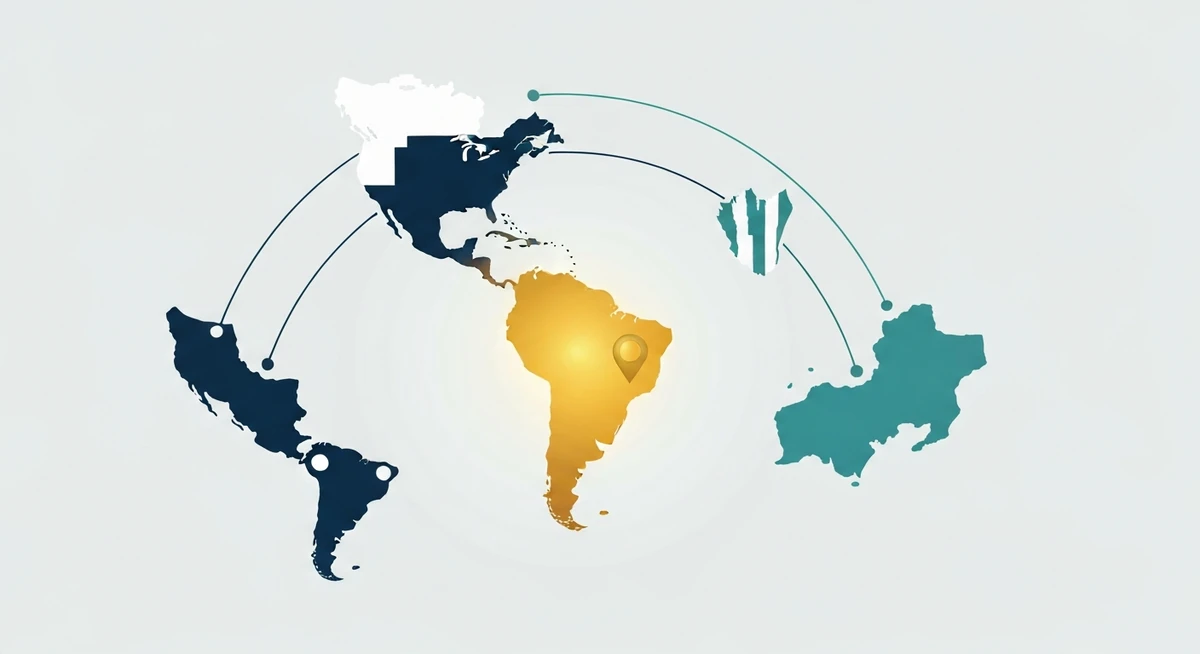
Latin America is now the most active residency market on earth, and Paraguay’s new instrument is competing with serious alternatives. The right comparison is not against every country that offers a residency stamp. It is against the programs a typical Liberty Mundo client actually considers: Uruguay, Panama, Mexico, Costa Rica, and the Caribbean CBI routes (for a passport rather than residency, but the same wallet is choosing).
| Program | Minimum Investment (USD) | Direct PR? | Physical Presence | Tax on Foreign Income (Residents) | Path to Citizenship |
|---|---|---|---|---|---|
| Paraguay Investor Pass | $150,000 (tourism) / $200,000 (real estate or securities) | Yes | Entry once every 3 years | 0% (territorial) | 3 years PR + language exam |
| Paraguay SUACE | $70,000 + 5 jobs | Yes | Habitual presence | 0% (territorial) | 3 years PR + language exam |
| Uruguay residency by investment | ~$525,000 real estate or ~$1.9M business | No (temp first) | ~6 months/year typical | Modified source-based (12% IRPF on foreign capital income from 2026) | 3-5 years + Spanish + ties |
| Panama Qualified Investor | $300,000 real estate or securities | Yes | None specified for PR | 0% (territorial) on foreign-source | 5 years PR |
| Mexico Temporary (Investor) | ~$230,000 real estate | No (temp first, 4 years) | None enforced | Worldwide (up to 35%) if tax-resident | 5 years legal residence |
| Costa Rica Investor | $150,000 real estate or business | No (temp first) | ~4 months/year | Territorial, 0% on foreign-source | 7 years + Spanish |
Pound for pound, Paraguay’s new instrument is the cheapest direct-to-permanent-residency product in the table, with the lowest physical-presence burden and the fastest path to a passport. Panama is closer on structure but costs 50% more. Uruguay is a better lifestyle bet for many but runs a modified tax system that is no longer the zero-tax haven people remember. Mexico and Costa Rica are slower and require temporary residency first.
The one thing this program does not do well is raw passport strength. The Paraguayan passport sits around 26th in the 2026 Henley Passport Index with roughly 145 visa-free destinations, which is strong for Latin America but well below a second EU passport or the Caribbean CBI passports. If unrestricted mobility is your primary goal, Paraguayan residency plus a strategic second citizenship is a better combined play than either piece alone.
Banking, Cost of Living, and Practical Realities
Getting approved is one thing. Actually living with Paraguayan permanent residency is another. A few practical notes nobody publishes:
Banking is the choke point. Paraguayan banks have tightened KYC significantly since 2023 and now demand source-of-funds files that look a lot like European private-bank onboarding. Expect to produce tax returns, bank statements, and an asset-origin narrative. Expect an in-person appointment. Itaú, Banco Continental, and Sudameris are the realistic options for foreign residents. Budget two to four weeks for account opening after your cédula is issued.
Cost of living remains absurdly low. A couple can live comfortably in Asunción for USD 1,500 to USD 2,500 per month. A good two-bedroom apartment in the desirable Villa Morra or Carmelitas neighbourhoods costs USD 700 to USD 1,200. Healthcare at private hospitals (Adventista, Migone) is excellent and runs roughly 10% of US prices. That is not hype. That is what our clients actually spend.
English is limited. Spanish is effectively mandatory for day-to-day life, and you’ll also hear Guaraní, the co-official indigenous language, everywhere outside the capital. An English-only resident will survive, but they will not integrate. Plan lessons into your transition.
From Paraguay Investor Pass to Paraguayan Citizenship
Article 148 of the Paraguayan Constitution sets three years of legal permanent residence as the baseline for naturalisation. The new program starts that three-year counter running from day one, because you begin as a permanent resident rather than burning two years in temporary status. That is the shortest legal route to a Latin American passport that does not require you to be born into the right family or marry a local.
Citizenship is not automatic after three years. You need to pass a judicial naturalisation process that includes basic Spanish proficiency (A1 or better), an exam on Paraguayan history and civics (minimum score 21/30), and evidence of “habitual residence” (which in practice has been interpreted by the courts as roughly three to six months of physical presence per year during the three qualifying years, though this varies by judge). Paraguay permits dual citizenship with most countries, so you don’t have to give up your original nationality.
Treat naturalisation as a separate, deliberate project. It is not a formality bolted onto your residency approval. Clients who plan for it from year one, spend real time in the country, and study the material are the ones who get their Paraguayan passports on time.
Who the Paraguay Investor Pass Is (and Is Not) For
Not everyone should use this program. Let’s be honest about the fit:
Good fit. Passive investors and retirees with USD 150k to USD 300k of deployable capital who want a permanent residency that does not require uprooting their lives. Families using it as a Plan B with a view to future citizenship. Entrepreneurs who want a territorial tax base and a low-cost operational hub. Argentines, Brazilians, and Europeans who want a Latin American Plan B without Uruguay or Panama pricing.
Bad fit. Americans hoping to slash US federal tax by moving (you need expatriation planning, not residency planning). People who want a strong mobility passport in under five years (look at Caribbean CBI or EU routes instead). Non-Spanish speakers who refuse to learn. Investors who want to park their qualifying capital in something speculative, since the program expects the qualifying asset to stay in place while residency is active.
That ship has sailed on easy, cheap European golden visas. Portugal, Ireland, Spain, and the UK have all shut or gutted their programs in the last three years. This is what replaces them for a specific slice of the market: the person who wants a real residency, low tax friction, and a serious passport three years later, for under USD 250,000 all in.
Frequently Asked Questions About the Paraguay Investor Pass
How much does the Paraguay Investor Pass cost in total?
Is the Paraguay Investor Pass the same as a golden visa?
How long does a Paraguay Investor Pass application take?
Can I include my spouse and children in a Paraguay Investor Pass application?
Does the Paraguay Investor Pass make me tax-resident in Paraguay?
What happens if I sell my qualifying investment after getting the Paraguay Investor Pass?
How does the Paraguay Investor Pass compare to Panama’s Friendly Nations Visa?
Can I get a Paraguay passport through the Paraguay Investor Pass?
Is the Paraguay Investor Pass safe politically?
Can I combine a real estate investment with a securities investment for the Paraguay Investor Pass?
Does Paraguay share financial data under CRS?
What is the minimum age for the Paraguay Investor Pass?
Final Thoughts on the Paraguay Investor Pass
Paraguay’s new program is the most interesting Latin American residency launch since Uruguay restructured its tax code. It does not solve every problem. Americans still owe the IRS. Spanish is still unavoidable. The passport is decent, not elite. Banking is workable, not painless.
But the numbers don’t lie on value. USD 150,000 to USD 200,000 in capital that stays yours, immediate permanent residency with almost no physical-presence burden, a territorial tax system that protects foreign income completely, and a three-year path to citizenship. For a specific category of client, nothing in the hemisphere beats it right now.
The only real question is whether you match the profile, and whether you execute the application cleanly. That is where most people lose. Done properly, this program is a wake-up call for the lazy assumption that good residency options only exist in Europe or the Caribbean.
Put your assets beyond reach in 57 jurisdictions.
Pick where you want your company. We handle the filing, the registered agent, and the bank introduction. From US$1,290, done in days, not months.
- Charging-order protection in jurisdictions courts can't pierce
- Zero tax on foreign income in 30+ territories
- Banking options available
- Fixed price. No surprise fees at closing
Liberty Mundo works with clients on the full stack: second residency planning, second passport strategy, asset protection, offshore company formation, and international tax planning. Paraguay’s new residency route is one tool in a bigger toolkit. For most of our clients, it sits alongside an offshore company, a non-CRS bank account, and a separate passport strategy. If you’d like a second opinion on offshore company structures that pair well with Paraguayan residency, our partner site at taxfreecompanies.com covers the corporate side in detail. If you’d rather start with the residency itself, book a call and we’ll map out the full path, from apostille to cédula to passport.
Sources and References
- Ministerio de Industria y Comercio de Paraguay, Official Portal of the Paraguay Ministry of Industry and Commerce
- Dirección General de Migraciones de Paraguay, Official Portal of Paraguay Migration Authority
- PwC Worldwide Tax Summaries, Paraguay: Individual Taxes on Personal Income
- PwC Worldwide Tax Summaries, Paraguay: Corporate Taxes on Corporate Income
- PwC Worldwide Tax Summaries, Paraguay: Corporate Income Determination and Dividend Withholding
- Chambers and Partners, Corporate Tax 2026: Paraguay Trends and Developments
- Constitution of the Republic of Paraguay (1992, as amended), National Constitution (Article 148: Naturalisation)
- U.S. Internal Revenue Service, Foreign Earned Income Exclusion (FEIE) Guidance for US Citizens Abroad