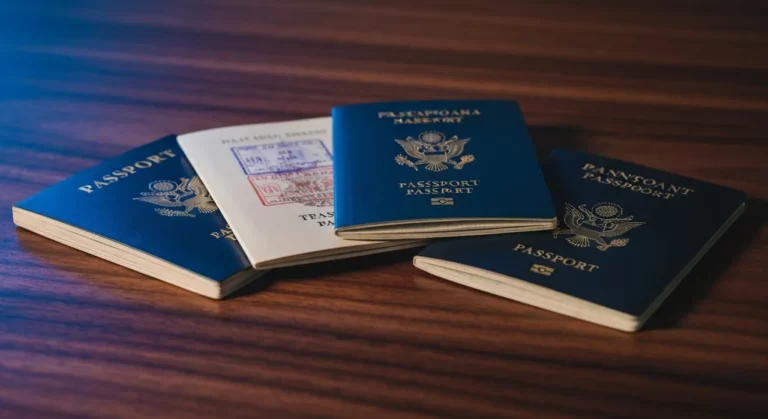
3 passports 3 names same person sounds like something out of a Jason Bourne script. It is not. It is a perfectly legal asset protection structure that quiet, careful people have been using for decades, and Ireland, Turkey and Canada are three of the cleanest jurisdictions on earth to build it in.
The strategy is simple to describe and brutal to execute. You acquire three citizenships through three different legal routes. In each jurisdiction, you legally adjust the name on the passport using that country’s own statutory process. The result is one human being holding three valid travel documents, each issued under a different legal name, each backed by its own court records, civil registry entries, and tax IDs.
Done sloppily, this lands you in a federal courtroom. Done correctly, it gives you the strongest legal firewall against political risk, civil litigation, kidnapping, divorce raids, and creditor harassment that exists outside of an outright fake identity. The difference between the two outcomes is paperwork, sequencing, and disclosure. Get any of those wrong and the whole structure collapses.
The Second Passport Blueprint walks through 50+ countries, every legal route to a second (or third) citizenship, and the back-door methods most law firms will not mention. 12 months of updates included. The exact resource a person building 3 passports 3 names would start with.
Why Anyone Would Build 3 Passports 3 Names in the First Place
Let’s be blunt. Most people who first hear this idea assume the goal is tax evasion or running from criminal liability. It is neither. Anyone trying either one of those is going to get caught fast, because the entire structure depends on legal transparency at every step.
The real drivers are quieter and more rational. A high-net-worth founder in California is one bad headline away from a public lawsuit storm. A Russian-born tech executive is watching her relatives’ assets get frozen by a sanctions regime that did not exist three years ago. A retired Hong Kong banker who finished his career in London is trying to plan an inheritance for kids in three different countries. A divorced doctor in Texas is sick of being named in malpractice suits filed by ambulance chasers. Each of these people has a different problem. Each of them benefits from holding identities and assets that do not all sit in one jurisdiction with one name attached.
Bottom line. The strategy spreads legal exposure. If a US court orders the seizure of accounts held by John Smith, that order does not automatically reach into Turkey to grab the accounts of the same human being who is registered there as Yusuf Demir following a court-ordered name change. The Turkish court would need to recognize and enforce the US judgment locally, and there are entire bodies of private international law dedicated to when that happens and when it does not. The same logic applies to Irish accounts held under a deed-poll-changed Irish name, and to Canadian accounts held under a provincially registered new identity.
None of this works if you forget to declare the accounts on your home country tax return. The structure protects you from civil creditors, sanctions overspill, and political risk.
The Three Pillars: Why Ireland, Turkey and Canada Sit at the Top of the Shortlist
The shortlist of countries where the 3 passports 3 names structure works exists for a reason. Each of the three has to pass four tests.
- A clean, statutory legal route to citizenship that does not depend on lying about anything.
- A defined civil process for changing the name on the passport after citizenship is granted.
- Strong respect for due process and property rights so the resulting passport is actually defensible if challenged.
- A travel document that is genuinely useful, not a flag-of-convenience joke that triggers extra scrutiny at every border.
Ireland, Turkey and Canada all check every box. Each takes a completely different route to get there.
| Country | Citizenship Route | Henley 2026 Rank | Visa-Free Destinations | Name Change Process |
|---|---|---|---|---|
| Ireland | Foreign Births Register (descent) or naturalisation | Tied 4th | 185 | Deed Poll, then 2-year usage rule for passport |
| Turkey | Citizenship by Investment ($400K real estate, 3-year hold) | ~52nd | 118 | Civil court of first instance lawsuit (6 to 9 months) |
| Canada | Descent (Bill C-3 removed generational limit, $75 fee) or naturalisation | Tied 7th | 182 | Provincial legal name change certificate, then passport reissue |
Pillar One: Ireland and the Deed Poll Route
Ireland is the foundation stone for most 3 passports 3 names structures, for one reason. The country is the easiest tier-one EU passport on earth to acquire if you have any Irish ancestry at all, and the name on the resulting passport is more flexible than people realize.
How the Citizenship Step Works
If your parent was born on the island of Ireland, you are automatically an Irish citizen and can apply for an Irish passport directly. If your grandparent or great-grandparent was born there, you go through the Foreign Births Register operated by the Department of Foreign Affairs. The process takes around 12 months at current processing speeds, costs a fraction of any citizenship by investment program, and produces a tied-fourth-ranked passport with 185 visa-free destinations.
No Irish ancestry? You still have a route. Naturalisation is available after five years of reckonable residence in Ireland, with the final 12 months being continuous. The Irish Nationality and Citizenship Act sets out the headline test, and the Department of Justice runs the file. Reckonable residence means time spent in the country on a valid permission, with student stamps and short-stay visas excluded from the count. Spouses and civil partners of Irish citizens get a shorter track at three years.
The process is not casual. You file a Form 8 application with the Citizenship Division, pay the certification fee of 950 euro on approval (currently waived for minors and refugees), attend a citizenship ceremony, and swear fidelity to the nation. You also need to demonstrate “good character,” which means a clean criminal record across every country you have lived in. Processing currently runs around 19 to 24 months from filing.
For Liberty Mundo readers building the three-passport structure from scratch, naturalisation is the slower and more expensive Irish route, but it is also the only option for people with zero Irish ancestry who still want a tier-one EU passport in the mix. The strategist call is whether to spend five years building Irish residency for citizenship, or to take a different EU route entirely. Most people with even one Irish grandparent or great-grandparent should ride the Foreign Births Register lane. Most people without that link should weigh naturalisation against alternatives like Portugal, Malta residency-to-citizenship, or descent claims through other EU states.
How the Name Change Step Works
Here is where Ireland gets interesting. Once you are an Irish citizen, you can change your legal name by Deed Poll, a statutory procedure recognized across the common law world. Citizens Information, the official Irish government information service, describes the Deed Poll as a legal document stating you will take a particular course of action from the date you sign it. There is no court hearing required for a citizen acting voluntarily. You sign the deed in front of a witness, and the new name becomes your legal name from that day.
The catch with the Irish passport is the two-year usage rule. The Passport Service does not accept a Deed Poll alone as the basis for putting a new name in a passport. They want to see proof that you have been actually using the new name for two years, in correspondence, on bank statements, on utility bills, and on any other legal documents you generate during that period. This is a deliberate anti-fraud measure. It also means that if you are running this strategy, the Irish leg is the longest one to mature.
For non-EEA nationals living in Ireland, an additional step applies. They must obtain a change of name licence from the Irish Naturalisation and Immigration Service before the Deed Poll Office will register the deed. This does not apply to Irish citizens by descent, which is the route most readers will use.
Pillar Two: Turkey and the Civil Court Lawsuit
Turkey is the second pillar, and it is the most direct of the three. The country runs one of the most popular citizenship by investment programs on the planet, and the name change process after naturalisation is a well-trodden path.
How the Citizenship Step Works
The Turkish CBI program currently requires a minimum real estate investment of $400,000, a level set in May 2022 when Turkey raised the threshold from the previous $250,000. The property must be held for a minimum of three years, after which the holding restriction is automatically removed and the investor can sell. Properties can be residential, commercial, or land plots, provided they are registered under the investor’s name with no debts attached.
Alternative investment routes include a $500,000 bank deposit held for three years, a $500,000 fixed capital investment, government bond purchases, or creating employment for at least 50 Turkish citizens. The real estate route is by far the most common because the asset retains value at the end of the three-year hold period.
Processing typically takes between three and six months from the moment the investment is verified by the Land Registry to the moment the passport is issued. That is fast. Compared to a five-year naturalisation track or a 12-month Foreign Births Register cycle, Turkey delivers a passport in under half a year.
How the Name Change Step Works
The Turkish CBI program does not allow a name change during the citizenship application itself. The documents you submit must reflect your existing legal name as it appears on your current passport and birth certificate. There is one important nuance though. The name has to be transliterated using the Turkish alphabet, which does not contain the letters W, X, or Q. If your name contains any of those, the Turkish authorities will substitute the closest equivalent during the application.
The real name change happens after citizenship is granted. Under Turkish law, a Turkish citizen can file a name change lawsuit at the civil court of first instance, the Asliye Hukuk Mahkemesi. The lawsuit requires a “just cause,” and Turkish courts have accepted a range of reasons, including pronunciation difficulty, social ridicule, religious conversion, administrative error, and cultural integration. The process takes six to nine months on average. Once the court grants the change, the new national ID and Turkish passport are issued in the new name.
One myth worth killing right now. There is no requirement to adopt a Turkish-sounding name. Your new name can be anything the court will accept under its just-cause standard, as long as it is written in the Turkish alphabet. People do choose Turkish names sometimes, for cultural integration reasons or because they want the new identity to fit naturally into the country, but it is not mandatory.
The Turkish leg looks simple on paper. In practice, the timing of the property purchase, the residence permit, the citizenship grant, and the name change lawsuit has to be choreographed precisely or you waste a year. Liberty Mundo handles the entire sequence, including the Turkish lawyer who files the just-cause petition.
Pillar Three: Canada and the Provincial Name Change Certificate
Canada is the third pillar, and it just got dramatically easier. Bill C-3 has demolished the first-generation limit on citizenship by descent, opening a clean lane for any American with a Canadian ancestor anywhere in the family tree. Pair that with one of the cleanest legal name change processes in the common law world, and Canada has gone from “slowest leg” to “fastest leg” for the millions of Americans who can prove the descent claim.
How the Citizenship Step Works
Here’s the kicker. Canadian citizenship by descent just changed in a way that opens the door for millions of Americans who were locked out before. Bill C-3 has scrapped the first-generation limit that used to cap descent at one generation born outside Canada. Under the old rule, if your Canadian parent was themselves born abroad, you were out. That ceiling is gone. Anyone with a provable Canadian ancestor in their family tree, no matter how many generations back, now has a credible claim, subject to the substantial connection test for newer generations. Liberty Mundo’s full breakdown of the change sits here: Canadian Citizenship by Descent: The Complete Guide for Americans (2026). The application fee is 75 Canadian dollars. That is not a typo. For a tied-seventh-ranked passport, this is the cheapest tier-one citizenship on earth right now.
For people without Canadian ancestry, the naturalisation route is still on the table. It requires permanent residency first, then physical presence in Canada for at least 1,095 days during the five years preceding the application. There are language tests in English or French for applicants between 18 and 54, and a citizenship knowledge test. Once granted, the Canadian passport sits at tied seventh in the 2026 Henley Passport Index with 182 visa-free destinations. With Bill C-3 in force, however, most Americans building the three-passport structure should run the family tree first. The descent route is faster, cheaper, and does not require five years of residency.
How the Name Change Step Works
Canadian legal name changes happen at the provincial level, not the federal level, and the process varies between provinces. Ontario, British Columbia, Alberta, and Quebec each have slightly different application forms, fees, and waiting periods. The general structure is the same everywhere though. You file an application with Vital Statistics, undergo background and identity checks, pay the fee, and after approval you receive a Legal Change of Name Certificate.
That certificate is the document the Canadian passport office requires. To put a new name on a Canadian passport, you apply for a fresh adult passport using form PPTC 657 (Request – name change on travel document) along with the provincial name change certificate or court order. There is no two-year usage rule like Ireland. Once the certificate is issued, the new name is your legal name immediately, and the passport reflects it on reissue.
Canada also allows Indigenous Canadians to reclaim their traditional names on passports for free until May 30, 2026, although that rule does not apply to most readers of this article.

The Legal Framework: Where the Line Sits Between Strategy and Fraud
Here is the kicker that nobody else writing about this topic seems willing to say out loud. Holding 3 passports 3 names is legal in every country involved in this guide. Using those passports to lie to a bank, to a tax authority, or to a court is a serious criminal offense in every one of those same countries. The line between the two is razor thin and it is entirely about disclosure.
The Common Reporting Standard, the international tax-information-sharing framework operated under the OECD, requires every signatory country’s banks to gather full identifying information for each account holder, including all nationalities, all places of birth, and all known tax residencies. The US Foreign Account Tax Compliance Act, FATCA, imposes parallel disclosure obligations on US persons and on foreign financial institutions that deal with them. Both regimes work on the assumption that the bank knows who the account holder really is, regardless of which passport that person used to open the account.
What this means in practice. When you open a Turkish bank account using your Turkish passport in your court-ordered Turkish name, the bank will still ask for your other tax IDs and other nationalities during onboarding. You disclose them. The bank reports the account to the Turkish tax authority. The Turkish tax authority shares that information, under CRS, with every other tax authority where you are tax resident. If you are a US person, the bank reports the account separately to the IRS under FATCA. You also report it on your US tax return and on your FBAR. None of this conflicts with holding the account under a different name. All of it has to happen simultaneously.
The 3 passports 3 names structure gives you legal separation of identities for civil purposes, including civil judgments, sanctions overspill, asset seizure orders, and reputational shielding. It does not give you secrecy from any tax authority you owe money to. Anyone selling it to you on the latter basis is selling you a ticket to prison.
The names are the visible part. The bulletproof asset protection structure underneath them is what actually keeps a court order from reaching across borders and taking your accounts. Liberty Mundo’s full asset protection product walks through the holding structures, banking relationships, and trust architecture that make the three identities mean something in real-world litigation.

Asset Layering: How to Make the Three Identities Actually Useful
A passport is a piece of paper. What gives the 3 passports 3 names structure its power is the asset architecture sitting underneath the three identities. Done correctly, no single court order, sanctions designation, or creditor judgment can reach all three layers at once.
Layer One: Operating Identity
This is the name and citizenship you live and work under. For most readers, it stays the home country and the home name. This identity holds your day-to-day operating accounts, your primary residence, your employment income, and the assets you actively use. It is also the identity that takes the most legal hits because everyone who might ever sue you knows it.
Layer Two: Investment Identity
This is one of the three new identities, typically built around the EU passport. Ireland is the natural fit because of the descent route’s speed and the EU access the passport provides. The investment identity holds long-term assets, brokerage accounts, real estate held through a holding company, and pension-style structures. Crucially, this identity is not used for day-to-day life. It exists to hold value where political risk in your home country cannot reach it.
Layer Three: Insurance Identity
This is the second new identity, often the Turkish one because of the speed of acquisition. The insurance identity holds the emergency assets. A second residence, a foreign currency holding, a small operating company, a clean banking relationship that is not connected to the operating identity. If your operating identity gets sanctioned or sued into oblivion, the insurance identity is what you use to survive while the rest is being unwound by lawyers.
Layer Four: Legacy Identity
The third new identity, frequently the Canadian one, becomes the legacy and family layer. Permanent residency for spouse and children, education planning, multi-generational trust structures, and the long-term inheritance vehicle. Canada’s stable rule of law, predictable inheritance regime, and tied-seventh passport make it the natural home for assets that need to survive intact across two or three generations.
Each layer has its own banking, its own tax filings, its own trust or holding structure, and its own legal counsel. Done right, the four layers operate independently. Done wrong, they overlap and create the very correlation risk the structure was meant to eliminate.
How to Build 3 Passports 3 Names: The Step-By-Step Sequence
Step 1: Build the genealogy file and the source documents. Before any application is filed, the entire paper trail has to exist in one place. Birth certificates for you, your parents, your grandparents, and any great-grandparents whose Irish birth might support a Foreign Births Register application. Marriage certificates, death certificates, and any historic name changes in the family. This file becomes the spine of the Irish application and feeds into the Canadian residency application later.
Step 2: File the Irish Foreign Births Register application first. Ireland takes around 12 months at current processing speeds, so this is the rate-limiting step for the whole structure. Filed early, the Irish passport arrives by the time the Turkish property is being legally transferred and the Canadian residency timeline is mid-stream.
Step 3: Execute the Turkish real estate purchase. Identify the property, conduct title diligence at the Turkish Land Registry, transfer the $400,000 purchase price through the Turkish banking system to satisfy the foreign-currency requirement, and complete the deed transfer. The property must be registered debt-free in your name. This is the moment the three-year hold clock starts ticking.
Step 4: File the Turkish citizenship application. Once the property is registered and the certificate of conformity is issued by the Ministry of Environment, file the citizenship application through the Turkish Ministry of Interior. Processing typically runs three to six months. The Turkish passport is issued in your existing legal name, transliterated into the Turkish alphabet.
Step 5: File the Turkish name change lawsuit. After receiving Turkish citizenship, file the just-cause petition at the civil court of first instance, the Asliye Hukuk Mahkemesi. The lawsuit takes six to nine months. After judgment, the national ID and passport are reissued in the new Turkish-alphabet name.
Step 6: File the Canadian descent claim, or begin the residency clock if no Canadian ancestry exists. Bill C-3 has scrapped the first-generation limit on citizenship by descent. If you can prove a Canadian ancestor anywhere in your family tree, file the proof of citizenship application with Immigration, Refugees and Citizenship Canada. The fee is 75 Canadian dollars. For Americans without Canadian ancestry, the slower route still applies. Permanent residency under Express Entry, the Quebec investor stream, or one of the provincial nominee programs runs in parallel with the Irish processing time and the Turkish hold period, with a 1,095-day physical-presence requirement before naturalisation.
Step 7: Sign the Irish Deed Poll once the Irish passport is issued. The two-year usage clock for the Irish name change starts the day the Deed Poll is signed. Begin building the new name’s documentation trail immediately. Open Irish bank accounts in the new name, redirect correspondence, and make sure the documentation will satisfy the Passport Service after 24 months.
Step 8: Issue the Canadian passport, then file the provincial name change. If the descent claim has been approved (Bill C-3 route), apply for the Canadian passport in your existing name as soon as the citizenship certificate arrives. If you went the naturalisation route, the same step happens once the 1,095-day requirement is met and the citizenship test is passed. File the provincial Legal Change of Name application in parallel, then reissue the Canadian passport using form PPTC 657 once the Vital Statistics certificate is in hand.
Step 9: Layer the asset architecture across the three identities. Open banking relationships in each country under the relevant identity. Place long-term assets under the investment identity, emergency reserves under the insurance identity, and legacy assets under the legacy identity. Disclose every single account on every relevant tax filing. Without this final step, the three passports are just paper.

Common Mistakes That Wreck the Structure
This strategy has a long list of ways to fail. Most of them are sequencing errors that nobody warns about until it is too late.
Sequencing the Turkish lawsuit before citizenship issues. The lawsuit cannot be filed until you are a Turkish citizen. Trying to lock in the new name during the citizenship application creates legal cross-talk that delays both processes.
Letting the Irish two-year usage clock start late. Some applicants sign the Deed Poll the day they apply for the new Irish passport, expecting the change to be honored. The Passport Service rejects these applications. The clock has to be running for two years before you apply.
Choosing the wrong Canadian province for the name change. Provincial name change rules differ on residency requirements, processing time, and the exact documents required. Picking a province for tax reasons that does not match your name change strategy creates a compliance gap.
Skipping the FATCA or FBAR disclosure on a US tax return. Three passports do not exempt you from US worldwide taxation if you are a US citizen. The accounts opened under the new identities still get reported. Missing the FBAR threshold of $10,000 in aggregate foreign accounts triggers civil and criminal penalties that no asset structure can defend against.
Using a Tier 3 marketing site as a source for any of this. The internet is full of immigration consultants who will quote you a Turkish CBI threshold of $250,000 (it is $400,000 since May 2022), an Irish processing time of three months (it is around 12), or a Canadian residency requirement of three years (it is 1,095 days within the preceding five). Get the facts wrong and the structure fails.
Forgetting that the bank still knows who you are. CRS and FATCA require banks to capture all your nationalities and tax residencies, regardless of which passport you use to open the account. The structure is not about hiding from banks. It is about creating legal separation of identities for civil purposes while remaining fully transparent for tax purposes.
Most people building a passport portfolio find out they are far more exposed than they thought. The Freedom Score quiz takes 2 minutes and benchmarks you across the five pillars of international diversification: citizenship, residency, asset protection, banking, and income. Free, no email gymnastics.
3 Passports 3 Names Versus the Single-Passport Strategy
Most people considering this structure ask the obvious question first. Is one second passport enough? For some readers it is. For others it falls short. The decision depends on what risk you are actually trying to insure against.
| Risk Type | Single Passport (Same Name) | Two Passports (Same Name) | 3 Passports 3 Names |
|---|---|---|---|
| Loss of home country travel rights | No protection | Strong protection | Strongest protection |
| Sanctions overspill from home country | No protection | Partial protection | Strong protection |
| Civil judgment reaching foreign assets | No protection | Weak protection (same name traced) | Strong protection (different name) |
| Reputational risk from public lawsuit | No protection | Weak protection | Strong protection |
| Kidnapping or extortion risk while traveling | No protection | Partial protection | Strong protection |
| Tax authority pursuit (home country) | No protection | No protection | No protection (and never should be) |
| Setup cost (USD) | $0 to $10K | $30K to $500K+ | $450K to $700K+ all-in |
| Setup time | Weeks | Months to years | 3 to 5 years |
The right answer for any individual depends on the size of the assets at risk, the political profile of the home country, and the time horizon. A founder sitting on a $10 million liquid net worth in a politically stable jurisdiction probably does not need three names. The same founder with $100 million, a public business profile, and growing political risk in their country of residence probably does.
Frequently Asked Questions About 3 Passports 3 Names
Is it actually legal to hold 3 passports 3 names same person?
Do I have to declare my other passports to my home country?
How much does the full 3 passports 3 names structure cost?
How long does the full structure take to build from scratch?
Can I change my name to anything I want in Turkey?
Why does Ireland have a two-year usage rule for passport name changes?
Does the Canadian name change process vary by province?
Can I keep my US citizenship while building 3 passports 3 names?
What happens if a court tries to seize assets across the three identities?
Is this strategy only for the ultra-wealthy?
Why not just use a citizenship by investment program in a Caribbean country?
Can my spouse and children be included in the 3 passports 3 names structure?
Final Thoughts: Why This Is Worth Doing, and Why It Is Worth Doing Properly
3 passports 3 names same person is one of the most powerful asset protection structures legally available in 2026. It is also one of the most consistently bungled. The strategy works because three different legal systems, operating independently, each issue a valid travel document under a name that has gone through that system’s own statutory process. The strategy fails because the choreography between those three systems is fragile, the disclosure obligations under FATCA and CRS are unforgiving, and the asset architecture underneath the three identities has to be designed before the first application is ever filed.
Anyone telling you this can be done with a templated checklist is lost. The actual sequencing of the Foreign Births Register filing, the Turkish property purchase, the post-citizenship Asliye Hukuk Mahkemesi lawsuit, the Canadian Bill C-3 descent claim or Express Entry application, the provincial Vital Statistics name change, and the bank account openings under each identity is choreographed work. Get any one of them wrong and you waste a year. Get the disclosure step wrong and you face criminal liability.
The clock is ticking on the timing too. Turkey has raised its CBI threshold once already (from $250,000 to $400,000 in May 2022). Caribbean programs have closed (Malta in July 2025) or been struck down by EU courts. Ireland’s Foreign Births Register has slowed from a few months to around 12. The window for building a clean three-identity structure is narrower today than it was three years ago, and there is no reason to expect it to widen.
If you are sitting on assets large enough to justify the work, the next step is a strategy call. The first conversation establishes whether the structure makes sense for your specific situation, which three (or two, or four) jurisdictions are the right fit, what the disclosure obligations look like for your home country, and what timeline is realistic.
Most people thinking about 3 passports 3 names waste months chasing the wrong jurisdictions and the wrong sequence. One strategy call clarifies which three citizenships fit your asset profile, your home country tax position, and your timeline. You leave the call with a structured plan, not a sales pitch.
The deeper context for this strategy sits inside Liberty Mundo’s broader work on second passport planning, bulletproof asset protection, and US LLP banking structures. Each of those resources covers a piece of what makes the three-identity architecture defensible in real-world litigation. For readers also planning the corporate side of the structure, tax-free company formation closes the loop on how the three identities hold operating businesses across jurisdictions.
Sources and References
- Department of Foreign Affairs (Ireland), Registering a Foreign Birth
- Citizens Information (Ireland), Changing Your Name
- Citizens Information (Ireland), The Foreign Births Register
- Department of Foreign Affairs (Ireland), Documents for Adult Passport Applications
- Government of Canada, Changing the Name on Your Passport or Other Travel Document
- Parliament of Canada, Bill C-3 — An Act to amend the Citizenship Act
- Liberty Mundo, Canadian Citizenship by Descent: The Complete Guide for Americans (2026)
- Government of Canada (Justice Laws), Canadian Passport Order (SI/81-86)
- OECD, Common Reporting Standard (CRS)
- Internal Revenue Service (US), Foreign Account Tax Compliance Act (FATCA)