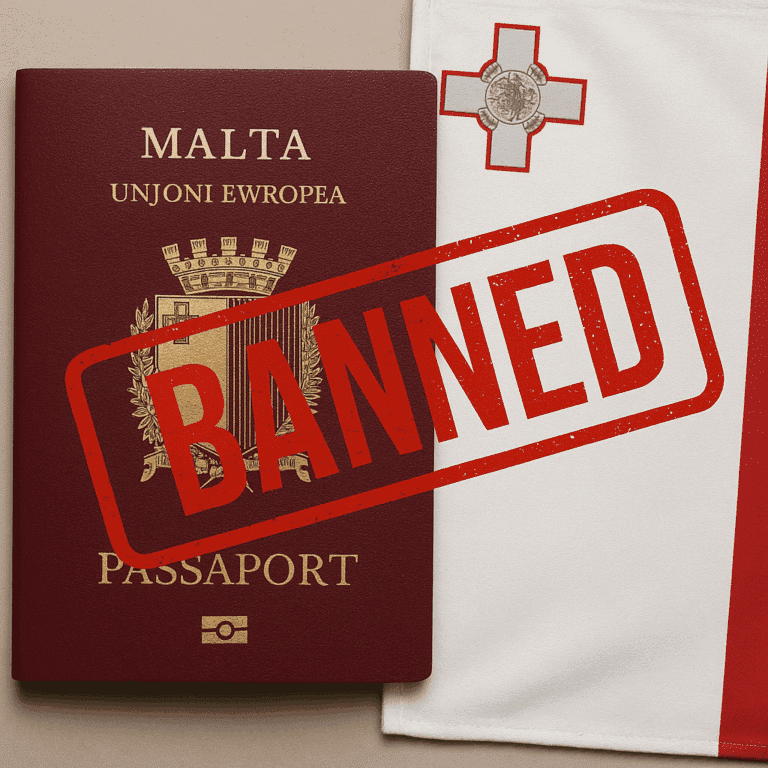
Malta’s controversial “golden passport” scheme has been dealt a fatal blow by the European Union’s highest court, marking a watershed moment in the bloc’s efforts to prevent citizenship from becoming a luxury commodity. The European Court of Justice (ECJ) ruled on April 29, 2025, that Malta’s practice of selling EU citizenship through investments violates core principles of European law, effectively forcing the island nation to dismantle its lucrative program.
The Scheme That Sparked a Legal Firestorm
For years, Malta offered one of the EU’s most sought-after citizenship-by-investment programs. Wealthy individuals could obtain a Maltese passport—and with it, unrestricted access to the EU—by meeting a checklist of financial commitments. Applicants needed to invest at least €600,000, either purchase or rent property, donate €10,000 to charity, and reside in Malta for three years. Those willing to bump their investment to €750,000 could slash the residency requirement to just 12 months.
The program proved wildly popular, attracting global elites seeking visa-free travel, tax advantages, and a foothold in Europe. But critics argued it turned EU citizenship into a transactional perk. “This wasn’t about fostering genuine ties to Malta,” said one Brussels-based diplomat. “It was a cash-for-passports operation dressed up as economic policy.”
EU vs. Malta: Clash Over Citizenship’s “Essence”
The European Commission launched legal action against Malta in 2023, accusing the country of undermining the “essence of EU citizenship.” Under EU law, citizenship grants the right to live, work, and vote across the bloc—privileges the Commission argued should stem from genuine connections to a member state, not financial clout.
Malta defended its program fiercely, insisting citizenship decisions fell under national sovereignty. The government highlighted tightened due diligence checks, including rigorous background screenings for applicants. “We’ve always prioritized security and transparency,” a Maltese official claimed.
But the ECJ saw it differently. In a scathing ruling, the court declared that Malta’s scheme reduced citizenship to a “mere commercial transaction.” By requiring only “legal residence”—not meaningful integration—the program failed to establish a “genuine link” between applicants and the country, a cornerstone of EU citizenship law.
The Risks of Selling Citizenship
The court’s decision follows years of scrutiny over golden passport schemes. Cyprus and Bulgaria shuttered similar programs after scandals revealed passports granted to individuals with criminal ties or sanctions histories. A Financial Times investigation found that 16 Maltese passport recipients were either politically exposed figures, sanctioned individuals, or later convicted of crimes.
“These schemes aren’t just ethically dubious—they’re security risks,” said Laura Dubois, the FT journalist who broke the story. “When you auction off citizenship, you’re inviting bad actors to exploit the system.”
EU officials also warned of broader dangers, including money laundering and tax evasion. “Citizenship shouldn’t be a backdoor for illicit wealth,” noted an EU anti-fraud investigator.
The Court’s Unambiguous Verdict
The ECJ’s ruling leaves no room for compromise. By operating an “institutionalized citizenship investment scheme,” Malta breached its obligations under EU treaties, the court found. The judges emphasized that while member states control nationality laws, they must respect the “principle of sincere cooperation” with EU institutions.
Notably, the decision overruled a preliminary opinion by the court’s advocate general, who had suggested Malta’s residency requirements might suffice. The final verdict dismissed this argument, asserting that mere physical presence—without deeper societal ties—couldn’t justify granting citizenship.
Malta now faces immediate pressure to terminate the program. The government must refund pending applicants and unwind a system that contributed millions annually to its economy.
Ripple Effects Across Europe
The ruling solidifies the EU’s crackdown on investment-based citizenship. With Cyprus and Bulgaria already out of the game, Malta’s closure leaves no EU member states offering golden passports. Residency-by-investment programs, like Portugal’s “golden visa,” remain legal but face mounting scrutiny.
“This isn’t just about Malta,” said a European Parliament member. “It’s a warning to any government tempted to monetize EU membership.”
Legal experts predict the decision will influence ongoing debates about wealth-based residency schemes. “If citizenship requires genuine links, how can residency be any different?” asked a migration lawyer in Lisbon. “The EU’s playing a long game here.”
Malta’s Economic Dilemma
For Malta, the ruling poses economic challenges. The citizenship scheme funded infrastructure projects and social initiatives, filling gaps in the nation’s €15 billion GDP. Prime Minister Robert Abela acknowledged the blow but pledged compliance. “We respect the court’s decision,” he said, “but must now seek alternative revenue streams.”
Critics argue Malta grew overly reliant on passport sales. “It’s a wake-up call to diversify,” said a Valletta-based economist. “Tourism and tech can’t carry the economy alone.”
Broader Implications for EU Unity
The case underscores tensions between national sovereignty and EU integration. While member states retain control over citizenship, the ruling asserts that EU law sets non-negotiable boundaries. “You can’t have 27 different interpretations of what citizenship means,” said an ECJ spokesperson. “The integrity of the bloc depends on common standards.”
The decision also strengthens the Commission’s hand in policing member states. Brussels is now likely to target other policies perceived as undermining EU values, from tax loopholes to media freedom breaches.
What Comes Next?
Prospective investors face fewer options. Non-EU programs in the Caribbean and Southeast Asia remain active, but none offer the same privileges as an EU passport. “The golden passport era is over,” said a London-based immigration consultant. “Now, it’s about genuine ties—or nothing.”
For Malta, the path forward is uncertain. The government may pivot to promoting residency programs or niche investment sectors. But for the EU, the message is clear: citizenship isn’t for sale, and belonging can’t be bought.