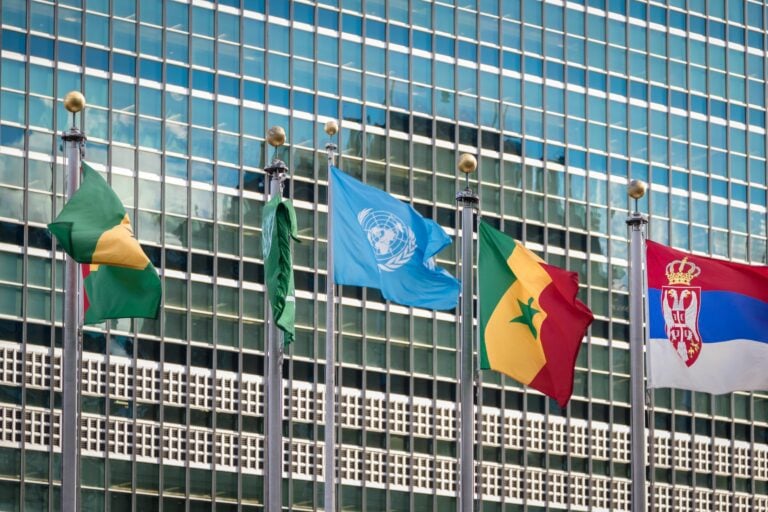
These Countries are Not Recognised by Most Others and Not Members of International Organizations
Which countries are not members of the UN? More than you’d think. The United Nations has 193 member states, but that number hides something most people never consider. Several countries not members of the UN operate their own governments, print their own currencies, issue their own passports, and collect taxes from millions of citizens. Some have armies. Some have held democratic elections for decades. Yet the international system treats them as if they don’t exist.
That legal limbo creates real problems for real people. Try opening a bank account with a passport from Somaliland. Try getting travel insurance for Northern Cyprus. Try extraditing a fugitive from Transnistria. The answers range from “difficult” to “impossible,” and those gaps create both headaches and opportunities for anyone operating internationally.
This guide breaks down every country and territory that sits outside the UN system in 2026, including the two official observer states, the partially recognized nations, the frozen conflict zones, and even the territories that function like independent countries but technically belong to someone else. More importantly, it explains what non-membership actually means in practical terms: for travel, banking, asset protection, and second citizenship.
How United Nations Membership Actually Works
Before getting into which countries are not members of the UN, it helps to understand why the club is so hard to join. The process is deceptively simple on paper but brutally political in practice.
A country applies to the UN Secretary-General, submits a letter accepting the UN Charter, then the Security Council reviews the application. If the Council recommends admission, the General Assembly votes. A two-thirds majority admits the new member.
Here’s the kicker. The Security Council has five permanent members: the United States, the United Kingdom, France, Russia, and China. Each one holds veto power. A single “no” from any of them kills the application dead. That veto is the reason Taiwan, Kosovo, and Palestine remain locked out despite having the support of dozens (sometimes over a hundred) UN member states.
The last country admitted to the UN was South Sudan in 2011. Since then, nothing. The system is effectively frozen, and countries not members of the UN have no realistic path to membership unless the geopolitical calculus of one of the P5 changes dramatically.
The Two Official Non-Member Observer States
The UN recognizes two entities as permanent non-member observer states. They can attend General Assembly sessions, participate in debates, and access most UN services. They just cannot vote.
The Holy See (Vatican City)
The Holy See has held permanent observer status since 1964. It is the only widely recognized sovereign state that has voluntarily chosen not to apply for full UN membership. The reasoning is strategic: full membership would require the Vatican to vote on political and military matters, which the Catholic Church prefers to avoid. By remaining an observer, the Holy See maintains diplomatic influence (it has formal relations with 183 states) without entangling the Church in geopolitical votes on sanctions, wars, or territorial disputes.
Vatican City is the smallest internationally recognized state in the world at just 0.44 square kilometers, with a population of roughly 800. It issues its own passports, mints its own coins (Vatican euro), and maintains a diplomatic corps that is one of the oldest on earth.
The State of Palestine
Palestine was upgraded to non-member observer state in November 2012 after a General Assembly vote of 138 in favour, 9 against, and 41 abstentions. In May 2024, the General Assembly went further: it voted 143 to 9 to declare Palestine qualified for full membership and urged the Security Council to approve the bid.
The bid has gone nowhere. The United States has consistently vetoed Palestinian membership in the Security Council, and that veto shows no sign of changing. Palestine now has expanded participation rights, including the ability to co-sponsor resolutions and be seated alphabetically among member states, but it still cannot vote. Over 140 UN member states recognize Palestine bilaterally, making it the most widely recognized entity among countries not members of the UN.
Countries Not Members of the UN: The Partially Recognized States
These are the heavy hitters. Functioning countries with governments, armies, currencies, and in some cases millions of citizens. They hold elections. They issue passports. They run hospitals and school systems. The only thing they lack is the UN’s stamp of approval, and that missing stamp creates cascading consequences in international law.
Taiwan (Republic of China)
Taiwan is the elephant in the room. With a population of 23.9 million, a GDP of over $790 billion, and the world’s most advanced semiconductor industry, Taiwan is wealthier and more populated than over 70% of actual UN member states. It holds regular democratic elections, has a world-class healthcare system, and issues passports that grant visa-free access to over 140 countries.
So why is Taiwan not in the UN? One word: China. In 1971, UN General Assembly Resolution 2758 recognized the People’s Republic of China as the sole legitimate representative of China, expelling the Republic of China (Taiwan) from the seat it had held since the UN’s founding in 1945. Taiwan was a founding UN member. Let that sink in.
China’s veto on the Security Council means Taiwan cannot even get its application onto the agenda. Every attempt since 1993 has been blocked at the committee level. The numbers don’t lie: only 12 UN member states currently maintain formal diplomatic relations with Taiwan, down from over 50 in the 1970s. Beijing pressures countries to switch recognition, and it works.
For travelers and expats, Taiwan’s non-UN status creates an odd split. Taiwanese passports are powerful (ranked around 30th globally), but Taiwan cannot join the World Health Organization, Interpol, or most international bodies. During the COVID-19 pandemic, Taiwan’s exclusion from the WHO became a headline issue despite the country having one of the world’s best pandemic responses.
Kosovo
Kosovo declared independence from Serbia in February 2008 and is now recognized by over 100 UN member states, including the United States, the United Kingdom, France, and most EU countries. It has its own government, its own police force, and a population of about 1.8 million.
Russia and China, both permanent Security Council members, refuse to recognize Kosovo. Their reasoning is partly about precedent: both countries have their own separatist regions (Chechnya, Tibet, Xinjiang, Taiwan) and do not want to legitimize unilateral declarations of independence. Serbia, backed by these two veto powers, continues to claim Kosovo as its territory.
Kosovo joined the International Monetary Fund and the World Bank in 2009 but remains shut out of the UN, UNESCO, and Interpol. For second passport seekers, Kosovo’s passport is notably weak, ranking among the bottom 40 globally. Many Kosovars hold dual Serbian or Albanian citizenship to get around travel restrictions.
Western Sahara
Western Sahara has been in limbo since Spain withdrew in 1975. Morocco claims and controls most of the territory. The Polisario Front, backed by Algeria, declared the Sahrawi Arab Democratic Republic (SADR) and controls a thin strip of desert along the eastern border. The SADR is recognized by around 46 UN member states and is a full member of the African Union.
A UN-brokered referendum on independence has been “pending” since 1991. Disputes over voter eligibility have prevented it from ever taking place. Morocco will not accept a vote that includes independence as an option; the Polisario Front will not accept one that doesn’t.
In 2020, the United States recognized Moroccan sovereignty over Western Sahara as part of the Abraham Accords normalization deal with Israel. That recognition stands, making the US the first major Western power to take sides. The territory remains on the UN’s list of Non-Self-Governing Territories, one of 17 worldwide.
Put your assets beyond reach in 57 jurisdictions.
Pick where you want your company. We handle the filing, the registered agent, and the bank introduction. From US$1,290, done in days, not months.
- Charging-order protection in jurisdictions courts can't pierce
- Zero tax on foreign income in 30+ territories
- Banking options available
- Fixed price. No surprise fees at closing
Somaliland
Somaliland declared independence from Somalia in 1991 and has operated as a fully functional state ever since. It has its own currency (the Somaliland shilling), its own military, its own government, and has held multiple peaceful democratic elections and transfers of power. By almost any measure, Somaliland is more stable and better governed than Somalia itself.
For over 30 years, not a single UN member state recognized Somaliland. That changed on December 26, 2025, when Israel became the first country to formally recognize Somaliland as an independent state. Prime Minister Netanyahu signed a joint declaration of mutual recognition alongside Somaliland’s president, describing the move as being “in the spirit of the Abraham Accords.”
The recognition triggered an emergency UN Security Council meeting. Somalia condemned the move as an “unlawful attack” on its sovereignty. The African Union rejected it outright. But the United States defended Israel’s right to conduct diplomatic relations, and there is speculation that additional recognitions from the US, UK, and Gulf states could follow.
Strategically, Israel’s interest is the Bab el-Mandeb Strait. Somaliland sits at the entrance to the Red Sea, giving it enormous value for monitoring Iranian and Houthi threats. Recognition was as much a military move as a diplomatic one.
Somaliland remains one of the most fascinating countries not members of the UN, because its exclusion has nothing to do with great power vetoes or frozen conflicts. It simply lacks the critical mass of international recognition needed to force the issue.
Northern Cyprus (Turkish Republic of Northern Cyprus)
The island of Cyprus was split in 1974 after a Turkish military intervention following a Greek-backed coup. The northern third declared independence as the Turkish Republic of Northern Cyprus (TRNC) in 1983. Only Turkey recognizes it.
A 2025 election shook up the status quo. Opposition leader Tufan Erhürman defeated the hardline, Ankara-aligned incumbent Ersin Tatar in a landslide (62.8% to 35.8%), signaling broad Turkish Cypriot support for reviving reunification talks. In November 2025, Greek Cypriot and Turkish Cypriot leaders met in the UN buffer zone and agreed to work toward an informal meeting with the UN Secretary-General.
For property buyers and expats, Northern Cyprus operates in a legal grey zone. Property titles can be contested because much of the land was owned by Greek Cypriots before 1974. The European Court of Human Rights has ruled against the TRNC in property cases, but enforcement is almost impossible. Banking is limited to Turkish banks, and TRNC passports are not widely recognized for travel. Most residents hold Turkish or Republic of Cyprus passports instead.
Northern Cyprus is a popular destination for offshore gambling companies and universities precisely because it sits outside international regulatory frameworks. That same regulatory gap is a reason tax-efficient company formation advisors keep an eye on the jurisdiction, though the political uncertainty makes it risky for long-term planning.
Countries Not Members of the UN: Frozen Conflict Zones
These territories broke away from their parent states during conflicts, usually with Russian military backing. They function as quasi-states with their own governments and security forces, but their independence is recognized by only a handful of countries. Most exist in a frozen state: not at war, but not at peace either.
Abkhazia
Abkhazia broke from Georgia after a brutal war in 1992-1993 and declared independence in 1999. Russia recognized it after the 2008 Russo-Georgian War, along with Venezuela, Nicaragua, Nauru, and Syria. That is the full list: five countries.
Russia maintains a military base in Abkhazia and provides the bulk of its budget. The population has shrunk to roughly 245,000, and the economy depends almost entirely on Russian tourism and subsidies. Georgian citizens who were displaced during the conflict (over 250,000 people) have never been allowed to return.
South Ossetia
South Ossetia’s story mirrors Abkhazia’s. It declared independence from Georgia in 1991 and was recognized by Russia after the 2008 war, alongside the same four countries. With a population of only about 53,000 and an economy that barely functions without Russian support, South Ossetia is the smallest of all countries not members of the UN.
In 2022, South Ossetia’s leadership floated a referendum on joining the Russian Federation entirely, similar to what happened with Crimea. The referendum was ultimately postponed, but the direction is clear: South Ossetia is more of a Russian military outpost than an independent country.
Transnistria
Transnistria split from Moldova in 1990 after a brief military conflict. It has its own president, parliament, army, and currency. Russia maintains roughly 1,500 troops in the territory, a remnant of the old Soviet 14th Army. No UN member state recognizes Transnistria’s independence.
I’ve seen this film before. A frozen conflict zone gets squeezed economically until it either collapses or gets absorbed. The situation deteriorated sharply in 2025. On January 1, Russia cut off natural gas supplies to Transnistria after Ukraine halted Russian gas transit through its territory. The 367,000 residents lost nearly all heating and hot water in the middle of winter. The main power plant switched from gas to coal, causing daily blackouts. Exports dropped 60% compared to January 2024.
Moldova is now drafting a reintegration plan with Western partners. The old international negotiation formats have collapsed, and Moldova and Transnistria are holding direct talks without outside mediators for the first time. With Moldova on track for EU accession, the clock is ticking on Transnistria’s future as a Russian satellite state.
What Happened to Artsakh (Nagorno-Karabakh)?
If you read an older version of this article, you’ll remember Artsakh (also called Nagorno-Karabakh) on the list. It was a self-declared Armenian republic in Azerbaijan’s internationally recognized borders. That entity no longer exists.
In September 2023, Azerbaijan launched a full-scale military offensive. Artsakh’s forces collapsed within 24 hours. On September 28, 2023, Artsakh’s president signed a decree dissolving all state institutions effective January 1, 2024. Nearly the entire Armenian population (over 100,000 people) fled through the Lachin corridor to Armenia in a matter of days. A millennia-old Armenian presence in the region ended in less than a week.
The dissolution came after a 10-month Azerbaijani blockade that cut off food, medicine, and essential supplies. The international community issued statements of concern. Nobody intervened.
Artsakh’s disappearance is a stark reminder: countries not members of the UN exist at the mercy of their neighbours. Without international recognition, without treaty protections, without a seat at the table, a functioning state with 120,000 citizens can be erased from the map overnight. That should be a wake-up call for anyone who thinks geopolitical status is just paperwork.
Territories That Function Like Countries But Aren’t UN Members
Beyond the partially recognized states, there is a third category: territories that have significant autonomy, sometimes even their own foreign policies, but remain constitutionally tied to a parent state. They are not countries in the traditional sense, but they are not mere provinces either.
Cook Islands and Niue
Both the Cook Islands and Niue are states in free association with New Zealand. They govern themselves, sign international treaties, and maintain diplomatic relations (the Cook Islands has been recognized by 65 UN member states, Niue by 28). Both are members of UNESCO and the World Health Organization.
Neither is a UN member. New Zealand has said it would not support their applications without a change in the constitutional relationship, specifically the right of Cook Islanders and Niueans to hold New Zealand citizenship. In 2025, the Cook Islands’ prime minister confirmed that the UN had told them they do not currently meet the requirements for membership.
These two Pacific nations sit in one of the strangest positions in international law: recognized enough to join specialized UN agencies, but not recognized enough for the UN itself.
The Sovereign Military Order of Malta
The Order of Malta is not a country. It has no territory. But it issues passports, maintains diplomatic relations with 113 states, and holds permanent observer status at the UN (a step below even the Holy See and Palestine). Its “sovereign” status is a relic of its centuries-old role as a military and medical order. For asset protection and offshore strategy, it is irrelevant. But it rounds out the list of entities outside the UN framework.
Dependent Territories
Dozens of territories around the world are governed by UN member states but are not themselves members. This includes places like Puerto Rico, Guam, and the US Virgin Islands (United States); Bermuda, the Cayman Islands, and Gibraltar (United Kingdom); Greenland and the Faroe Islands (Denmark); French Polynesia, New Caledonia, and Réunion (France); and Hong Kong and Macau (China).
These territories have varying degrees of autonomy. Hong Kong operates under “one country, two systems” (at least nominally) with its own legal system and passport. The Cayman Islands have their own financial regulatory framework that makes them one of the world’s top offshore banking centres. Puerto Rico’s residents are US citizens but cannot vote in presidential elections.
None of these territories can join the UN independently. Their parent states represent them. But for anyone building an international strategy, many of these territories are far more practically important than some actual UN member states. The Cayman Islands, BVI, and similar jurisdictions are where the real action happens in offshore finance, not in the halls of the General Assembly.
Complete Comparison: All Countries Not Members of the UN in 2026
| Entity | Population | Recognized By | UN Status | Own Passport? |
|---|---|---|---|---|
| Holy See (Vatican City) | ~800 | 183 states | Permanent Observer | Yes |
| Palestine | ~5.4 million | 143+ states | Permanent Observer | Yes |
| Taiwan | 23.9 million | 12 states | None | Yes (strong) |
| Kosovo | 1.8 million | 100+ states | None | Yes (weak) |
| Western Sahara (SADR) | ~600,000 | 46 states | Non-Self-Governing Territory | Limited |
| Somaliland | ~4.5 million | 1 state (Israel) | None | Yes (very weak) |
| Northern Cyprus (TRNC) | ~330,000 | 1 state (Turkey) | None | Yes (very weak) |
| Abkhazia | ~245,000 | 5 states | None | Yes (very weak) |
| South Ossetia | ~53,000 | 5 states | None | Yes (very weak) |
| Transnistria | ~367,000 | 0 states | None | Yes (unrecognized) |
| Cook Islands | ~17,000 | 65 states | None (in WHO, UNESCO) | NZ passport |
| Niue | ~1,600 | 28 states | None (in WHO, UNESCO) | NZ passport |
Why Non-UN Status Matters for Travelers and Expats
If you are just reading about countries not members of the UN out of curiosity, the practical implications might not seem obvious. But for anyone who travels frequently, holds assets in multiple jurisdictions, or is considering a second passport, the consequences are real.
Passport Strength and Travel Freedom
Passports issued by unrecognized states range from useless to surprisingly functional. Taiwan’s passport grants visa-free access to over 140 countries, making it more powerful than most UN member state passports. On the opposite end, a Somaliland passport is recognized by essentially nobody. A Transnistrian passport is not worth the paper it is printed on outside Russia.
Citizens of these territories typically solve the problem by holding dual citizenship. Kosovars get Albanian or Serbian passports. Northern Cypriots hold Turkish citizenship (and sometimes Republic of Cyprus citizenship, which comes with EU free movement). Taiwanese citizens can often acquire citizenship in countries that recognize Taiwan through citizenship by investment programs.
Banking and Financial Access
International banking runs on compliance frameworks built around UN member states. SWIFT codes, correspondent banking relationships, and anti-money laundering (AML) systems all assume you are dealing with a recognized sovereign. Banks in unrecognized territories operate through workarounds: Turkish banks in Northern Cyprus, Russian banks in Abkhazia and Transnistria, Taiwanese banks that route international transactions through correspondent networks.
Let’s be blunt. For anyone setting up offshore companies or international bank accounts, jurisdictions outside the UN system carry additional compliance friction. That does not make them useless, but it means you need to understand the workarounds before committing capital.
Extradition and Legal Cooperation
Countries not members of the UN generally cannot sign extradition treaties through normal channels. They are excluded from Interpol (except through workarounds). They cannot participate in Mutual Legal Assistance Treaties (MLATs). This creates gaps that are sometimes exploited.
Taiwan has no extradition treaties with most countries, which has made it a haven for certain types of financial crime from mainland China. Transnistria’s legal isolation means Moldova cannot easily enforce its laws there. Northern Cyprus falls outside EU legal frameworks despite being geographically in Europe. These gaps are not a reason to do anything illegal, but they are a reason to understand the extradition landscape if you are structuring an international life.
Micronations: The Countries That Want to Be Countries
No guide on countries not members of the UN would be complete without mentioning the micronations, though these sit in a completely different category. Micronations are self-declared entities that claim sovereignty but have zero international recognition and usually no permanent population or defined territory.
The most famous is the Principality of Sealand, a decommissioned World War II sea fort off the English coast that has claimed sovereignty since 1967. It has “citizens,” a “royal family,” and even issues novelty passports. No country recognizes it.
Liberland is a more recent example, declared in 2015 on a 7-square-kilometer patch of unclaimed land between Croatia and Serbia. Its founder, Czech politician Vít Jedlička, has attracted hundreds of thousands of citizenship applications. Neither Croatia nor Serbia recognizes Liberland, and Croatian police prevent anyone from accessing the territory.
These are curiosities, not serious geopolitical entities. Nobody is structuring their asset protection around Sealand’s legal system. But they illustrate how blurred the line between “country” and “not a country” can get when you step outside the UN framework.
How Many Countries Are There in the World, Really?
This is the question that trips everyone up. The UN says 193 member states, plus two observers. But that count excludes Taiwan (population 23.9 million), Kosovo (1.8 million), and Somaliland (4.5 million), all of which function as independent countries by any practical measure.
If you count every entity that governs itself independently, issues passports, and controls defined territory, the number jumps to at least 200 to 206, depending on where you draw the line. There is no single “correct” number because the definition of “country” is political, not objective.
For practical purposes, if you are planning international residency, travel, or business, focus less on the UN count and more on what each jurisdiction actually offers. Some of the most useful places for offshore strategy (Cayman Islands, BVI, Hong Kong, Cook Islands) are not UN member states and never will be.
| Category | Count | Examples |
|---|---|---|
| UN Member States | 193 | All widely recognized countries |
| Permanent Observer States | 2 | Holy See, Palestine |
| Partially Recognized States | 6 | Taiwan, Kosovo, Western Sahara, Somaliland, Northern Cyprus, Abkhazia |
| Unrecognized De Facto States | 2-3 | Transnistria, South Ossetia |
| Free Association States | 2 | Cook Islands, Niue |
| Dependent Territories | 60+ | Hong Kong, Bermuda, Puerto Rico, Greenland, Cayman Islands |
| Dissolved (formerly on this list) | 1 | Artsakh (dissolved Jan 2024) |
Put your assets beyond reach in 57 jurisdictions.
Pick where you want your company. We handle the filing, the registered agent, and the bank introduction. From US$1,290, done in days, not months.
- Charging-order protection in jurisdictions courts can't pierce
- Zero tax on foreign income in 30+ territories
- Banking options available
- Fixed price. No surprise fees at closing
Frequently Asked Questions About Countries Not Members of the UN
How many countries are not members of the UN?
Why is Taiwan not a member of the United Nations?
Is Palestine a member of the United Nations?
Which countries not members of the UN have the strongest passports?
Can citizens of unrecognized countries get a second passport?
Why did the Holy See choose not to join the United Nations?
What happened to Nagorno-Karabakh (Artsakh)?
Is Kosovo recognized as a country?
Does Somaliland have international recognition?
Do countries not members of the UN have extradition treaties?
How does a country become a member of the United Nations?
Are the Cook Islands and Niue independent countries?
Final Thoughts
The list of countries not members of the UN is not static. Artsakh vanished from the map in 2024. Somaliland gained its first international recognition in 2025. Northern Cyprus may be heading toward reunification talks. Transnistria is economically collapsing. Taiwan’s semiconductor dominance gives it leverage that no amount of diplomatic isolation can erase.
For anyone building a life or a business across borders, these territories matter. Not because you should base your strategy on an unrecognized country, but because the gaps in international systems they create, from extradition to banking to travel, ripple across jurisdictions that are very much recognized. Understanding which countries sit outside the UN framework is the first step to understanding how the international system actually works, as opposed to how it is supposed to work.
If you need help navigating any of this, whether you are looking at second citizenship options, asset protection structures, or tax-efficient company formation, the tools exist. You just have to know where to look.
Sources and References
- United Nations, UN Member States
- United Nations, Non-Member States
- United Nations General Assembly, Resolution on Palestine Membership (A/RES/ES-10/23)
- United Nations, Non-Self-Governing Territories
- UN Security Council, Speakers Warn Israel Recognition of Somaliland Threatens Stability in Horn of Africa
- Carnegie Endowment for International Peace, Moldova’s Window to Reintegrate Transnistria Is Closing
- Freedom House, Nagorno-Karabakh: Freedom in the World 2024