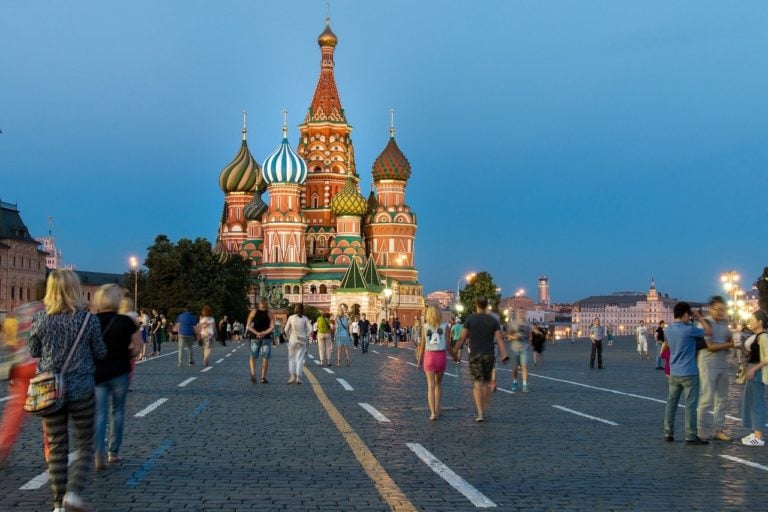
Russian citizenship has gone from a bureaucratic nightmare to one of the most accessible second passport options on the planet. Between the new citizenship law that took effect in October 2023, the Shared Values Visa launched in August 2024, and the Golden Visa program that keeps getting more generous, Moscow is rolling out the red carpet for foreigners willing to plant a flag. The old rule that forced you to renounce your existing nationality? Gone. The five-year wait that scared everyone off? Slashed to as little as six months for the right candidates. If you have been sleeping on russian citizenship as a Plan B passport, the clock is ticking.
This guide breaks down every pathway to russian citizenship and russian residency in 2026: the standard naturalization route, the simplified fast-tracks, the Shared Values Visa for Westerners, the Golden Visa for investors, citizenship by marriage, citizenship by descent, and the step-by-step process from visa to passport. Costs, timelines, documents, common mistakes, and the tactical reasons a Russian passport actually makes sense for global diversification.
Why Russian Citizenship Makes Strategic Sense in 2026
Most people hear “russian citizenship” and immediately think of geopolitical headaches. That reaction is understandable, but it misses the bigger picture entirely. From a pure diversification standpoint, a Russian passport fills gaps that almost no other second passport can touch.
Visa-free access to China. Read that again. Western passport holders queue up at Chinese consulates for weeks, pay fees, submit itineraries, and sometimes still get rejected. Russian passport holders walk through immigration with nothing more than their passport. Same story with Iran, Cuba, and a string of Central Asian countries that are notoriously difficult for Americans, Brits, and EU nationals to enter.
Then there is the tax situation. Russia operates a flat 13% personal income tax. No progressive brackets, no wealth taxes, no inheritance tax, no capital gains tax on assets held longer than five years. For anyone coming from a jurisdiction where the government takes 40% or more before you have finished your morning coffee, the numbers don’t lie.
A Russian passport also provides access to 121 countries visa-free or on arrival. That is not top-tier by itself, but combined with a strong Western passport, you have created a combination that covers nearly every country on earth. The real power of a Russian passport is not as a standalone travel document. It is as a complement that fills the exact holes your primary passport leaves open.
There is also the cost angle. Citizenship by investment programs in the Caribbean start at $100,000 and climb to $400,000 or more. The EU Golden Visas that remain want $500,000 minimum in real estate. The standard naturalization route in Russia costs roughly $56 in government fees. Even the Golden Visa route starts at about $170,000, which is cheaper than almost every CBI program on the market, and you get permanent residency for your entire family thrown in.
Put your assets beyond reach in 57 jurisdictions.
Pick where you want your company. We handle the filing, the registered agent, and the bank introduction. From US$1,290, done in days, not months.
- Charging-order protection in jurisdictions courts can't pierce
- Zero tax on foreign income in 30+ territories
- Banking options available
- Fixed price. No surprise fees at closing
Every Pathway to Russian Citizenship Explained
Russia does not have a single route to citizenship. It has at least seven, and the 2023 overhaul of Federal Law 138-FZ added simplified categories that did not exist before. Picking the wrong pathway wastes years. Picking the right one can put a passport in your hands in months.
| Pathway | Residency Requirement | Approximate Timeline | Cost (USD) | Best For |
|---|---|---|---|---|
| Standard Naturalization | 5 years with PRP | 6 to 8 years total | ~$56 (fees) | Long-term expats already living in Russia |
| Simplified (ex-Soviet citizens) | Valid residence permit only | 6 to 12 months | ~$56 | Citizens of Moldova, Ukraine, Belarus, Kazakhstan |
| Citizenship by Marriage | Must have child with spouse | 3 to 4 years | ~$56 | Those married to Russian nationals |
| Citizenship by Descent | None to minimal | 4 to 12 months | ~$56 | Those with Russian, Soviet, or Russian Empire ancestors |
| Shared Values Visa | TRP (no quota, no language test) | 3 to 5 years | ~$56 | Citizens of 47 Western countries |
| Golden Visa (Investment) | PRP granted immediately | 5 to 6 years to citizenship | $170,000 to $570,000+ | Investors and high-net-worth individuals |
| Compatriot Resettlement Program | Minimal | 6 to 9 months | ~$56 | Ethnic Russians and Russian speakers abroad |
Standard Naturalization: The Five-Year Pathway
The standard path follows a three-step ladder that every immigration system in the world would recognize: temporary residency, permanent residency, citizenship. Simple in theory. In practice, it takes patience and planning.
Step one is getting into Russia on an appropriate visa. Tourist visas do not convert to residency. You need a work visa, student visa, business visa, or private visa that allows you to apply for a Temporary Residence Permit (TRP, known locally as RVP) once you are on Russian soil.
The TRP lasts three years and cannot be renewed. During those three years, you cannot spend more than six consecutive months outside Russia. After holding the TRP for at least eight months (reduced from the previous one-year requirement under the new law), you become eligible to apply for a Permanent Residence Permit (PRP, known as VNZh).
The PRP has no expiration date, which is unusual. Most countries issue permanent residence for five or ten years with renewal requirements. Russia gives you indefinite residency with one condition: you must live in Russia for at least 180 days per year. Miss that threshold and you risk losing the permit.
After five continuous years on the PRP, you qualify for russian citizenship by naturalization. The total timeline from first visa to passport: roughly six to eight years. Not fast, but dead simple if you are already living and working in Russia.
Requirements for the Standard Pathway
- Five years continuous residence on a Permanent Residence Permit
- No more than 3 months per year outside Russia during the PRP period
- Legal source of income sufficient for self-support
- Russian language proficiency (B1 level minimum, verified by exam)
- Knowledge of Russian history and constitutional law (standardized test)
- Agreement to observe the Russian Constitution
- Oath of allegiance to the Russian Federation
The language and history test trips up more applicants than anything else. The exam covers Russian at B1 conversational level, basic Russian history, and fundamentals of constitutional law. Testing windows are in April and July, with applications typically submitted by October and decisions arriving by November. If you fail, you can retake it, but each attempt costs time.
Simplified Pathways for Former Soviet Citizens
Here is where the 2023 law changes become genuinely impressive. Citizens of Moldova, Ukraine, Belarus, and Kazakhstan can now obtain russian citizenship with nothing more than a valid residence permit. No five-year wait. No lengthy residency requirements. Just the permit and the standard paperwork.
The Russian government eliminated the three-year residency mandate that previously applied to these nationalities. The logic is straightforward: these are countries with deep historical, linguistic, and cultural ties to Russia, and Moscow wants to make it as frictionless as possible for their citizens to relocate.
Beyond the ex-Soviet fast-track, several other categories qualify for the simplified procedure:
Descendants of anyone born or who lived in the territory of the Russian Empire, the RSFSR, or the USSR. That covers a staggering number of people. If your grandparents or great-grandparents were born in territories that were part of the Russian Empire (which stretched from Finland to Alaska at its peak), you may qualify. The documentary proof can be challenging, especially with Soviet-era spelling inconsistencies in archived records, but the pathway exists.
Native Russian speakers who can demonstrate fluency and have ancestors who lived in Russia also qualify for a streamlined process with a theoretical four-month decision timeline. The language assessment is more rigorous than the standard test, so this is not a shortcut for beginners.
Permanent residents of Latvia and Estonia also receive fast-track provisions. This is a politically charged category, but from a practical standpoint, tens of thousands of ethnic Russians in the Baltic states hold “non-citizen” status and have a clear legal pathway to a Russian passport.
The Shared Values Visa: A New Door for Western Citizens
This is the pathway that made international headlines. In August 2024, President Putin signed Decree No. 702, creating a brand-new immigration category for foreigners from Western countries who, in the decree’s language, “share Russia’s traditional spiritual and moral values” and “reject destructive neoliberal ideological attitudes” prevalent in their home countries.
I’ve seen this film before with other countries trying to attract ideologically aligned immigrants, but Russia’s version actually has teeth. The programme is real, operational, and thousands of Westerners have already applied.
Citizens of 47 countries are eligible, including the United States, Canada, the United Kingdom, Australia, all EU member states, Japan, South Korea, and New Zealand. The full list covers essentially every Western democracy.
How the Shared Values Visa Works
You apply for a single-entry private visa (valid up to three months) at a Russian consulate. The application requires a written statement declaring your rejection of what Russia characterises as destructive Western ideological positions. Once in Russia, you apply for a Temporary Residence Permit through the Ministry of Internal Affairs.
Here is the kicker: the TRP under this program is issued outside the normal quota system, which means no waiting list. And applicants are exempt from the Russian language, history, and law test that every other TRP applicant must pass. That is a massive advantage. The language test alone requires months of preparation for non-speakers.
From the TRP, you follow the standard progression to PRP and eventually full citizenship. The total timeline is roughly three to five years depending on how quickly you move through each stage and which simplified categories you might qualify for along the way.
The Golden Visa: Permanent Residency by Investment
Russia launched its Golden Visa program to compete with the residency-by-investment schemes offered across Europe. The programme grants a Permanent Residence Permit (not just temporary) to investors and up to five generations of family members. That includes your spouse, children, parents, and grandparents. No other Golden Visa program on earth covers that many family members.
The minimum investment thresholds vary by route and region:
| Investment Route | Minimum Amount (RUB) | Approximate USD | Notes |
|---|---|---|---|
| Socially Significant Projects | 15 million | $170,000 | Non-refundable donation to schools, sports, infrastructure |
| Real Estate (Far East regions) | 20 million | $230,000 | New-build only, max 2 years old |
| Real Estate (standard regions) | 25 million | $280,000 | New-build only, max 2 years old |
| Business Investment | 30 million | $340,000 | Company must be 3+ years old, pay 6M+ RUB/year in taxes |
| Real Estate (Moscow) | 50 million | $570,000 | New-build only, max 2 years old |
Russia recently scrapped the six-month annual presence requirement for Golden Visa holders. You can now maintain your permit without physically living in Russia for half the year, which makes this attractive as a pure diversification play. Park the investment, hold the residency, use it when you need it.
After five years of holding the PRP, Golden Visa holders become eligible for citizenship through standard naturalization. Investors aged 18 to 65 (men) or 18 to 63 (women) still need to pass the Russian language test before citizenship, though the PRP itself does not require it.
For anyone comparing options, the team at taxfreecompanies.com can help you evaluate whether the Russian Golden Visa stacks up against alternatives in the UAE, Paraguay, or Southeast Asia for your specific situation.
Citizenship by Marriage to a Russian National
Marriage to a Russian citizen has always been one of the most popular pathways to a passport, but the rules changed significantly under the 2023 law. Previously, you could apply for citizenship after three years of marriage plus holding a TRP. The new law added a requirement that caught many people off guard: you must now have a child with your Russian spouse to use the simplified marriage pathway.
With a child, the process works like this: you obtain a TRP based on your marriage, live in Russia with your spouse and child, and then apply through the simplified citizenship procedure. The child requirement eliminates the waiting period, so you can move from TRP directly to citizenship without the intermediate PRP step.
Without a child, the marriage pathway still works, but you go through the full TRP to PRP to citizenship ladder. The marriage itself does not give you any timeline advantage unless a child is involved. That is a significant shift from the old rules, and I have seen people caught completely off guard by it.
Citizenship by Descent: The Soviet Ancestry Route
Descent-based citizenship is the pathway most people overlook, and it is arguably the most powerful one available. If you can prove that a direct ancestor (parent, grandparent, great-grandparent, or further back in the ascending line) was born or lived in the territory of the Russian Federation, the RSFSR, the Soviet Union, or the Russian Empire, you may qualify for simplified citizenship.
The Russian Empire at its territorial peak included modern-day Finland, the Baltic states, Poland, Ukraine, Belarus, parts of Turkey, all of Central Asia, and even Alaska. The USSR covered an even broader population base. The pool of potential descent-based claimants is enormous.
The documentary challenge is real, though. Soviet-era archives are notoriously inconsistent with name spellings, particularly for non-Russian ethnic groups. Patronymics get abbreviated differently across documents. Birth certificates from the 1920s and 1930s may have been issued in languages that no longer use the same script. Archival access varies dramatically by region.
Russian Residency: TRP and PRP Explained
Understanding the residency system is essential because every citizenship pathway (except some simplified routes) requires you to hold residency first. Russia has a two-tier system: the Temporary Residence Permit (TRP/RVP) and the Permanent Residence Permit (PRP/VNZh).
Temporary Residence Permit (TRP)
The TRP is your first step. It lasts three years and cannot be renewed or extended. You either move up to a PRP or you leave. Russia issues TRPs through a quota system, meaning each region gets a limited number per year. Once the quota fills up, applicants must wait until the next year.
Some categories are exempt from the quota. These include spouses of Russian citizens, those with a Russian-born parent, investors, graduates of Russian universities, and Shared Values Visa applicants. If you fall into an exempt category, your TRP application is processed regardless of whether the regional quota is full.
Required documents for the TRP include your passport, migration card, arrival registration form, four colour photos, a medical certificate (including HIV and drug tests), proof of Russian language and history knowledge (unless exempt), and a receipt for the state fee.
Processing time: approximately four months from submission. During the TRP period, you must not leave Russia for more than six consecutive months. You are allowed to work in Russia without a separate work permit, but only in the region where your TRP was issued.
Permanent Residence Permit (PRP)
After eight months on the TRP, you can apply for the PRP. This is a significant upgrade. The PRP has no expiration date, allows you to work anywhere in Russia, and serves as the stepping stone to full citizenship.
The PRP requires you to live in Russia for at least 180 days per year and file an annual declaration confirming your residence and income. Fail to file the declaration and you risk having the permit revoked. Not a theoretical risk. It happens regularly.
Golden Visa investors skip the TRP entirely and receive a PRP directly, which is one of the programme’s main selling points for anyone who wants permanent status without the three-year temporary phase.
Put your assets beyond reach in 57 jurisdictions.
Pick where you want your company. We handle the filing, the registered agent, and the bank introduction. From US$1,290, done in days, not months.
- Charging-order protection in jurisdictions courts can't pierce
- Zero tax on foreign income in 30+ territories
- Banking options available
- Fixed price. No surprise fees at closing
Dual Citizenship and Russian Law
Let’s be blunt about this because there is a mountain of outdated information online. Russia no longer requires you to renounce your existing citizenship when applying. This changed under Federal Law 138-FZ in October 2023, and it is one of the most significant policy shifts in Russian immigration history.
The old law forced applicants to give up their previous nationality. That was a dealbreaker for most Westerners. Now, you can hold a Russian passport alongside your American, British, Canadian, Australian, or EU passport without any legal issue on the Russian side.
There is one obligation: if you are a Russian citizen and acquire a foreign nationality (or already hold one), you must notify the Russian authorities within 60 days. The notification goes to the Ministry of Internal Affairs. Failure to notify can result in administrative penalties. It is not grounds for losing your passport, but it is a legal requirement you should not ignore.
Article 62 of the Russian Constitution recognises dual citizenship, but formal dual citizenship agreements exist only with Tajikistan (the agreement with Turkmenistan was unilaterally cancelled). For all other countries, Russia treats you as a Russian citizen first when you are on Russian soil, regardless of what other passports you hold. Practically speaking, this means you enter and exit Russia on your Russian passport and cannot claim consular assistance from another country while inside Russia.
Costs and Fees: What You Will Actually Pay
One of the most attractive aspects of becoming a Russian citizen is the cost. Outside of the Golden Visa investment route, the fees are almost laughably low compared to other second passport options.
| Item | Cost (Approx. USD) | Notes |
|---|---|---|
| State fee for citizenship application | $56 | Paid at time of application |
| TRP application fee | $20 to $30 | Varies slightly by region |
| PRP application fee | $50 to $70 | Varies slightly by region |
| Russian language/history test | $80 to $150 | Fee per attempt, varies by testing centre |
| Medical examination | $50 to $100 | Required for TRP, includes HIV/drug testing |
| Document translation and notarisation | $200 to $500 | Depends on number of documents and languages |
| Apostille for foreign documents | $50 to $200 | Required for birth/marriage certificates, etc. |
| Total (non-investment route) | $500 to $1,100 | Excluding immigration lawyer fees |
Compare that to $100,000 minimum for a citizenship by investment program in the Caribbean or $250,000+ for a European Golden Visa. Even if you hire a Russian immigration lawyer (which runs $1,000 to $3,000 depending on complexity), the all-in cost through naturalization is under $5,000. Not even close to the alternatives.
The Second Passport Blueprint breaks down these cost comparisons across 50+ countries, including all the back-door methods that most consultants either do not know about or charge $10,000 just to tell you about.
How to Get Russian Citizenship: Step by Step
Step 1: Obtain an appropriate Russian visa. Apply at a Russian consulate in your home country for a work visa, student visa, business visa, or private visa (including the Shared Values Visa if you are from an eligible country). Tourist visas do not convert to residency. Processing takes 4 to 20 business days depending on visa type and consulate.
Step 2: Register your arrival and apply for a Temporary Residence Permit (TRP). Within seven days of arrival, register your address with the migration authorities. Then apply for a TRP at your local branch of the Ministry of Internal Affairs (MVD). Submit your passport, migration card, photos, medical certificate, language test results (if not exempt), and proof of accommodation. Processing takes approximately four months.
Step 3: Live in Russia and apply for a Permanent Residence Permit (PRP). After eight months on the TRP, submit your PRP application. You will need to demonstrate a legal income source, pass the language and history test (if not already done), and show continuous residence. The PRP is issued indefinitely and allows you to work anywhere in Russia. File the mandatory annual declaration confirming your address and income every year without fail.
Step 4: Complete the five-year residency requirement. Live in Russia continuously for five years on your PRP. You must not spend more than three months per year outside Russia during this period. Maintain your income documentation and annual declarations throughout. Any gaps or oversights can reset the clock.
Step 5: Apply for russian citizenship. Submit your citizenship application to the MVD with all required documents: PRP, income verification, language/history test certificate, passport photos, and the state fee payment. The review period is three to six months. If approved, you will be invited to take the oath of allegiance to the Russian Federation.
Step 6: Take the oath of allegiance and receive your Russian passport. The oath ceremony is mandatory. Failure to take the oath within the required timeframe can void your citizenship approval. Once the oath is completed, you receive your Russian internal passport (for use within Russia) and can then apply for your Russian international passport (zagranpasport) for foreign travel. Congratulations. You are now a Russian citizen.
Common Mistakes That Derail Your Application
I have seen people torpedo perfectly good applications over avoidable errors. Absolute lunacy, some of them. The application process is not complicated, but the bureaucracy is precise, and small mistakes cascade.
Missing the annual PRP declaration. Every PRP holder must file an annual declaration confirming their address, income, and time spent in Russia. It is not optional, and there is no grace period. Miss it and your PRP can be revoked. Lose the PRP and your five-year residency clock resets to zero.
Exceeding absence limits. Three months per year outside Russia during the citizenship residency period. Six consecutive months maximum during the TRP period. These are hard limits, not guidelines. Border records are checked. One extra week abroad and you may need to start over.
Soviet-era document inconsistencies. This is the silent killer for descent-based applications. Your grandmother’s birth certificate spells the surname one way, her marriage certificate spells it another, and the archival extract from her city of birth uses a third variation. Each discrepancy requires additional notarised explanations, translations, and sometimes archival research. Budget extra time and money for this.
Applying in the wrong region. TRP applications are region-specific in Russia. You apply where you intend to live, and your TRP restricts you to that region for work purposes. Applying in Moscow because it seems easier when you actually plan to live in St. Petersburg creates problems that take months to untangle.
Failing to notify about dual nationality. Once you hold a Russian passport and travel on another one, or if you hold another nationality when you become a citizen, you must notify the MVD within 60 days. The penalty for not notifying is a fine. The penalty for knowingly concealing a foreign nationality is a criminal offence. Not worth the risk.
How Russia Compares to Other Second Passport Options
Where does a Russian passport stack up against the other options on the table? The comparison depends entirely on what you value: cost, speed, travel access, tax benefits, or family coverage. Here is how Russia compares against the most popular alternatives.
| Feature | Russia (Naturalization) | Russia (Golden Visa) | St. Kitts CBI | Portugal Golden Visa | Paraguay Residency |
|---|---|---|---|---|---|
| Cost | ~$1,000 | $170,000+ | $250,000+ | $500,000+ | ~$5,000 |
| Time to Citizenship | 6 to 8 years | 5 to 6 years | 3 to 6 months | 5+ years | 3 years |
| Visa-Free Countries | 121 | 121 | 156 | 191 | 146 |
| Access to China (visa-free) | Yes | Yes | No | No | No |
| Income Tax | 13% flat | 13% flat | 0% | Up to 48% | 10% (territorial) |
| Family Members Covered | Applicant only | 5 generations | Spouse + children | Spouse + children + parents | Spouse + children |
| Dual Citizenship | Yes | Yes | Yes | Yes | Yes |
| Physical Presence Required | Yes (180 days/year) | No (recently removed) | No | 7 days/year | Minimal |
The standout advantage is the combination of extremely low cost, flat tax, and visa-free access to countries that Western passports cannot reach. The standout disadvantage is the time commitment for non-simplified categories and the geopolitical baggage that comes with holding a Russian passport. For certain banking and business situations, a Russian passport can create complications that a Caribbean or Latin American passport would not.
That is exactly why the smartest approach is not picking one passport, but building a portfolio. A Russian passport paired with a Caribbean CBI passport and structured through the right asset protection vehicles gives you coverage that no single nationality can match. The team at taxfreecompanies.com specialises in exactly this kind of multi-jurisdictional structuring.
Tax Implications for New Residents and Citizens
Russia taxes on a residency basis, not a citizenship basis. That is a critical distinction. If you hold a Russian passport but do not live in Russia for 183 days or more in a calendar year, you are not considered a Russian tax resident and Russia only taxes your Russian-source income.
For those who are tax resident, the rate structure is refreshingly simple. A flat 13% on income up to 5 million rubles per year, and 15% on income above that threshold. No wealth tax, no inheritance tax, no gift tax, and no capital gains tax on assets held for more than five years. Compared to the progressive tax systems in most Western countries, the savings can be enormous.
Russia does participate in the Common Reporting Standard (CRS) for automatic exchange of financial information. If you hold a residence permit and have bank accounts in CRS-participating countries, those accounts will be reported to Russian tax authorities. Plan accordingly. For structures that sit outside the CRS framework, the US LLC with a non-CRS bank account is worth examining closely.
One wake-up call for Americans: the United States taxes citizens on worldwide income regardless of where they live. Obtaining a Russian passport does not reduce your US tax obligations by one cent. You would need to renounce US citizenship (a drastic step with its own exit tax implications) to escape the IRS. For US citizens, residency and citizenship in Russia are useful for diversification and travel, not tax optimization, unless you structure things very carefully through the right entities.
Russian Passport Power: Where Can You Travel?
A Russian passport provides visa-free or visa-on-arrival access to approximately 121 countries. That places it in the middle tier globally, roughly on par with passports from countries like Turkey and Mexico. Not a powerhouse travel document on its own.
But here is where it gets interesting. The countries Russia opens up are precisely the ones that Western passports struggle with. Visa-free access to China is the headline act. Iran, Cuba, Mongolia, all of Central Asia (Kazakhstan, Uzbekistan, Kyrgyzstan, Tajikistan), and much of Southeast Asia are all accessible without the visa headaches that American and European passport holders face.
Russia also has visa-free agreements with most of Latin America, including Brazil, Argentina, Chile, Colombia, Peru, and Ecuador. These overlap with Western passport access, but the China and Iran access alone makes a Russian passport worth having as a second or third travel document.
For a detailed breakdown of every second passport option and how they complement each other for maximum global coverage, the Second Passport Blueprint has the full analysis across 50+ countries.
Compatriot Resettlement Program
Russia runs a State Program to Assist the Voluntary Resettlement of Compatriots Living Abroad. It is designed for ethnic Russians and Russian speakers living outside Russia who want to return. Participants receive accelerated processing and can obtain a Russian passport in as little as six to nine months, making it the fastest route available for those who qualify.
Eligibility extends beyond ethnic Russians. If you are a former citizen of the USSR, or a descendant of someone who held citizenship or permanent residence in the Russian Empire, the RSFSR, the USSR, or the Russian Federation, you may qualify. The programme also covers citizens of ex-Soviet states who can demonstrate cultural and linguistic ties to Russia.
Participants choose a resettlement region (not all regions participate, and some offer financial incentives to attract settlers to underpopulated areas). The program covers some relocation costs and provides access to simplified citizenship procedures that bypass the standard five-year wait.
Living in Russia: What to Expect as a New Resident
Getting a residence permit is one thing. Actually living there is another conversation entirely. Moscow and St. Petersburg are world-class cities with everything you would expect: excellent public transport, thriving restaurant scenes, cultural institutions that rival anything in London or New York, and a cost of living that is a fraction of Western European capitals.
A one-bedroom apartment in central Moscow runs roughly $600 to $1,200 per month. In St. Petersburg, $400 to $800. Outside the two major cities, costs drop dramatically. The quality of healthcare in private clinics is high, and private health insurance costs a fraction of what Americans pay.
The language barrier is real. Outside Moscow and St. Petersburg, English proficiency drops sharply. Government offices conduct all business in Russian. The bureaucracy is paper-heavy and requires physical presence for most procedures, not online submissions. Learning at least conversational Russian is not optional if you plan to navigate daily life independently.
Winters are exactly as brutal as the stereotypes suggest. Moscow averages minus 10 Celsius in January. St. Petersburg is marginally warmer but wetter and darker. Vladivostok, if you are feeling adventurous, gets significantly colder. Southern cities like Sochi and Krasnodar offer milder climates and have become increasingly popular with expatriates and remote workers.
Frequently Asked Questions
How long does it take to get russian citizenship through naturalization?
Can I hold dual citizenship with Russia?
How much does russian citizenship cost?
What is the Shared Values Visa for russian residency?
What is the Russian Golden Visa minimum investment?
Do I need to speak Russian to get russian citizenship?
Can Americans get russian citizenship?
How does russian residency work for remote workers and digital nomads?
Can I lose my russian citizenship once I have it?
What countries can I visit visa-free with a Russian passport?
Final Thoughts: Is a Russian Passport Worth It in 2026?
The citizenship landscape in Russia has changed more in the last three years than in the previous three decades. Federal Law 138-FZ in 2023 removed the renunciation requirement. The Shared Values Visa in 2024 opened a front door for Western citizens. The Golden Visa program keeps expanding its terms. Simplified procedures now cover more categories than ever before.
None of that means a Russian passport is right for everyone. The geopolitical situation creates real complications for banking, business, and travel to certain countries. The language barrier is non-trivial. The residency requirements for non-investors demand actual physical presence in Russia.
But for anyone building a diversified passport portfolio, particularly someone who needs access to China, Iran, and Central Asia, wants a flat 13% tax environment, or has ancestral ties to the former Soviet Union, a Russian passport deserves serious consideration. The cost is a fraction of any comparable option. The pathways have never been more numerous or more accessible.
If you are weighing this option against alternatives like Caribbean CBI programs, Latin American residency, or offshore asset protection structures, the decision comes down to your specific circumstances: your nationality, your tax situation, your family, your timeline, and where you actually want to spend your time. The team at taxfreecompanies.com can help you map the full picture.
For more on complementary strategies, read our guides on second passports, offshore banking, and bulletproof asset protection. And if you want to explore what the right combination of citizenship, residency, and corporate structures looks like for your situation, book a strategy call and get clarity in 30 minutes instead of spending months going down the wrong path.
Travel power is only half the story. Visa-free access tells you where Russia’s passport can take you, not how free the country behind it leaves you. The Liberty Mundo Passport Freedom Index re-ranks 197 passports on tax, extradition protection, conscription and civil liberties, not just visa-free travel, so you can see where Russia really lands once freedom is in the mix.
Sources and References
- Russian Federation, Federal Law No. 138-FZ “On Citizenship of the Russian Federation” (April 28, 2023)
- President of Russia, Presidential Decree No. 702 “On Providing Humanitarian Support to Individuals Who Share Traditional Russian Spiritual and Moral Values” (August 19, 2024)
- Ministry of Internal Affairs of Russia, General Directorate for Migration Affairs (GUVM MVD)
- Constitution of the Russian Federation, Article 62: Dual Citizenship Provisions
- Henley & Partners, Henley Passport Index: Global Passport Rankings
- IMI Daily, Russia Golden Visa: Investment Migration Overview
- Fragomen, Russia: New Law to Improve Citizenship Application Routes and Processes