
Montenegro vs Monaco comes down to how much income tax you’re willing to pay and how much you can spend on a home. Monaco taxes no personal income at all but needs a Monaco address and a bank reference; Montenegro taxes residents on worldwide income at up to 15%, and a €150,000 property can be enough for a residence permit.
They’re both small Mediterranean states that use the euro, which is why they end up on the same shortlist and why some people searching for one mix it up with the other. Monaco residency is a housing-and-means exercise on 2 square kilometres of the Riviera. Residency in Montenegro is open to property buyers, business owners and remote workers in a country of about 624,000 people on the Adriatic.
Every figure below was checked against government sources and established news reports in October 2026.
Put your assets beyond reach in 57 jurisdictions.
Pick where you want your company. We handle the filing, the registered agent, and the bank introduction. From US$1,290, done in days, not months.
- Charging-order protection in jurisdictions courts can't pierce
- Zero tax on foreign income in 30+ territories
- Banking options available
- Fixed price. No surprise fees at closing
Montenegro vs Monaco at a Glance
The table covers the points that decide most moves. The sections after it explain each row and where the figure comes from.
| Factor | 🇲🇪 Montenegro | 🇲🇨 Monaco |
|---|---|---|
| Personal income tax | 0%, 9% and 15% on salaries; residents taxed on worldwide income | None (French nationals excepted) |
| Dividends, interest and capital gains | 15% | Not taxed |
| Corporate tax | 9% to €100,000, 12% to €1.5m, 15% above | 25%, only when more than 25% of turnover is outside Monaco |
| VAT | 21% (reduced 15% and 7%) | 20% (reduced 10% and 5.5%) |
| Wealth tax | None | None |
| Annual property tax | 0.25% to 1% of market value, set by each municipality | None |
| Inheritance | Real estate to spouse and children exempt from transfer tax | 0% spouse and children; 8% to 16% for others, on Monaco assets only |
| Property purchase tax | 3% to €150,000, rising to 6% above €500,000 | Registration duty 4.5% or 7.5% |
| Main residence route | Temporary residence through property (€150,000+ for non-EU buyers), business, work or digital nomad permit | Residence permit: home in Monaco plus proof of means |
| Permanent residence | After 5 years’ continuous lawful residence | Ordinary card after 3 years, privileged card after 10 |
| Citizenship | 10 years’ lawful residence; release from other citizenship | 10 years’ residence after age 18, at the Prince’s discretion; renounce |
| Passport Freedom Index | 90th of 198 (127 visa-free) | 2nd of 198 (176 visa-free) |
| CRS reporting | Committed; exchanges not yet started | First exchanges 2018 |
| FATF status | Not listed | Grey list since June 2024 |
| EU status | Candidate; 21 of 33 chapters closed | Outside the EU; inside Schengen’s external borders through France |
| Population | 623,633 (2023 census) | 38,857 (2025 census) |
Montenegro vs Monaco Tax: Which Takes Less?
Monaco takes less from almost everyone. It has no personal income tax, so salary, dividends, interest and gains all go untaxed, and it has no wealth tax or annual property tax. Montenegro’s rates are low by European standards, but a tax resident there is taxed on worldwide income, with 15% on dividends, interest and capital gains and up to 15% on salaries.
Monaco: no income tax, with two exceptions
The Monaco government’s tax page confirms there’s no personal income tax for residents, and no wealth tax, annual property tax or council tax either. The state collects VAT at 20%, registration duty on property, and inheritance duty on assets situated in Monaco. That duty is 0% for a spouse and children, 8% for siblings, 10% for uncles, aunts, nephews and nieces, 13% for other relatives and 16% for anyone unrelated.
Two groups don’t get the full deal. French nationals living in Monaco are taxed by France under the 1963 Franco-Monegasque convention, unless they had five years’ habitual residence in Monaco by 13 October 1962. And US citizens owe the IRS tax on worldwide income wherever they live. Neither Monaco nor Montenegro changes that.
Montenegro: low rates on worldwide income
Montenegro treats you as tax resident if you’re domiciled there, have your centre of business and life interests there, or stay more than 183 days in the tax year. Under the Personal Income Tax law, residents are taxed on income earned in Montenegro and abroad. Tax paid abroad is credited, capped at the Montenegrin tax on the same income, and residents have to file a return for foreign income.
The rates are where Montenegro looks good. Salaries are taxed monthly: nothing on the first €700 of gross pay, 9% on the slice up to €1,000, and 15% above that. Self-employed income follows the same pattern on an annual basis (0% to €8,400, 9% to €12,000, 15% above). Dividends and interest pay 15%, and so do capital gains on property and shares. Selling your only main residence is exempt, and so are transfers between spouses.

Montenegro adds an annual property tax of 0.25% to 1% of market value, or 0.3% to 1.5% on second homes, with each municipality setting its own rate. There’s no wealth tax. VAT is 21%, with reduced rates of 15% and 7%.
Put an investor with €200,000 a year in dividends in each place. In Monaco the bill is zero. In Montenegro it’s about €30,000, less any credit for tax withheld abroad. Let’s be blunt: that’s the tax gap in one number, and it’s why people living off a portfolio lean towards Monaco if they can afford the housing. For someone on a modest salary or freelance income, Montenegro’s 9% and 15% rates are a fraction of what most of Western Europe charges.
Getting Residency: Montenegro vs Monaco
Montenegro is easier and cheaper. Buying a home worth at least €150,000 can support a temporary residence permit, and you can also qualify through a company, a job or a digital nomad permit. Monaco sets no investment figure, but you need a home in Monaco and a Monaco bank reference showing you can support yourself, and Monaco housing is among the most expensive in the world.
Monaco: a home, a bank reference and a clean record
You need a residence permit to live in Monaco for more than three months a year. The official application page asks for:
- Accommodation in Monaco, owned or rented.
- Proof of means, usually a reference from a Monaco bank dated within the last month.
- Criminal record extracts under three months old from every country you’ve lived in over the last five years.
- For non-EEA nationals, a French long-stay (type D) visa first.
The government doesn’t publish a minimum deposit. It says the amount depends on the Monaco bank. In the Monaco files we work on, the bank’s own due diligence is usually the slowest step, and it often takes longer than the permit itself. The first card is temporary and valid one year (€80). After three years you can get an ordinary card valid three years (€100), and after ten a privileged card valid ten years (€160). A separate tax residency certificate costs €600 a year and needs a valid permit plus more than 183 days in Monaco, your main business there, or most of the year spent there.
Montenegro: property, business, work or remote work
Montenegro’s Law on Foreigners lists several grounds for temporary residence. The ones relocators use most:
| Route | Main requirement | Permit length |
|---|---|---|
| Property ownership | Own at least half of a property; for non-EU, EEA and Swiss nationals, a transfer-tax value of at least €150,000 | Up to 1 year, renewable |
| Business owner or director | Own more than 51% of a Montenegrin company; renewals need at least €5,000 a year paid in taxes and contributions | Up to 1 year, renewable |
| Digital nomad | Remote work for an employer or clients outside Montenegro | Up to 2 years, plus 2 more; family can join |
| Employment | A job with a Montenegrin employer | Usually up to 1 year; up to 3 years, plus 3, in IT and health |
After five years of continuous lawful residence you can apply for permanent residence, valid five years at a time. Absences count against you: no more than ten months in total over the five years, or a single absence of up to six months. Our guide to retiring in Montenegro covers the day-to-day side of that.
One thing to watch: a new Law on Foreigners was proposed on 8 October 2026. It keeps the €150,000 property route, but under the draft that route would apply only from the date Montenegro joins the EU. If property is your plan, the timing matters.
Which Passport Is Stronger: Monaco or Montenegro?
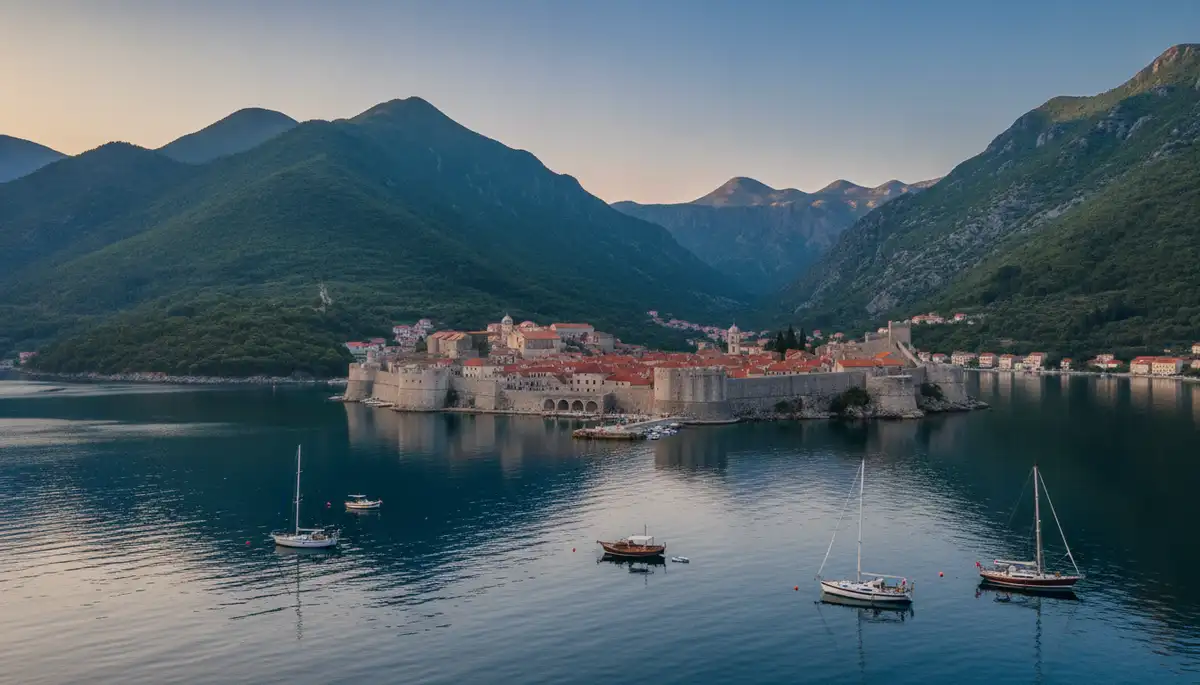
Monaco’s passport is far stronger on our Passport Freedom Index: 2nd of 198 with a score of 88.0 and 176 visa-free destinations, against Montenegro’s 90th, 64.0 and 127. Both take about ten years of residence, and both generally ask new citizens to give up their previous nationality.
Monegasque citizenship
Naturalisation needs ten years’ ordinary residence after age 18, which the Prince can waive, and it’s granted at the Sovereign Prince’s discretion. You must renounce your previous nationality and show you’re exempt from military service at home. Marriage is the other route: for marriages from 1 July 2022 you can declare for Monegasque nationality after 20 years.
Montenegrin citizenship
The Law on Montenegrin Citizenship requires ten years of lawful, continuous residence, release from your other citizenship, basic language skills, and income and housing. Spouses of Montenegrin citizens can apply after three years of marriage and five years of residence. Dual citizenship is allowed only under a bilateral treaty, and an adult citizen who voluntarily takes another nationality loses Montenegrin citizenship. Our Montenegro naturalisation guide walks through the file.
The citizenship-by-investment programme closed on 31 December 2022. The government reports 1,113 applications: 869 approved, 239 rejected and 5 still pending as of 1 October 2026.
There’s an EU angle too. Montenegro had closed 21 of its 33 negotiating chapters by 12 October 2026, and the prime minister is aiming for membership in 2028. If that happens, Montenegrin citizens would gain the right to live and work across the 31 countries of the EU, EEA and Switzerland.
Montenegro vs Monaco: Safety and Cost
Both are safe by European standards. Monaco’s police reported 1,055 recorded offences in 2025 and no homicides. In Montenegro, MONSTAT recorded 12 intentional homicides in 2024, about 1.9 per 100,000 people, and 5 in 2023.
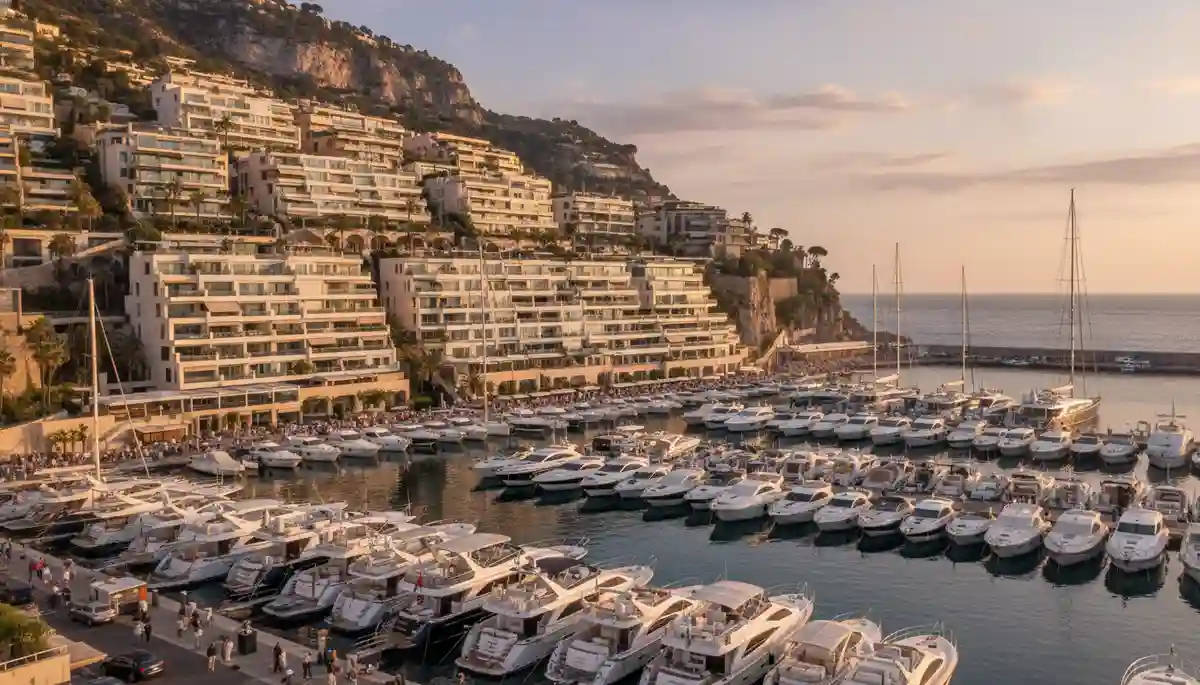
Cost is where they split. IMSEE, Monaco’s statistics office, put the average home price at €57,569 per square metre in 2025, across 493 sales. Our piece on real estate in Monaco shows how fast that adds up for a family flat. Monaco’s registration duty is 4.5% for buyers who meet its transparency criteria and 7.5% otherwise.
Montenegro’s transfer tax is progressive: 3% up to €150,000, then €4,500 plus 5% up to €500,000, then €22,000 plus 6% above that. Foreign buyers pay the same rates as locals. A home that qualifies for the residence permit therefore costs €4,500 in transfer tax at the threshold. We haven’t found an official national average price per square metre for Montenegro, so we’ve left that comparison out.
Size changes daily life as much as price does. Monaco covers 208 hectares and has 38,857 residents, with France and Italy a short drive away. Montenegro has 623,633 people, a coastline, mountains and a capital, Podgorica, of its own.
Banking and CRS Reporting
Monaco brought the Common Reporting Standard into force on 1 January 2017 and made its first exchange in 2018. Montenegro has committed to CRS, but the OECD’s list of commitments (30 September 2026) shows it hasn’t started exchanging yet. Its Tax Administration has completed a first FATCA exchange with the US and says CRS is in testing. The EU keeps Montenegro on its tax watch list (Annex II) until the Global Forum reviews those CRS shortcomings.
Monaco’s issue is anti-money-laundering. The FATF put Monaco on its grey list in June 2024, and the EU has listed it as a high-risk third country since August 2025. In June 2026 the FATF found Monaco had substantially completed its action plan, which warrants an on-site visit. The October 2026 plenary’s outcome is due on 30 October. Until it’s off both lists, EU banks must apply enhanced due diligence to business involving Monaco. Montenegro isn’t on the FATF list.
Company Setup: Montenegro vs Monaco
Montenegro is cheaper and quicker to get into. A limited company (DOO) needs €1 of capital under the Companies Law that applies from 1 January 2026, and foreigners can own it outright. Profits pay 9% up to €100,000, 12% up to €1.5 million and 15% above, and dividends paid to individuals are taxed at 15%. Our Montenegro company formation page explains the process.
Monaco wants more. An SARL needs at least two partners and €15,000 of capital; an SAM needs €150,000. Foreign partners need government authorisation, with a 45-day review that starts from notification of eligibility, so the full process runs longer. A Monaco company with more than 25% of its turnover outside Monaco pays 25% profits tax. Our Monaco company formation service handles that file.
Montenegro or Monaco: Which Is Better for You?
Monaco is better if you live on investment income or a business run from elsewhere and can afford Monaco housing. Montenegro is better if you want EU-candidate residency on a modest budget, earn a salary or freelance income, or want a cheap company. Our scores reflect that split.
| Liberty Mundo score | 🇲🇪 Montenegro | 🇲🇨 Monaco |
|---|---|---|
| Tax | 6/10 | 10/10 |
| Residency | 8/10 | 6/10 |
| Lifestyle | 7/10 | 8/10 |
| Business | 7/10 | 5/10 |
| Banking and asset protection | 5/10 | 5/10 |
| Overall | 6.6/10 | 6.8/10 |
Choose Montenegro if
- You can buy a home worth €150,000 or more, or you’ll run a company or work remotely
- Your income is a salary, freelance fees or a pension, where 9% to 15% is a good rate
- You want a five-year path to permanent residence in a country heading for EU membership
- You want a company with €1 of capital and 9% tax on the first €100,000 of profit
- Living costs and space matter more to you than a zero tax bill
Choose Monaco if
- Most of your income is dividends, interest or gains that Montenegro would tax at 15%
- You can afford Monaco housing and have a Monaco bank willing to write your reference
- You aren’t a French national, or you’ve accepted that France will still tax you
- Estate planning matters and your heirs are your spouse and children
- You want a passport that ranks 2nd on our index and are prepared to give up your current one
Most people who ask us about both have already decided by the time they’ve priced a flat in Monaco. If the numbers work there, the tax argument wins. If they don’t, Montenegro gives you European residency at a fraction of the cost. A strategy call with our team is the quickest way to run your own numbers.
Common Mistakes When Comparing Montenegro and Monaco
- Assuming Montenegro taxes only local income. Tax residents are taxed on worldwide income. Dividends and interest from abroad pay 15%, with a credit for tax already paid abroad. This is where people get burned.
- Using Montenegro’s old rates. Corporate tax is now 9%, 12% or 15% depending on profit, and capital gains and dividends pay 15%. Older guides still quote a flat 9% for everything.
- Treating €500,000 as Monaco’s official deposit. The government sets no figure. It asks for a Monaco bank reference and says the amount depends on the bank, so ask your bank early.
- Counting on Montenegro’s investor citizenship. The programme closed at the end of 2022. Today the route is ten years of residence and release from your other citizenship, unless a treaty says otherwise.
Frequently Asked Questions: Montenegro vs Monaco
Is Montenegro or Monaco better for tax?
Are Montenegro and Monaco the same country?
Can I get residency in Montenegro by buying property?
How much money do you need to live in Monaco?
Is Montenegro in the EU?
How long does it take to get citizenship in Montenegro or Monaco?
Which passport is stronger, Monaco or Montenegro?
Does Montenegro still have citizenship by investment?
Is Montenegro or Monaco better for starting a company?
Montenegro vs Monaco: The Bottom Line
Montenegro vs Monaco is a choice between paying a little tax and paying a lot for housing. Monaco charges no income tax and asks for a Monaco home and a bank that vouches for you. Montenegro taxes worldwide income at up to 15%, but lets you in through a €150,000 property, a company or remote work, with permanent residence after five years.
If Monaco is the front-runner, our Monaco vs Singapore comparison covers the other place it’s most often weighed against.
Sources and References
- Government of Monaco, Tax in Monaco and inheritance tax
- Government of Monaco, How to apply for a residence permit
- Government of Monaco, Acquiring Monegasque nationality
- Government of Montenegro, Law on Personal Income Tax (consolidated text)
- Government of Montenegro, Law on Foreigners (consolidated text)
- Government of Montenegro, Law on Montenegrin Citizenship
- OECD Global Forum, AEOI commitments
- FATF, Jurisdictions under increased monitoring, June 2026