
The EU foreign bank account ban is real, it starts this coming January, and almost everyone explaining it online has the details wrong. The headlines claim Brussels is stopping EU residents from opening accounts abroad from 11 January 2027. The truth is narrower, stranger, and in some ways worse. The rule sits in Article 21c of the sixth Capital Requirements Directive, and it aims at the banks, so the fallout lands on you.
If you live in any of the 27 EU member states, a bank in Switzerland, Singapore, the United States, the UK, Panama or Dubai will soon need a licensed branch in your country to take your deposits, lend you money, or issue you a guarantee. No branch, no new business. Your passport has nothing to do with it. Your address has everything to do with it.
We’ve spent the last few months fielding calls from clients who got a polite letter from an offshore bank and panicked. Some of that panic is justified. Most of it is misdirected. This guide sets out exactly what the EU foreign bank account ban covers, the exemptions that keep the door open, the dates that matter, and the moves that actually protect your banking access.
Put your assets beyond reach in 57 jurisdictions.
Pick where you want your company. We handle the filing, the registered agent, and the bank introduction. From US$1,290, done in days, not months.
- Charging-order protection in jurisdictions courts can't pierce
- Zero tax on foreign income in 30+ territories
- Banking options available
- Fixed price. No surprise fees at closing
What Is the EU Foreign Bank Account Ban?
The EU foreign bank account ban is Article 21c of Directive (EU) 2024/1619, known as CRD VI. From 11 January 2027 it requires any non-EU bank that takes deposits, lends, or issues guarantees to clients located in an EU member state to first obtain a branch authorisation in that member state. Cross-border service without a branch becomes unlawful, subject to a handful of exemptions. Lawyers call it the non-EU bank branch requirement. Everyone else calls it a ban.
Read that definition once more, because the wording is doing a lot of work. The directive never mentions EU residents opening accounts. It restricts what third-country banks may do. Brussels can’t legislate for a bank in Zurich or Singapore directly, so it does the next best thing: it makes serving EU-based clients a licensing offence unless the bank plants a flag inside the Union. The bank carries the legal risk, so the bank decides whether you’re worth the trouble.
The three activities caught are listed in Annex I of the directive. Point 1 covers taking deposits and other repayable funds. Point 2 covers lending, including consumer credit, mortgages, factoring and trade finance. Point 6 covers guarantees and commitments. Everything else a bank does, from custody to FX to investment advice, sits outside the CRD VI banking rules on branches.
Let’s be blunt about the intent. The European Banking Authority and the Commission have spent a decade watching money flow to banks they don’t supervise. CRD VI drags that activity back inside the perimeter where the Common Reporting Standard, the beneficial ownership registers, and the coming EU anti-money-laundering regulation can all see it. Framing it as prudential supervision is polite. The effect is a fence around EU-resident capital.
Who Is Affected by the EU Foreign Bank Account Ban?
The EU foreign bank account ban affects anyone, individual or company, who is established or situated in one of the 27 EU member states, regardless of nationality. An American in Lisbon, a German in Munich, and a Brazilian in Madrid are all caught. A German citizen living in Dubai or Asunción is untouched, because the rule keys off the client’s location, never their passport.
This trips people up constantly. One client, a French national who’d lived in Singapore for six years, spent a week convinced he’d lose his DBS relationship. He hadn’t read past the headline. His bank sits in Singapore, he sits in Singapore, and Article 21c has nothing to say about either of them. The reverse scenario is where the damage is: a British retiree in Spain with a UK savings account, or a Swiss-bank client living in Milan.
| Your situation | Caught by Article 21c? | Why |
|---|---|---|
| EU citizen living in the EU, banking in Switzerland | Yes | Client located in an EU member state |
| Non-EU citizen (US, UK, Australian) resident in the EU, banking at home | Yes | Residence decides, nationality is irrelevant |
| EU citizen resident in Dubai, Paraguay, Singapore or the UK | No | Client located outside the EU |
| EU-resident owner of a US LLC with a US bank account | Grey area | The account holder is a US entity; some banks may look through to the owner |
| EU resident with a brokerage account at a non-EU broker | No | Investment services fall under MiFID II, outside Article 21c |
| EU resident with an account at a non-EU bank’s licensed EU branch | No | The branch is authorised in that member state |
Two wrinkles deserve a mention. First, “situated in” is broader than tax residence. A person who spends most of the year in the EU without ever registering for tax there can still be an EU-located client in the eyes of a compliance officer. Second, the directive is EEA-relevant, so Norway, Iceland and Liechtenstein are expected to adopt it, although their timetables run separately from the EU’s.
Key Dates for the EU Foreign Bank Account Ban
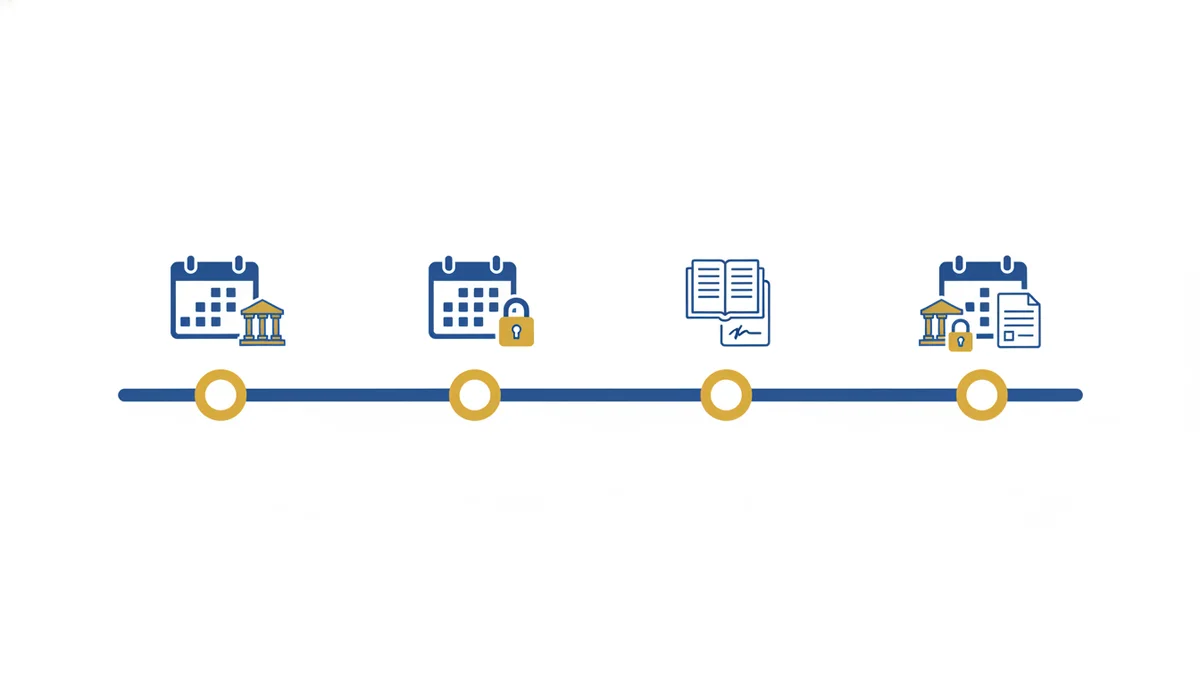
Four dates decide everything, and two of them have already passed.
| Date | What happens | Status |
|---|---|---|
| 10 January 2026 | Deadline for member states to transpose CRD VI into national law | Passed; only 12 states fully compliant by August 2026 |
| 11 July 2026 | Cut-off for grandfathered contracts. Accounts and loans in place before this date can continue | Passed |
| 11 January 2027 | Article 21c applies. The non-EU bank branch requirement bites: banks need a branch to write new core banking business with EU clients | Four months away |
| 10 July 2027 | The EU Anti-Money Laundering Regulation (AMLR) applies, including the EU-wide €10,000 cash payment limit | Pending |
The 11 July 2026 cut-off is the one most commentary skips, and it’s the most consequential. If your Swiss account was opened in 2019, it’s grandfathered. If you opened a UK savings account in August 2026, it wasn’t. Whether a bank keeps that newer account open past January depends entirely on whether it’s willing to argue reverse solicitation, which we’ll get to.
The clock is ticking on the January date, but don’t let a countdown push you into a rushed decision. Four months is enough time to open the right account or start the right residency if you begin now. It’s nowhere near enough to fix a mistake.
What Most Coverage Gets Wrong About the EU Foreign Bank Account Ban
Most of the commentary circulating on this rule makes four claims. Two are right, two aren’t, and the wrong ones matter.
The commentary says the rule targets residence, and that EU citizens living abroad are exempt. Correct on both counts. It also says a bank with “a branch inside one of the 27 member states” bypasses the rule. That’s wrong, and it’s the error that will cost people money. Third-country branches under CRD VI get no passport. A Swiss bank with an authorised branch in Luxembourg is licensed to serve clients in Luxembourg. It has no automatic right to serve you in Portugal. Each member state grants its own branch authorisation, with its own capital endowment, liquidity, and reporting requirements, and the larger branches (assets of €5 billion or more, or those taking retail deposits) face the strictest tier.
The second error is the word “ban” itself. Nothing in CRD VI prohibits an EU resident from holding, opening, or using a foreign account. The obligation, and the penalty, sit with the bank. That distinction sounds academic until you’re on the phone with a relationship manager in Geneva who’s decided your file isn’t worth defending. The EU foreign bank account ban works by making you unprofitable to serve.
I’ve watched this play out before with FATCA. When the US made foreign banks responsible for American clients in 2014, the law didn’t ban Americans from banking abroad. Banks simply started declining them. Within three years, most mid-sized European private banks had quietly shown their US clients the door. CRD VI is the same mechanism pointed in the other direction, and the same behaviour is already starting. Guernsey’s Skipton International wrote to its EU-resident customers in 2025 warning that the rules “may limit how non-EU banks can offer core banking services such as savings accounts and mortgages to EU residents.”
Reverse Solicitation: The Exemption That Keeps Offshore Banking Open
Reverse solicitation is the exemption in Article 21c that allows a non-EU bank to serve an EU-located client who approaches the bank at their “own exclusive initiative”, without the bank needing an EU branch. The bank may also provide services closely related to what the client originally asked for. The exemption fails if the bank, or anyone acting for it, marketed to the client first.
This is the door that stays open, and it’s the door every sensible EU resident should be walking through before January. If you find a bank yourself, contact it yourself, and open the account without the bank having advertised to you, the relationship is lawful on both sides. Skadden’s guidance to US banks puts it plainly: the bank must “retain evidence to demonstrate that the relevant client initiated contact with the lender on an unsolicited basis and without prior prompting.”
Three limits apply, and this is where people get burned:
- No marketing, ever. If the bank ran ads targeting EU residents, sponsored a conference in Frankfurt, or had an introducer with “close links” to the bank pitch you, the exemption is gone. Compliance teams know this, which is why many will simply decline the client instead of defending the file.
- Closely related services only. Open a deposit account on your own initiative and you can reasonably add a term deposit or a card. Ask for a mortgage six months later and the bank has to decide whether that’s “closely related” or new solicited business. Most will say new.
- Documentation is the bank’s, so make it easy. Email the bank first, in writing, stating that you found them independently and are requesting an account. Keep a copy. A file that starts with a clear unsolicited approach is a file a compliance officer can sign.
In practice we’re seeing a split. The big private banks with EU subsidiaries (UBS, Julius Baer, Pictet and their peers) will route EU clients to their Luxembourg or Frankfurt entities and carry on. The smaller Swiss cantonal banks, the Channel Island building societies, and the Singaporean and Hong Kong retail banks with no EU footprint are the ones that will quietly stop onboarding EU addresses. That’s where reverse solicitation earns its keep.
Does the EU Foreign Bank Account Ban Close Existing Accounts?
No. Accounts and loan agreements entered into before 11 July 2026 are grandfathered under CRD VI and can continue after 11 January 2027 without the bank needing an EU branch. The protection attaches to the contract as it stood. Materially amending, extending, or renewing that contract may be treated as new business, which would need reverse solicitation or a branch to stay lawful.
So the practical advice for existing accounts fits in three words. Leave them alone. Don’t upgrade the account type, don’t add a credit line, don’t ask the bank to restructure anything until you’ve checked whether the change counts as a material amendment. A client with a decade-old Liechtenstein account asked us last month whether he should “refresh” the relationship by moving to a new premium tier. We told him to do the opposite.
The grey area is what banks will do on their own initiative. Some will keep grandfathered accounts running indefinitely. Others, especially those with no intention of building an EU presence, will use the January date as a reason to prune EU-resident clients wholesale, grandfathered or not. A bank is always free to close an account for commercial reasons. Reports from Germany already describe non-EU banks asking customers to provide a non-EU address or face closure. If your offshore bank has under a few billion in assets and no EU branch, plan for the letter.
Offshore Bank Account for EU Residents: What Stays Legal After January 2027
An offshore bank account for EU residents remains possible after January 2027 because the scope of the EU foreign bank account ban is narrower than the fear around it. Plenty of routes to non-EU financial services remain fully open, because they were never core banking services in the first place.
| Service | Covered by Article 21c? | Why it stays open |
|---|---|---|
| Brokerage and investment accounts at non-EU firms | No | MiFID II investment services are carved out, including cash held as an ancillary to trading |
| Accounts at EU-licensed fintechs and neobanks | No | They’re EU institutions. Wise, Revolut and N26 hold EU licences and aren’t third-country banks |
| Accounts at a non-EU bank’s authorised branch in your member state | No | The branch holds a local authorisation |
| Custody, safekeeping, FX, payment services | No | Outside Annex I points 1, 2 and 6 |
| Accounts opened on your own exclusive initiative | Exempt | Reverse solicitation |
| Accounts and loans in place before 11 July 2026 | Exempt | Grandfathering |
| Bank account held by your non-EU company | Depends | The client is the company; banks differ on whether they look through to an EU-resident owner |
| New deposit or savings account at a non-EU bank that marketed to you | Yes | Core banking service, solicited, no branch |
| New mortgage or personal loan from a non-EU lender | Yes | Lending is a core banking service |
The brokerage carve-out deserves a closer look, because it’s the largest hole in the fence. A cash balance sitting at a non-EU broker as the settlement float for your portfolio is ancillary to a MiFID service and outside CRD VI. A pure savings account at the same institution’s banking arm isn’t. Banks that run both will start drawing that line carefully, and some clients will find their “bank account” has been reclassified as a brokerage cash account overnight. For most people that’s a distinction without a difference.
The non-EU company route is the one we field the most questions about. A US LLC owned by an EU resident is a US person for banking purposes. Its bank account sits at a US bank serving a US client. Article 21c asks where the client is established, and the client is Delaware or Wyoming. Whether a given bank then looks through to you as the beneficial owner is a compliance judgement, and we’ve seen them go both ways. Banks and fintechs that specialise in onboarding non-resident-owned LLCs have built their business on that structure and, so far, have shown no appetite to unwind it. Treat it as a strong option with a residual risk, and pair it with a non-CRS jurisdiction if reporting is also on your mind.
Which EU Countries Have Actually Implemented CRD VI Article 21c?
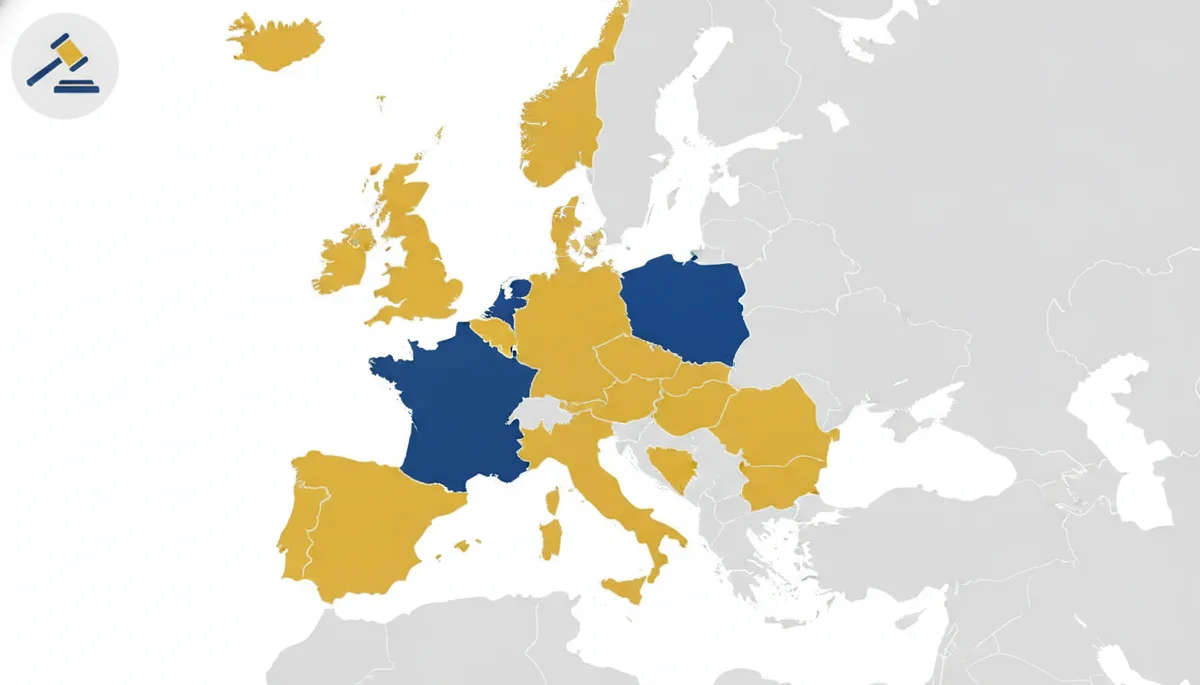
As of the Commission’s 7 August 2026 update, 12 of 27 member states had fully transposed CRD VI, seven had partially transposed it, and eight had notified nothing, with infringement proceedings open against 22 states. The directive still applies from 11 January 2027 across the Union, but the national rules that give it teeth are uneven, and gold-plating is expressly permitted.
This matters more than it looks. A non-EU bank serving clients in Germany, France or Ireland faces a fully written national regime with a supervisor ready to enforce it. The same bank serving clients in Spain, Portugal, the Netherlands, Belgium or Poland is dealing with a member state that hadn’t even published its rules by August. Banks don’t take comfort from delay, though. Their compliance departments assume the strictest reading everywhere and act accordingly.
| Transposition status (EC, 7 August 2026) | Member states |
|---|---|
| Full transposition communicated | Czech Republic, Denmark, Estonia, France, Germany, Hungary, Ireland, Italy, Latvia, Slovakia, Slovenia, Sweden |
| Partial transposition communicated | Austria, Bulgaria, Croatia, Cyprus, Lithuania, Luxembourg, Malta |
| No transposition measures communicated | Belgium, Finland, Greece, Netherlands, Poland, Portugal, Romania, Spain |
Spain is the one to watch. It has no national CRD VI measures on the books yet, and it already runs the harshest foreign-account reporting regime in the Union through Modelo 720, which requires residents to declare overseas accounts once any asset category passes €50,000. Layer Article 21c on top and a Spanish tax resident ends up with the worst of both worlds: full disclosure of the foreign accounts they have, and shrinking access to new ones. Americans will recognise the pattern. The FBAR threshold is only $10,000, and the FATCA experience taught them what happens next.
Germany, by contrast, transposed early and cleanly, and German media have been running practical explainers all summer about non-EU banks writing to customers. If you’re a German resident with a UK or Swiss account, assume your bank has already read the German rules and made its decision.
How to Keep Offshore Banking Access Under the EU Foreign Bank Account Ban
An EU resident keeps access to offshore banking by doing four things before 11 January 2027: leaving grandfathered accounts untouched, opening any new non-EU account on their own documented initiative, routing new relationships through a non-EU entity or an EU-licensed branch where one exists, and, for anyone serious about long-term freedom, establishing a residence outside the Union. Here’s the sequence we run with clients.
Step 1: Audit every non-EU account against the 11 July 2026 date. List each account, loan, and guarantee at a non-EU institution and note the contract date. Anything before 11 July 2026 is grandfathered. Anything after needs to stand on reverse solicitation. Note which banks have an authorised branch in your member state (their website will say so), because those relationships are safe regardless.
Step 2: Freeze grandfathered accounts as they stand. Don’t change the account type, add products, extend a loan, or renegotiate terms. Keep them funded and active so the bank has no dormancy reason to close them. If you need a new product from that bank, treat it as a fresh reverse-solicitation request and put it in writing.
Step 3: Open any new non-EU account on your own documented initiative. Pick the jurisdiction from research you did yourself. An ad that found you is exactly what kills the exemption. Our guide to the best offshore banking jurisdictions is a starting point. Contact the bank in writing, state that you’re approaching them unsolicited, and keep the email. Banks in Singapore, Panama and the Cayman Islands have all been onboarding EU clients this way through 2026.
Step 4: Put new relationships inside a non-EU entity. A US LLC with a US bank account moves the “client” outside the EU for Article 21c purposes and, as a bonus, the United States isn’t a CRS participant. A Nevis LLC or an offshore company in a jurisdiction with real banking does the same job with a different risk profile. Keep the entity’s substance honest: a real business purpose, real activity, and proper accounts.
Step 5: Move brokerage-style cash into MiFID-covered accounts. If your reason for a foreign account is holding investments in a hard currency, a non-EU brokerage account does that outside CRD VI entirely. Cash balances ancillary to a portfolio are exempt. This is the cleanest route for people whose “offshore banking” is really offshore investing.
Step 6: Decide whether EU residence is still worth it. Every workaround above is a patch. The permanent fix is to stop being “situated in” the EU. A second residency outside the Union takes you out of Article 21c, out of the coming AMLR cash regime, and in many cases out of worldwide taxation. Paraguay, Uruguay, Panama and the UAE all offer routes that can be started in weeks. The residence has to be real, though. A mailbox address on a bank form is fraud, and banks are getting better at spotting it.
Common Mistakes EU Residents Make With the Foreign Bank Account Ban
Five mistakes come up in almost every conversation we have about this rule.
Treating a bank’s EU branch as an EU passport. Covered above, but worth repeating: a Swiss bank’s Luxembourg branch serves Luxembourg. Check whether your bank has a branch in your member state, and if it only has a subsidiary, ask which entity your account sits with. A subsidiary is an EU bank in its own right and is fine.
Asking a grandfathered bank for “something new”. Every product added after 11 July 2026 to a pre-existing relationship is a potential new contract. The account survives; the new mortgage might not.
Using a fake non-EU address. Some clients arrive having already told their bank they live at a relative’s flat in London or a serviced office in Dubai. Self-certifying a false residence breaks the bank’s terms, breaks CRS self-certification rules, and in most jurisdictions is a criminal offence independent of any tax question. Establish a real residence or don’t bother.
Assuming fintechs solve it. Wise, Revolut and their peers are EU-licensed, so they’re outside Article 21c. They’re also inside CRS, inside the EU’s beneficial ownership and AML apparatus, and subject to every freeze and reporting obligation an EU bank has. They keep a multi-currency account working. They do nothing for the privacy or jurisdictional diversification most people wanted from offshore banking in the first place.
Waiting to see what the bank does. By the time a bank writes to you, it has already decided. Banks are working through their EU-resident client books now and will finish well before January. If you want to be on the right side of that review, the bank needs to see a grandfathered contract, a documented unsolicited approach, or a non-EU address before its compliance team reaches your file.
EU Foreign Bank Account Ban: Your Options Compared
Four strategies cover almost every EU resident’s situation, whether the goal is a new offshore bank account for EU residents or simply keeping the one they have. Each trades convenience against durability.
| Strategy | Legal basis | Durability | CRS reporting | Best for |
|---|---|---|---|---|
| Stay in the EU, keep grandfathered accounts, open new ones by reverse solicitation | Article 21c(2) and (4) exemptions | Medium. Depends on each bank’s risk appetite | Yes, unless the bank is in a non-CRS state | People with established offshore relationships who won’t need new products |
| Bank with non-EU banks through their authorised EU branch or subsidiary | Branch holds national authorisation | High | Yes | Clients of large private banks with Luxembourg, Frankfurt or Dublin entities |
| Bank through a US LLC or other non-EU entity | Client is a non-EU person | Medium to high. Residual look-through risk | US: no CRS. Other jurisdictions vary | Entrepreneurs, freelancers, investors with a business purpose |
| Establish residence outside the EU | Client no longer situated in the EU | Highest | Depends on new country of residence | Anyone planning on a ten-year horizon |
Most people who come to us end up combining the third and fourth rows. They form a US LLC now, which fixes the banking problem within weeks, and they start a residency in parallel, which fixes the underlying problem within a year. The pattern we see across cases is that the LLC buys time and the residency buys freedom. Neither one alone does both jobs.
Whichever route you choose, remember the direction of travel. CRD VI is one rule in a sequence: CRS in 2017, the fifth and sixth AML directives, the beneficial ownership registers, the EU exit tax studies, the AMLR cash limit in July 2027. Each one is defensible on its own. Together they describe a Union that wants every euro its residents hold to be visible, domestic, and reachable. Planning your finances as though the next rule won’t come is a bet against a decade of form.

Frequently Asked Questions About the EU Foreign Bank Account Ban
Is the EU really banning foreign bank accounts in 2027?
Does the EU foreign bank account ban apply to EU citizens living outside the EU?
Can EU residents still open an offshore bank account after January 2027?
What is CRD VI Article 21c?
Will my existing Swiss, UK or US bank account be closed?
Does the EU foreign bank account ban cover brokerage and investment accounts?
Are Wise, Revolut and other fintechs affected?
Can an EU resident get around the ban with a US LLC bank account?
Which EU countries have implemented CRD VI?
What happens to non-EU mortgages and loans under the EU foreign bank account ban?
Is leaving the EU the only permanent solution?
Final Thoughts on the EU Foreign Bank Account Ban
The EU foreign bank account ban won’t arrive as a dramatic shutdown on 11 January 2027. It will arrive as a slow trickle of letters, declined applications, and relationship managers who suddenly “can’t help with that”. That’s how FATCA worked, and CRD VI borrows the playbook wholesale.
You have four months and three good moves. Freeze what’s grandfathered. Open what you still can, on your own initiative and in writing. Put new relationships inside a structure the rule doesn’t reach. And if the direction of travel bothers you as much as it bothers us, start the paperwork on a residence that isn’t inside the fence. The offshore bank account you set up now, done properly, is the one you’ll still have in 2030.
Sources and References
- EUR-Lex, Directive (EU) 2024/1619 (CRD VI), Article 21c
- European Commission, Capital Requirements Directive VI: Transposition Status
- European Banking Authority, Final Report: Guidelines on the Authorisation of Third-Country Branches (EBA/GL/2026/08)
- EUR-Lex, Regulation (EU) 2024/1624 (Anti-Money Laundering Regulation)
- Skadden, Arps, Slate, Meagher & Flom, CRD VI: What US Banks Need to Know
- Latham & Watkins, CRD VI: Implications of the Licensed Branch Requirement
- Internal Revenue Service, Report of Foreign Bank and Financial Accounts (FBAR)
- The Connexion, Foreign banks contact clients in France over new rules limiting services to EU residents